

This guide is part of our budget coffee gear collection.
A great pour-over setup costs less than two café lattes. A paper filter, ground coffee, hot water, and a dripper — that is the entire equipment list, and the dripper is the cheapest part of it. The best budget pour over drippers are not $80 designer cones — they are $10 plastic V60s or $25 Kalita Waves that brew a cleaner, sweeter cup than any drip machine you will find anywhere near this price.
Below: four real budget drippers you can buy today — conical, flat-bottom, plastic, and ceramic — with honest pros, cons, and who each one is for, plus the $0 “use what you have” method for comparison. Prices move with sales, so we use ranges instead of exact numbers.
How to Choose the Best Budget Pour Over Drippers
Pour-over drippers all do the same job — hold a paper filter of grounds while hot water passes through — but the shape and material details change how forgiving the brew is:
- Shape: conical vs. flat-bottom. Conical drippers (V60, Melitta) have a deeper coffee bed, which rewards careful pouring with a brighter, more complex cup — but punishes sloppy technique. Flat-bottom drippers (Kalita Wave) spread the bed out, drain evenly, and forgive beginners — the friendlier first choice.
- Material: plastic vs. ceramic. Plastic is cheap, light, nearly indestructible — and brews just as well as ceramic. Ceramic looks beautiful and holds heat nicely, but it cracks if dropped. For a first dripper, plastic wins on practicality.
- Filter availability. Before you buy any dripper, check that its paper filters are easy to find. V60 #02, Melitta #2, and Kalita 155 wave filters are stocked everywhere; obscure no-name drippers can leave you hunting for odd-sized filters.
- Size: 1–2 cup vs. 4 cup. A smaller dripper brews a single mug more consistently than a big dripper brewing half-empty. For solo drinkers, a 1–2 cup dripper (Size 01/02, Wave 155) is the sweet spot.
- Drain design. A single large hole (V60) drains fast and gives you maximum control — and maximum chance to mess it up. Restricted flow designs (Melitta’s single small hole, the Wave’s three tiny holes) slow the drawdown and add built-in forgiveness.
The golden rule of pour-over: the dripper matters far less than the grind. Fresh beans, ground medium-fine right before brewing, beat any premium dripper filled with stale pre-ground coffee.
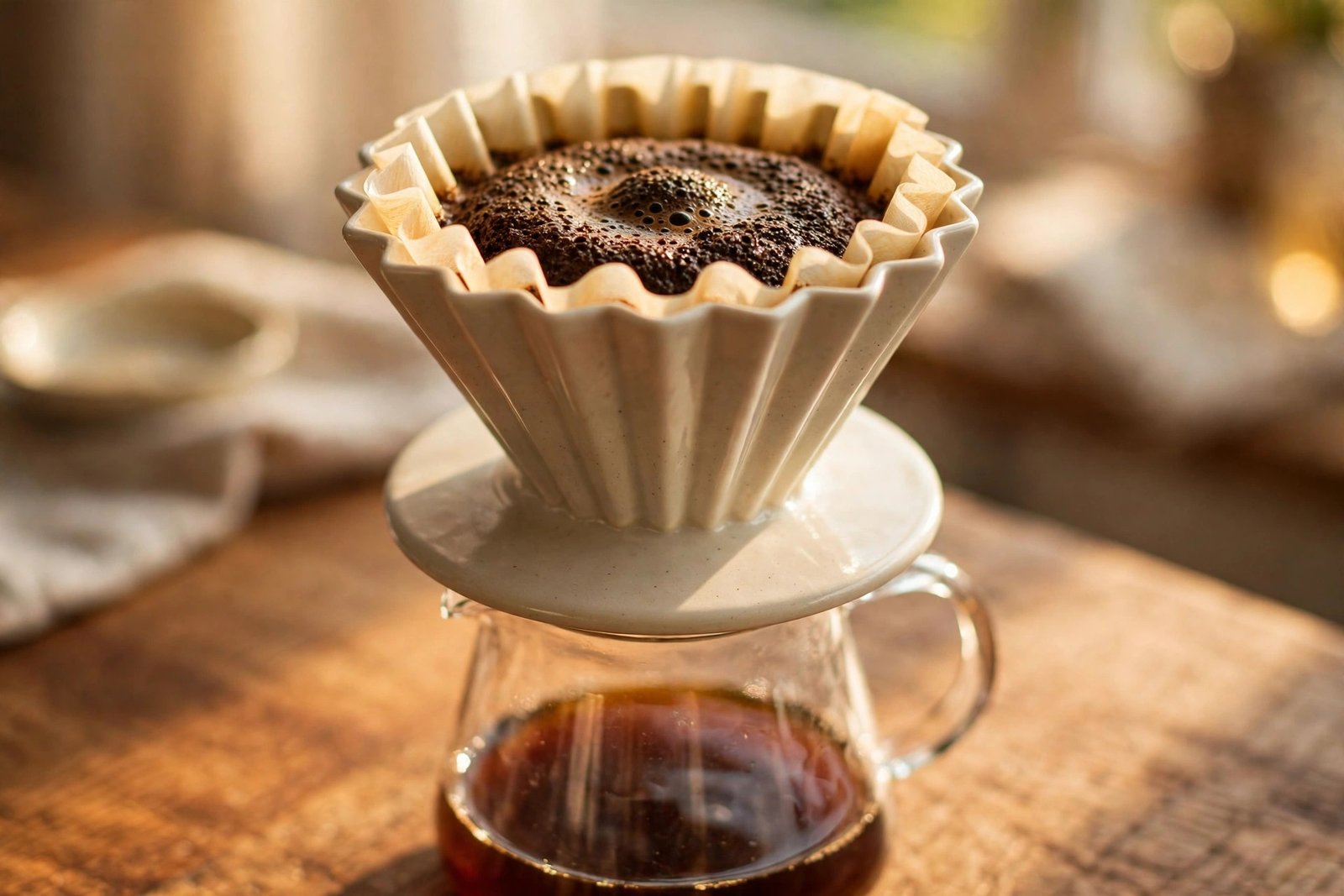
The Reviews
1. Hario V60 Plastic Dripper (Size 02) — Best Overall Budget Pick
The V60 is the pour-over dripper everything else gets measured against, and the plastic version costs about as much as one café latte. Its spiral ribs keep the filter from sticking, and the single large drain hole gives full control over drawdown — both its superpower and its learning curve.
Pros:
- Usually $8–$14 — absurd value for the most influential dripper design in coffee
- The large single hole and spiral ribs produce a clean, bright, complex cup
- Lightweight and nearly unbreakable — the travel and camping favorite
- Filters (Size 02) are available everywhere, bleached or natural
Cons:
- Unforgiving: the fast drain punishes inconsistent pouring with sour or bitter cups
- Really shines with a gooseneck kettle — a regular kettle makes control much harder
Best for: Anyone willing to practice their pour. If you want the ceiling of what pour-over can taste like at the lowest possible price, start here.
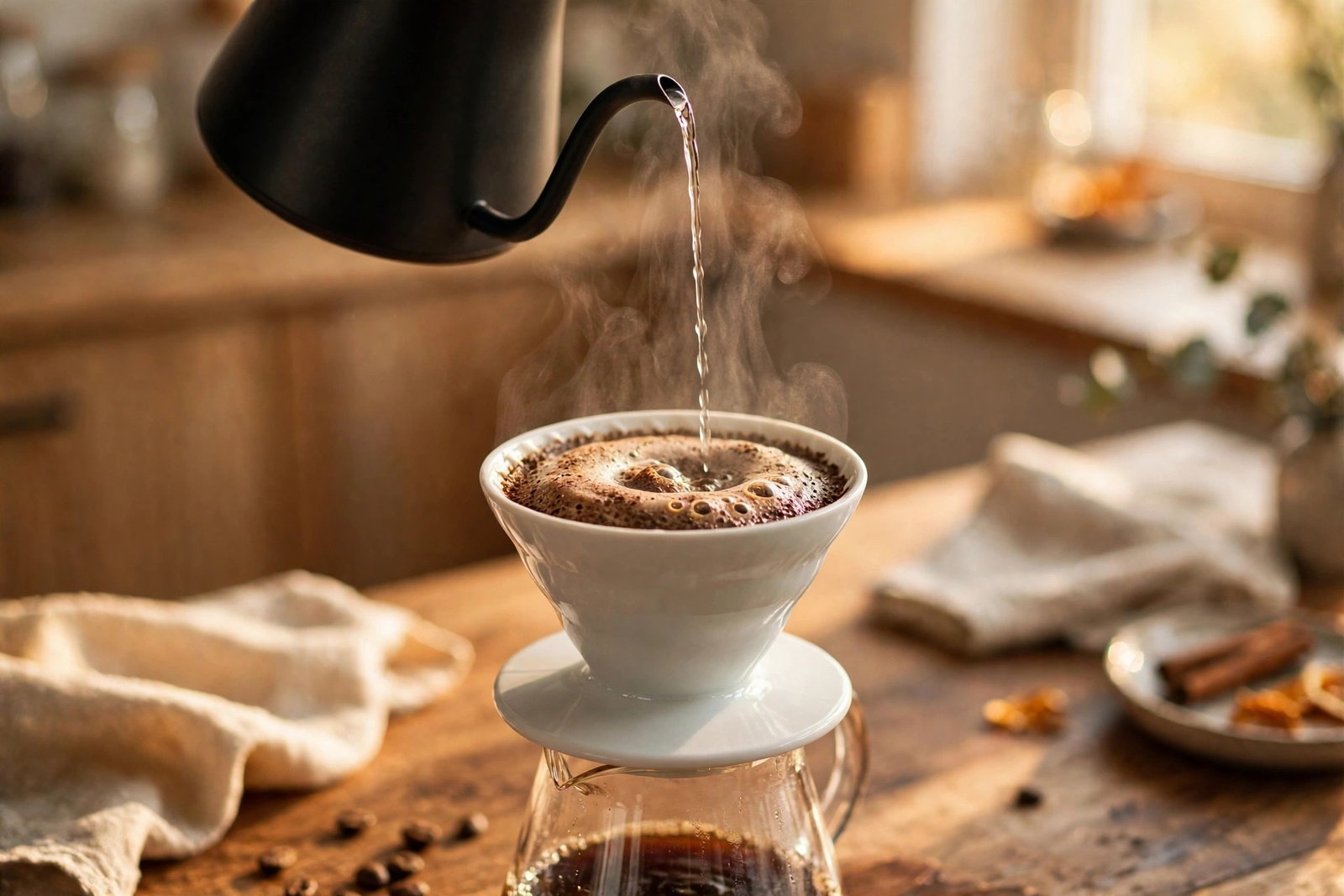
2. Kalita Wave 155 — Best for Beginners
The Wave is the dripper coffee shops hand to new baristas, and for good reason: its flat bottom and three tiny drain holes make it the most forgiving brewer on this list. Pour a little too fast or a little off-center and the Wave shrugs it off — the restricted flow keeps the brew in the sweet spot automatically. The 155 is the 1–2 cup size, perfect for a solo morning mug.
Pros:
- Usually $22–$28 — the most beginner-proof dripper under $30
- Flat-bottom design and three-hole drain give even extraction with minimal technique
- Available in stainless steel or ceramic, both sturdy and good-looking
Cons:
- Wave 155 paper filters cost more than standard cone filters and are sometimes harder to find locally
- Less “clarity” than a V60 for light, floral coffees; the trade-off for forgiveness
Best for: First-time pour-over brewers who want great coffee without studying technique. Pair it with a budget coffee grinder and you are set.
3. Melitta Pour-Over #2 Cone — Best Ultra-Budget Pick
The Melitta has been brewing pour-over coffee since long before pour-over was cool, and its #2 cone is still one of the cheapest ways to get into the method. The wedge shape and single small drain hole slow the flow on purpose — this dripper practically brews itself, and #2 filters are the easiest to find in any American grocery store.
Pros:
- Usually $6–$12 — the cheapest real dripper worth owning
- The restricted drain hole makes it genuinely hard to brew a bad cup
- #2 cone filters are everywhere: grocery stores, big-box stores, online
Cons:
- Brews a heavier, less nuanced cup than the V60 — good, not dazzling
- The wedge shape means the bottom of the bed can over-extract slightly
- Looks utilitarian; nobody is photographing this one for Instagram
Best for: Skeptics who want to try pour-over for the price of a sandwich, dorm rooms, offices, and backup brewers. Honestly, it beats most $100 drip machines.
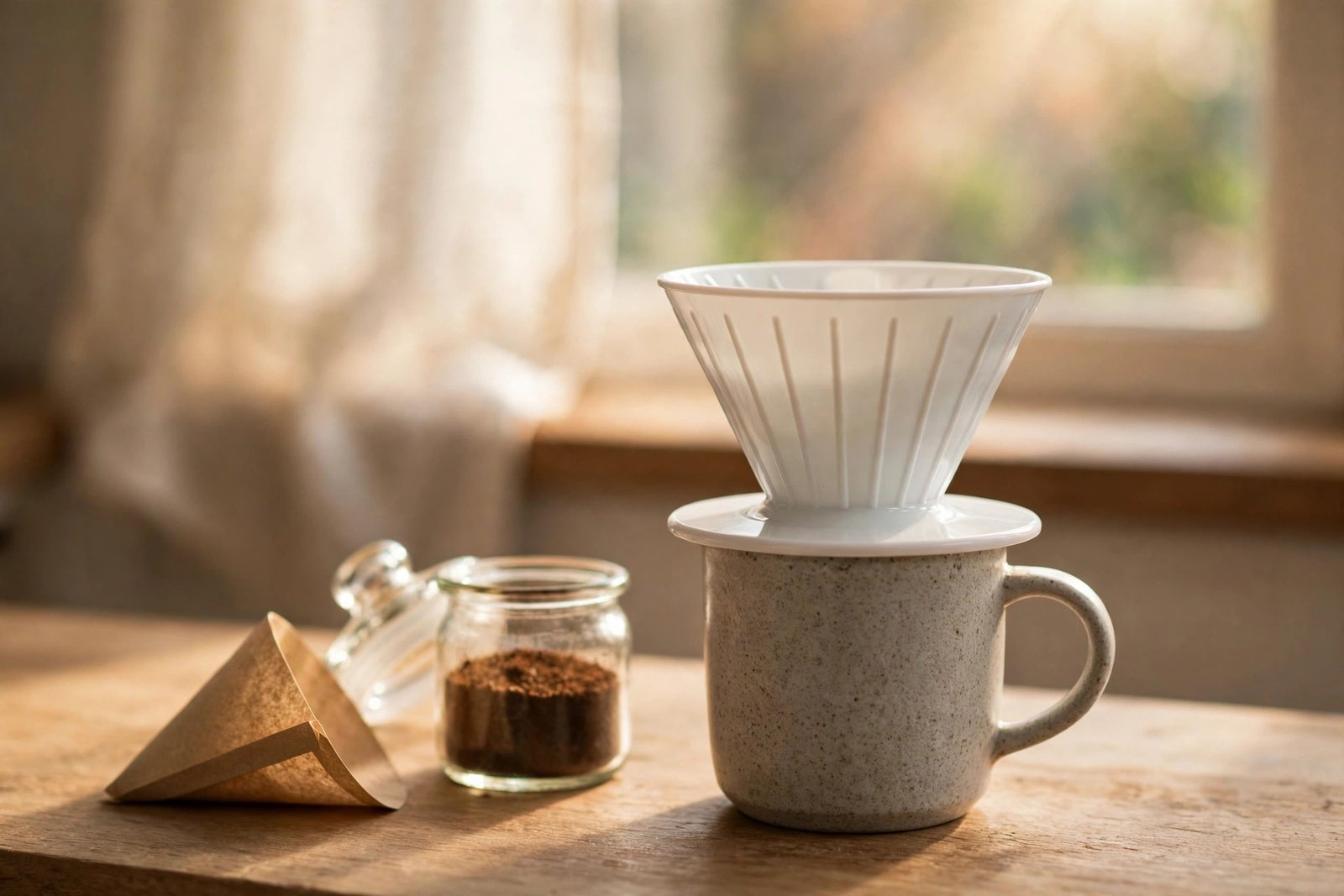
4. Bee House Small Dripper — Best Ceramic Value
The Bee House is the ceramic lover’s budget pick: a Japanese-made wedge dripper whose two small drain holes split the difference between the V60’s speed and the Melitta’s restriction. The small (1–2 cup) size is ideal for a single morning mug.
Pros:
- Usually $22–$28 — real Japanese ceramic at a plastic-dripper-adjacent price
- Two-hole design balances control and forgiveness better than most wedges
- Ceramic retains heat through the brew for a stable, sweet extraction
Cons:
- Ceramic breaks — one drop on a tile floor and it is over
- The dripper itself is harder to find in stores than a V60
Best for: Design-conscious brewers who want a ceramic dripper without the $40+ price tag, and anyone who finds the V60 too fussy but wants more clarity than the Melitta.
5. The $0 Method — The Fine-Mesh Strainer Trick
Before you spend a dime: set a fine-mesh kitchen strainer over a mug, line it with a paper coffee filter (or even a sturdy paper towel in a pinch), add your grounds, and pour exactly as you would with a real dripper. It is ugly, it is inelegant, and it makes perfectly good pour-over coffee.
Pros:
- $0 — you own everything already
- Makes essentially the same coffee as a $10 dripper; the cone shape never touched the flavor
Cons:
- Awkward to handle: the strainer wants to slide, and there is no drip-through base
- Paper towels can tear or add a papery taste — use a real coffee filter if you can
- No heat retention, so the brew cools faster than in a proper dripper
Best for: The truly curious who want to taste pour-over today, right now, with zero commitment. If you brew with a strainer three mornings in a row, buy the V60.

Quick Comparison
| Dripper | Typical price | Shape | Material | Standout strength |
|---|---|---|---|---|
| Hario V60 Plastic (Size 02) | $8–$14 | Conical | Plastic | Best cup ceiling, cheapest to own |
| Kalita Wave 155 | $22–$28 | Flat-bottom | Steel or ceramic | Most forgiving for beginners |
| Melitta Pour-Over #2 | $6–$12 | Wedge/cone | Plastic | Cheapest, nearly foolproof |
| Bee House Small | $22–$28 | Wedge | Ceramic | Prettiest budget pick, balanced flow |
| Fine-mesh strainer | $0 | Improvised | Metal | Free — the baseline everything beats on convenience |
5 Tips for Better Pour-Over Coffee
- Grind medium-fine — like table salt. Too fine and the bed chokes, giving bitter, over-extracted coffee; too coarse and the water rushes through, giving sour, thin coffee. A burr grinder makes this easy.
- Use the 1:16 ratio. That is 1 gram of coffee per 16 grams of water — about 2 tablespoons of coffee per 6 ounces of water, or 20 g coffee to 320 g water for a solid mug. A kitchen scale is the cheapest upgrade in all of coffee.
- Bloom for 30–45 seconds. Pour just enough hot water to wet all the grounds, then wait. The bed will bubble and swell as trapped CO2 escapes. Skipping the bloom is the most common beginner mistake — and the easiest to fix.
- Pour slow spirals, keep the water level steady. Pour in gentle circles from the center outward, keeping the water level consistent rather than dumping it all at once. You do not need a gooseneck kettle to start — just pour slowly from a regular kettle held low.
- Water just off the boil. Around 195–205°F is the target — in practice, boil the kettle and wait 30–60 seconds. Lighter roasts like it hotter, darker roasts a touch cooler.
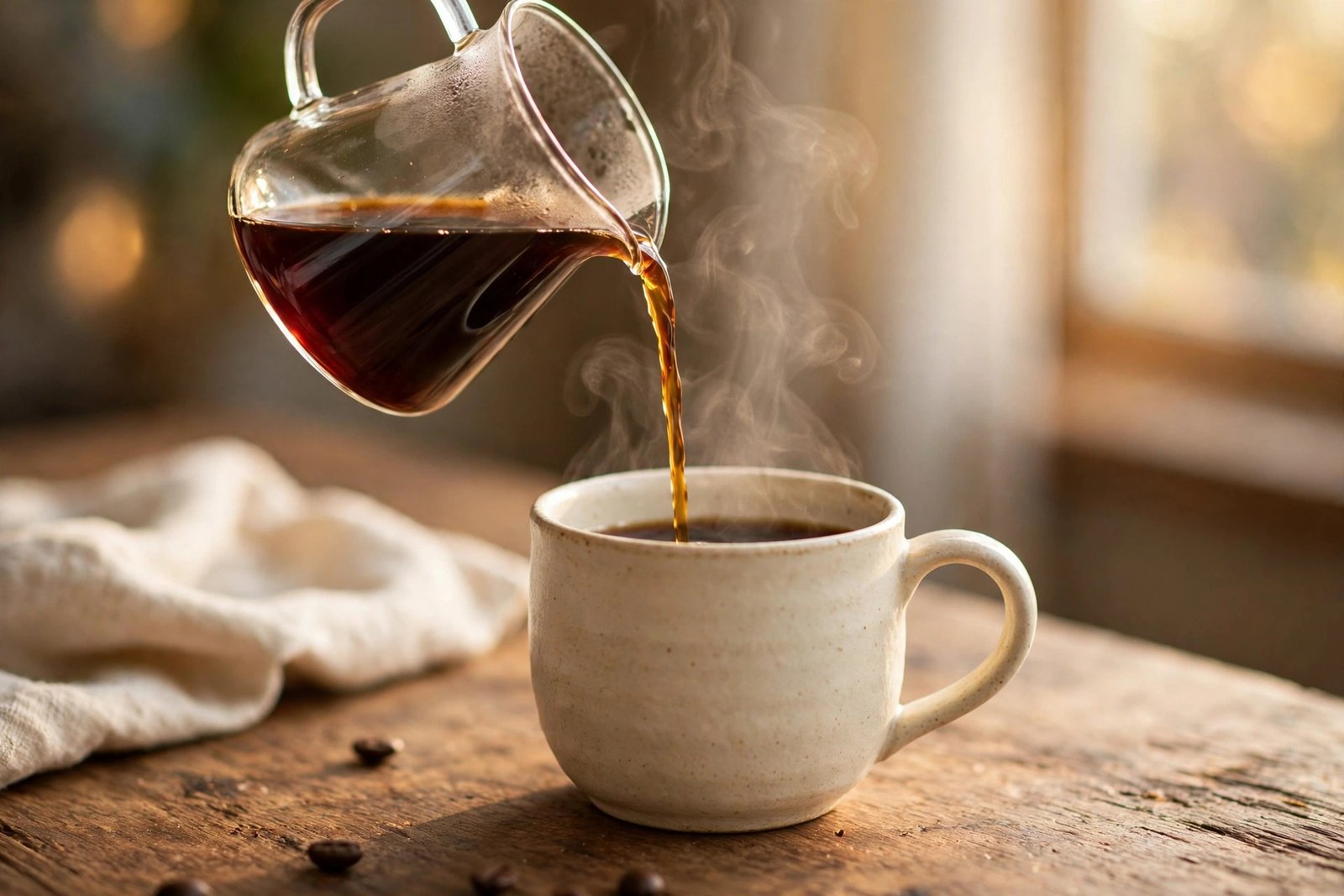
FAQs
Is a cheap pour-over dripper really as good as an expensive one? For the coffee in your cup, yes — with one caveat. A $10 plastic V60 brews identically to the $30 ceramic V60 because the geometry is the same. What more money buys is material (ceramic, copper), looks, and sometimes better heat retention — not a fundamentally better-tasting cup. Grind quality and technique matter far more than the dripper’s price tag.
What grind size should I use for pour-over? Medium-fine, about the texture of table salt — finer than drip-machine grind, coarser than espresso. If your brew drains in under 2 minutes and tastes sour, go finer; if it takes over 4 minutes and tastes bitter, go coarser. Total brew time of 2:30–3:30 for a single mug is the target zone.
Do I need a gooseneck kettle for pour-over? It helps, but it is not required — especially with forgiving drippers like the Kalita Wave or Melitta. It matters most for the fast-draining V60. Start with your regular kettle poured slowly and low; upgrade only if you catch the pour-over bug.
Can I brew pour-over without a scale? Yes — 2 level tablespoons per 6 ounces of water gets you close to 1:16. But a $12 kitchen scale is the biggest consistency upgrade you can buy.
Which dripper should a total beginner buy? The Kalita Wave 155. Its flat-bottom design and restricted flow forgive the inconsistent pouring every beginner does, and it still makes a genuinely excellent cup. Master the Wave first; graduate to the V60 when you want to chase brighter, more complex flavors.
Conclusion
Pour-over is the rare coffee method where the cheapest gear is also some of the best gear. Start free with the strainer method to prove you enjoy the ritual, then spend $10 on the V60 when you are ready to practice — or $25 on the Kalita Wave if you would rather have great coffee with zero learning curve. The Melitta is the honest workhorse, and the Bee House is the pretty one. Whichever you pick, fresh medium-fine grounds, a 30-second bloom, and water just off the boil will do more for your cup than the logo on the cone.
Pick one dripper, brew one mug tomorrow morning, and if it beats your old routine — it will — tell us which one earned a permanent spot on your counter.
Keep Brewing
- French Press vs Pour Over: Which Is Better for Your Home Café?
- Best Budget Coffee Grinders Under $50 (2026)
- Best Budget Milk Frothers: 4 Picks + the $0 Method
- How to Make Vanilla Syrup for Coffee at Home (5 Minutes)
Part of the collection: This guide is part of our Budget Coffee Gear hub — 10 guides to brewing great coffee without spending a lot.