Walk into any coffee aisle and you’ll face the big beginner question: French press or pour over? Both are affordable, both make excellent coffee, and both look great on a coffee bar — but they produce very different cups and suit very different mornings.
This is an honest, hype-free comparison across taste, cost, ease of use, cleanup, and time, with a clear verdict for different types of home baristas. No sponsored picks, no invented specs — just what actually matters.
Quick Comparison
| French Press | Pour Over (e.g. V60, Chemex) | |
|---|---|---|
| Taste | Full-bodied, rich, heavier mouthfeel; fine sediment | Clean, bright, crisp; highlights subtle flavors |
| Cost | Usually $20–$40 (Bodum, etc.) | Dripper usually $20–$35 (V60, Chemex); plus ongoing filter costs |
| Ease of use | Very easy — add grounds, add water, wait, press | Moderate — requires pouring technique and attention |
| Brew time | ~4 minutes steep + minimal active time | ~3–4 minutes of active pouring |
| Cleanup | Messier — scooping out wet grounds | Easy — lift out the filter and toss |
| Batch size | Great for 2–4 cups at once | Best for 1–2 cups (Chemex handles more) |
| Countertop look | Classic, sturdy, café-familiar | Minimalist, photogenic, “third-wave” vibe |
Taste: Rich vs. Clean
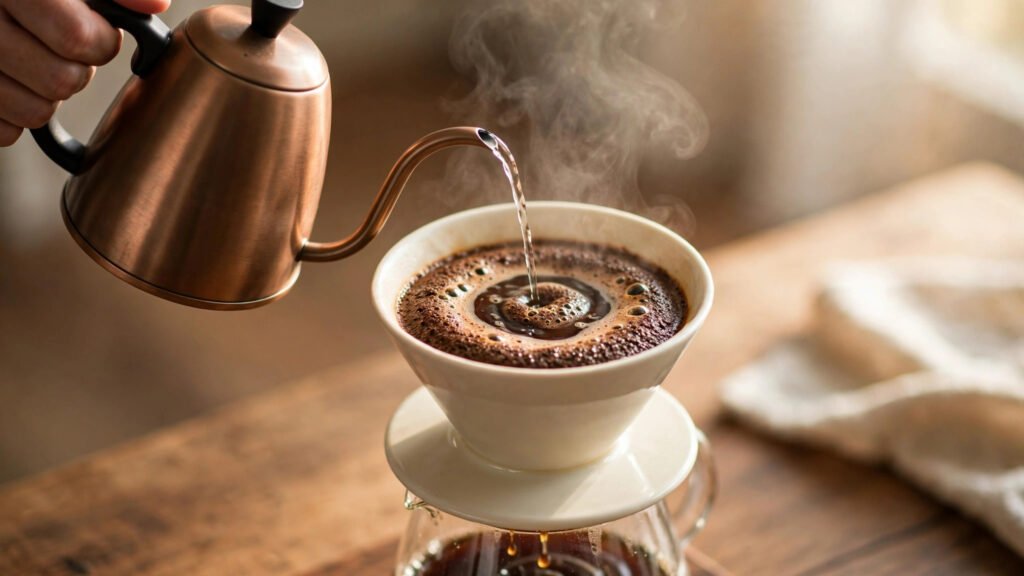
This is the real difference, and it comes down to the filter.
A French press uses a metal mesh filter that lets coffee oils and very fine particles through. The result is a heavier, fuller-bodied cup — chocolatey, round, and rich. If you love the feeling of a “hearty” morning coffee, this is your brew.
A pour over (like the Hario V60 or Chemex) uses a paper filter that traps oils and sediment. The result is a cleaner, brighter cup where subtle flavors — fruity, floral, citrusy notes — come through clearly. If you buy interesting single-origin beans and want to taste what makes them special, pour over shows it off.
Neither is “better” — it’s a texture preference. Try both at a local café before buying if you can.
Cost: What You’ll Actually Spend
French press: A solid Bodum Chambord or similar classic press usually runs $20–$40 depending on size. There are no ongoing costs — the metal filter is reusable indefinitely. Budget-friendly and done.
Pour over: A Hario V60 plastic dripper is famously inexpensive (usually under $15 for the dripper itself; ceramic runs more), while a Chemex is typically $40–$50. The catch is filters: paper filters cost a few cents each, which adds up to maybe $15–$25 a year for daily brewing. You’ll also want a gooseneck kettle for proper pouring technique — a basic one runs $25–$40.
First-year total (rough): French press ~$20–$40 all-in. Pour over ~$40–$90 with kettle and filters.
Ease of Use & Learning Curve
French press wins on simplicity. Coarse grounds + hot water + 4 minutes + press. It’s nearly impossible to mess up, which makes it ideal for groggy mornings, households with multiple coffee drinkers, and anyone who wants good coffee without a hobby.
Pour over takes practice. You control the pour speed, pattern, and timing, which means you can dial in an exceptional cup — but your first few attempts may be uneven or bitter. Budget a week of practice. That said, many people find the morning ritual itself relaxing and rewarding.
Time: Hands-On vs. Hands-Off
Both take about 4 minutes of brewing, but the kind of time differs:
- French press: 1 minute of active work (add coffee, add water, stir), then 4 minutes of waiting while you do something else. Great for multitaskers.
- Pour over: 3–4 minutes of active, attentive pouring. You can’t walk away. Great if you enjoy the ritual; annoying if you’re rushing out the door.
Cleanup: The Unsexy Deciding Factor
Be honest with yourself here, because cleanup determines whether you’ll actually use the thing daily.
- French press cleanup is the messiest: you have to scoop or rinse out a puck of wet grounds, and grounds love to clog sink drains (use a trash-first rinse). Takes 1–2 minutes.
- Pour over cleanup is nearly effortless: lift the filter, toss it (grounds and all — compostable!), quick rinse of the dripper. Under 30 seconds.
If you hate kitchen cleanup, this alone might decide for you.
Which Should You Choose? The Verdict
- Choose the French press if you: want rich, full-bodied coffee; brew for 2+ people regularly; want the simplest possible method; are on a tight budget with zero ongoing costs; like a hands-off morning routine.
- Choose pour over if you: love bright, clean, nuanced coffee; buy specialty or single-origin beans; enjoy the brewing ritual itself; mostly brew just for yourself; hate messy cleanup.
Can’t decide? Start with the French press — it’s cheaper, easier, and more forgiving. Many home cafés eventually own both: French press for weekday mornings and guests, pour over for slow weekend cups when you want to savor a special bag of beans. A Fellow or Bodum press plus a plastic V60 together cost less than one mid-range drip machine.
Tips for Either Brewer
- Grind fresh if you can. A basic burr grinder (usually $30–$50) improves both methods more than any other upgrade.
- Use a kitchen scale. A $10–$15 scale and a 1:15–1:17 coffee-to-water ratio beats eyeballing every time.
- Water matters. Filtered water just off the boil (about 200°F / 93°C) is the sweet spot for both.
FAQ
Q: Does French press coffee have more caffeine? A: Not inherently — caffeine depends on the coffee-to-water ratio and bean type, not the method. But French press drinkers often brew stronger ratios, so the cup can feel stronger.
Q: Is pour over healthier than French press? A: Paper filters trap cafestol, a compound in coffee oils linked to higher cholesterol. If that concerns you, pour over’s paper filter is the safer pick. (This isn’t medical advice — just the well-established chemistry.)
Q: Which is better for beginners? A: French press. It’s forgiving, cheap, and hard to get wrong. Pour over rewards practice but punishes sloppy technique.
Q: Can I make iced coffee with either? A: Yes. Brew either method at double strength directly over ice (Japanese-style iced coffee), or brew normally and chill. Pour over tends to make a cleaner iced cup.
Q: Do I need a gooseneck kettle for pour over? A: It helps a lot with control, but you can start with any kettle that pours slowly. If you get serious about pour over, a gooseneck kettle is the first upgrade to buy.
Conclusion
French press gives you rich, effortless, crowd-friendly coffee. Pour over gives you clean, nuanced, ritual-worthy coffee. Match the brewer to your taste buds and your mornings — not to what’s trending — and you’ll love your home café a little more every day.
Tried both? Tell us your pick — and pin this guide for your next gear upgrade. Follow Brew & Beam for more honest home café reviews!
Pingback: Best Budget Espresso Machines Under $200 (2026 Guide)