
This guide is part of our budget coffee gear collection.
Brew and Beam is reader-supported. When you buy through links on our site, we may earn an affiliate commission.
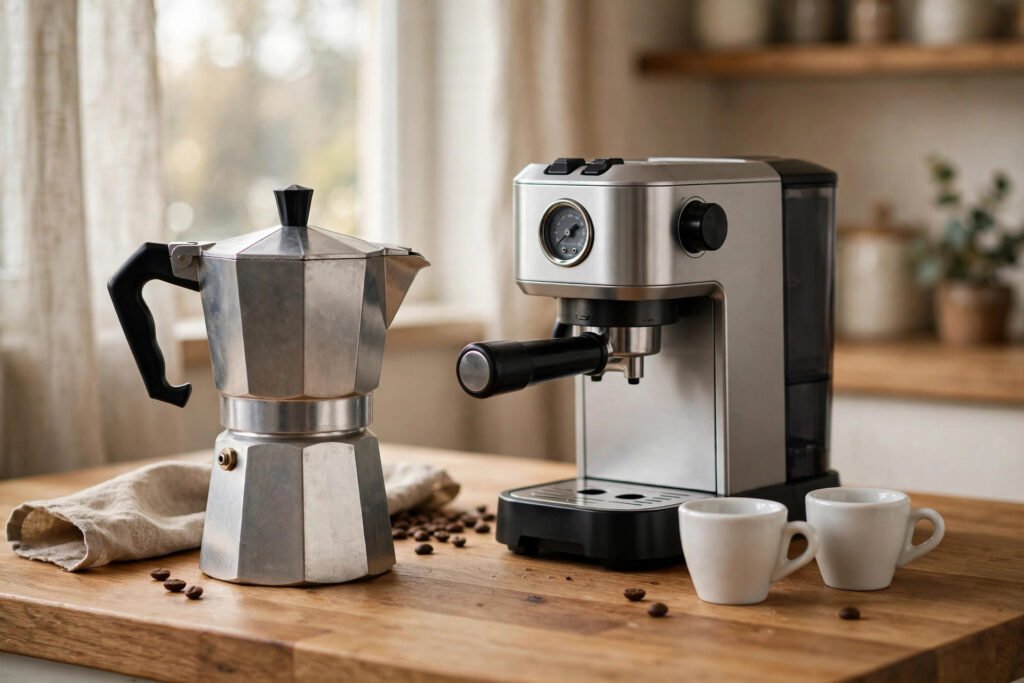
Every home coffee lover hits the same fork in the road: the $35 stovetop icon your grandparents probably owned, or the gleaming machine that promises real café shots at home. If you’re stuck on moka pot vs espresso, you’re asking exactly the right question — because the honest answer isn’t “they’re basically the same.” They aren’t. They’re different drinks, different rituals, and very different price tags, and picking the wrong one is how a $200 machine ends up gathering dust next to a $35 pot that gets used every single morning.
We’ve brewed on both for years — the moka pot on rushed weekday mornings, the espresso machine on slow Sundays. Here’s the full head-to-head: what each one actually is, how they taste side by side, what they really cost, and our no-fence-sitting verdict on which one you should buy.
What a Moka Pot Actually Is
The moka pot is the little octagonal stovetop brewer invented in Italy in 1933 — the Bialetti Moka Express is the one you’ve seen in every stylish kitchen photo ever. It has three parts: a bottom chamber for water, a middle funnel basket for ground coffee, and a top chamber where the brewed coffee collects. Put it on a flame, the water heats, steam pressure (about 1.5 bars) pushes the water up through the grounds, and strong coffee gurgles into the top. The whole ritual takes about five minutes and involves zero electricity.
What it makes is strong coffee — concentrated, bold, intense — but it is not espresso, and anyone who tells you otherwise is selling something. Real espresso needs around 9 bars of pressure; the moka pot manages about a sixth of that. No pressure, no crema, no espresso. What you get instead is its own beautiful thing: a heavy-bodied, old-school-strong cup that Italians have been drinking for ninety years without once apologizing for it.
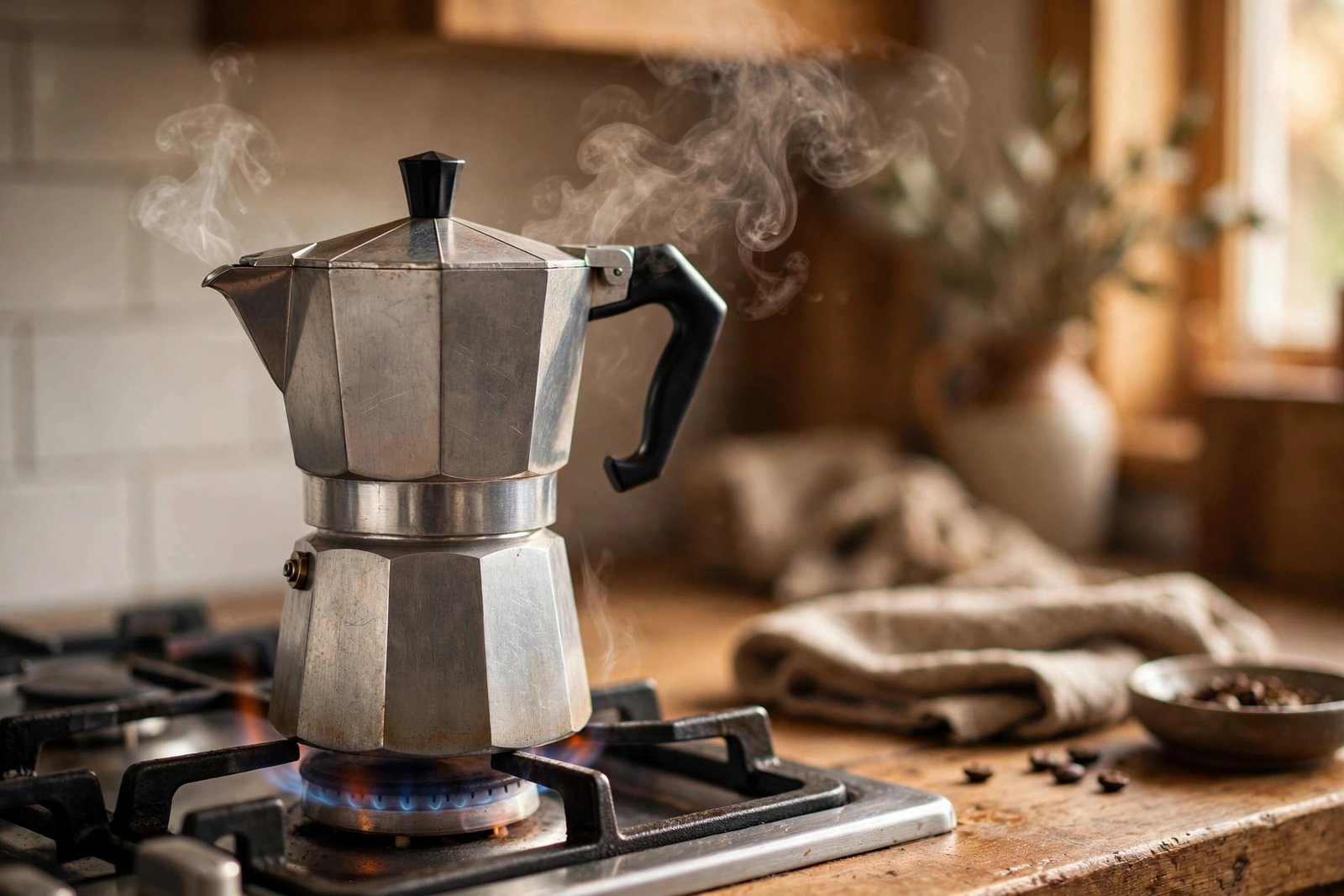
Three parts, one flame, zero electronics.
What Counts as Real Espresso
Espresso is a method, not a bean: finely ground coffee brewed by forcing near-boiling water through it at about 9 bars of pressure for 25–30 seconds. That violence is the whole point — it extracts a small, syrupy, intensely flavored shot crowned with crema, the golden-brown foam that’s essentially the signature of real pressure brewing. One ounce of it has more dissolved flavor than any other coffee format on earth.
The catch is the equipment. Even a decent entry-level machine runs $150–200, and that’s before the grinder — espresso demands a fine, consistent grind a $20 blade grinder can’t produce. There’s a learning curve: dialing in grind size, dose, tamp, and shot timing. The first week is humbling; the second week, when you pull a shot with tiger-striped crema, you understand why people build mornings around it. Our budget espresso machine guide covers machines that pull genuinely good shots without the $500 pain — and our espresso-without-a-machine guide is the honest rundown of what the workarounds can and can’t do.
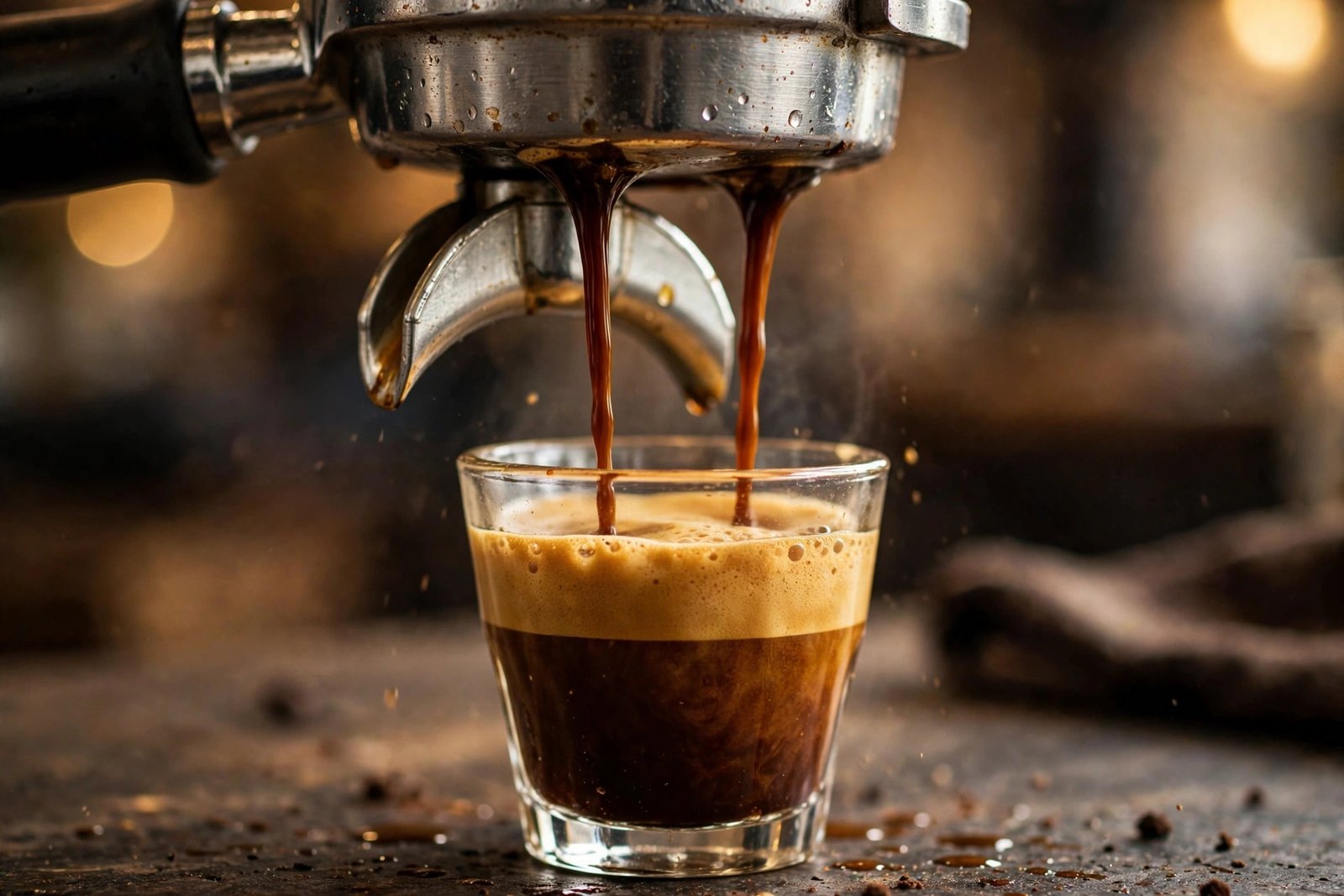
Nine bars of pressure make this — nothing else does.
Moka Pot vs Espresso at a Glance
The short version before we go deep:
| Moka Pot | Espresso Machine | |
|---|---|---|
| Price | $30–40 | $150–500+ |
| Taste | Strong, bold, heavy-bodied — no crema | Rich, syrupy, complex — real crema |
| Ease of use | Dead simple stovetop routine | Real learning curve (grind, tamp, pull) |
| Cleanup | Rinse three parts, done | Daily rinsing + weekly backflush + descaling |
| Best for | Budget-first strong-coffee lovers | Café-quality chasers and milk-drink fans |
Taste: Moka Pot vs Espresso, Side by Side
This is where the moka pot vs espresso debate gets settled honestly. Brew the same beans in both and taste blind: the espresso shot is syrupy and layered — you’ll pick out distinct notes, sweetness up front, a finish that lingers. The crema adds a velvety texture no other method replicates. The moka pot cup is bolder in a blunter way: strong, dark, satisfying, but flatter — one big chord instead of a melody.
Neither is “better” in a vacuum; they’re different pleasures. Black-coffee drinkers who like intensity often genuinely prefer the moka pot’s punch. But if you’ve ever had a great café espresso and thought I want that at home, the moka pot will never scratch that itch — it physically cannot produce crema or that concentrated sweetness. Set your expectations accordingly and you’ll love whichever you choose; expect one to be the other and you’ll be disappointed by both.
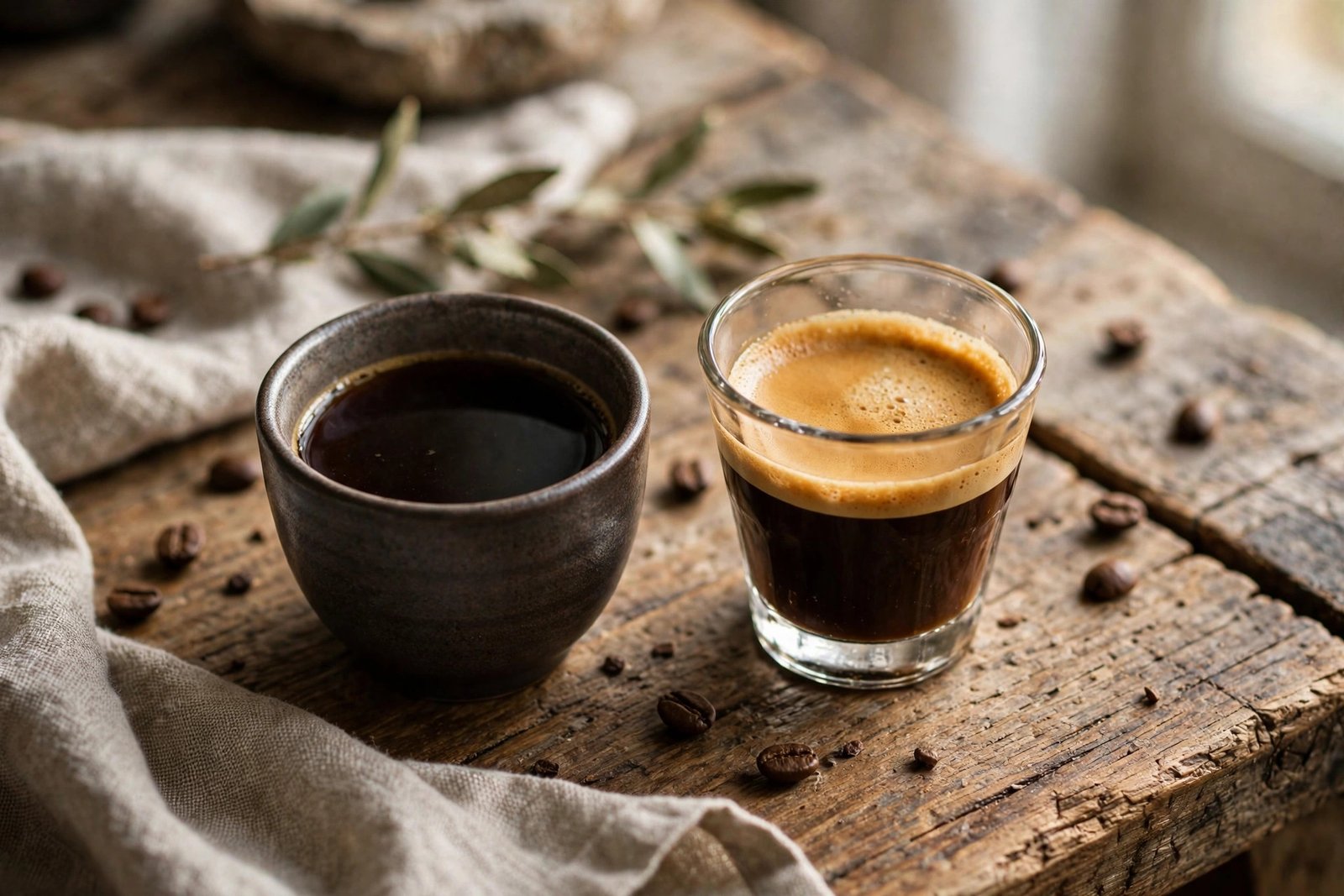
Same beans, different physics, different drink.
Cost: $35 vs $150+ (the Real Math)
A classic 6-cup Bialetti costs about $35 and lasts decades — there are moka pots in daily use older than we are. Total cost of ownership over ten years: $35, plus coffee. That’s it.
A budget espresso machine starts around $150–200, but the machine is only half the purchase. You need a grinder capable of a fine, consistent espresso grind ($50+ for a decent hand grinder), plus descaler, cleaning tablets, and replacement gaskets every year or two. Realistic first-year total: $250–350. The espresso rabbit hole is real, and it is priced accordingly.
Per-cup math favors both over the café — a homemade “latte” runs under a dollar either way versus $5+ at the shop — but the entry tickets aren’t in the same universe. If your budget has a hard ceiling under $100, this section just made your decision: it’s the moka pot, and it’s not close.
Ease of Use and the Learning Curve
The moka pot routine can be taught in one sentence: fill the bottom with hot water to the valve, fill the basket with medium-fine grounds (don’t tamp), screw it together, medium heat, take it off when it gurgles. The only real skill is heat management — too hot and the coffee tastes scorched and bitter. Preheating the water is the one pro move that fixes 90% of bad moka pot cups.
Espresso is a hobby disguised as an appliance. You’ll spend the first week or two pulling sour or bitter shots while you learn grind size, dose, tamp, and timing — every new bag of beans means re-dialing. Plenty of people love this process; it’s genuinely fun once it clicks. But go in clear-eyed: the machine demands patience before it rewards you. If you want great coffee on day one with zero homework, the moka pot wins this round walking away.
Cleanup and Maintenance
Moka pot cleanup is thirty seconds: unscrew, knock out the grounds, rinse all three parts under hot water (no soap — it strips the seasoned patina), air dry. There is nothing to descale, no gaskets to replace annually, no backflushing. The most maintenance-intensive thing you’ll ever do is replace the rubber gasket every couple of years for a few dollars.
Espresso machines are needier. Daily: rinse the portafilter and basket, wipe the steam wand, empty the drip tray. Weekly: backflush with water (and with detergent monthly). Every few months: descale — and if you’ve read our descaling guide, you know that’s a whole ritual. Skip maintenance and the machine punishes you with off flavors and, eventually, repairs. It’s not onerous once it’s habit, but it’s a habit the moka pot never asks you to form.
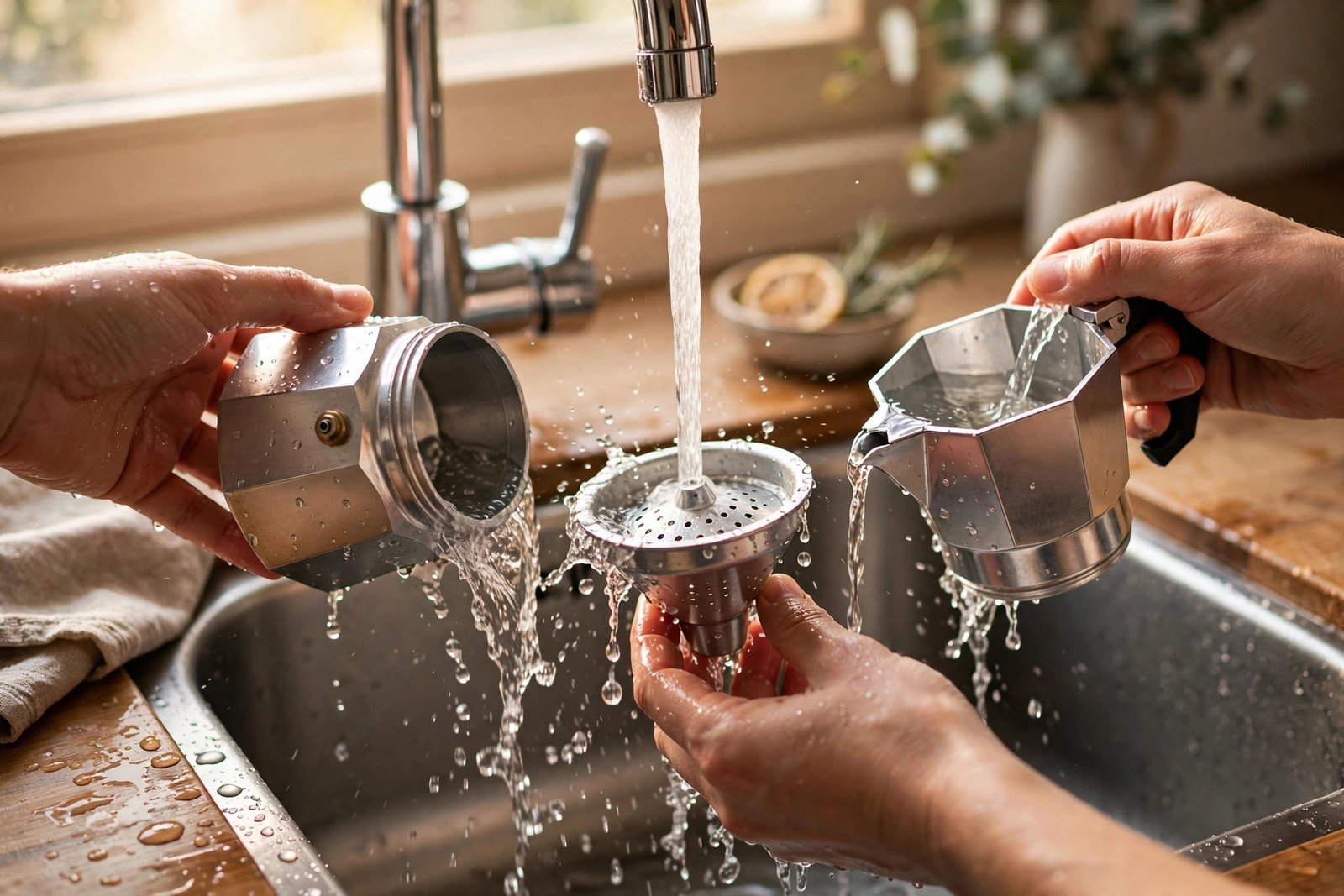
Thirty seconds under the tap. That’s the whole maintenance program.
Milk Drinks: Can a Moka Pot Make a Latte?
The question everyone means: can I skip the machine and still get my morning latte? Honestly? About 80% of the way there. Strong moka pot coffee plus properly frothed milk makes a delicious drink — we’d happily serve it to guests and call it a latte-adjacent triumph. What’s missing is the espresso base: without crema and that concentrated sweetness, it’s a strong milky coffee rather than a true latte.
If milk drinks are your whole personality — daily lattes, cappuccinos, flat whites — the espresso machine earns its keep fast, because steamed milk over real espresso is a combination nothing else replicates. If you mostly drink your coffee black or with a splash of milk, the moka pot covers you completely and the machine’s milk advantage never comes into play.
Who Should Buy Which: The Verdict
We promised no fence-sitting, so here it is — answer one question:
Buy the moka pot if: your budget is under $100; you want strong coffee with zero learning curve; your kitchen is small; you want something that lasts decades and travels well; you drink coffee black or with a splash of milk. At $35, it’s the best value in all of coffee — we’d recommend it to almost everyone as a first brewer, full stop.
Buy the espresso machine if: you’ve tasted real espresso and want that at home — the crema, the syrupy shots, true lattes and cappuccinos; you’re willing to spend $250+ all-in and invest two weeks learning; you enjoy a ritual with dials to turn. It’s a bigger commitment in money, counter space, and patience, and the payoff is café-quality coffee on demand.
Our honest take: these two don’t actually compete — they serve different buyers. The moka pot is the answer to “I want great strong coffee for almost no money.” The espresso machine is the answer to “I want the café experience in my kitchen.” If you’re asking the question, start with the moka pot — it’s $35, it’s fantastic, and if you outgrow it, you’ll buy the machine knowing exactly why. That’s the same head-to-head spirit as our French press vs pour over showdown: pick the brewer that matches your actual mornings, not your aspirational ones.

The $35 setup that punches absurdly above its weight.
Frequently Asked Questions
Is moka pot coffee the same as espresso?
No — and this is the most important thing in the whole moka pot vs espresso conversation. Espresso requires ~9 bars of pressure; a moka pot generates about 1.5. Moka pot coffee is strong, bold, and delicious, but it has no crema and a different extraction profile. Similar intensity, different drink.
Can you make a latte with a moka pot?
You can make a very good approximation: strong moka pot coffee plus steamed or frothed milk. It won’t have the crema-based body of a true latte, but most people find it satisfying — especially at 1/7th the equipment cost.
How much should I spend on my first moka pot?
$30–40 for the classic aluminum Bialetti in the 6-cup size (which makes about 2–3 real mugs). Skip the no-name knockoffs — the gasket and valve quality matters, and the original lasts decades.
Do I need a special grinder for a moka pot?
Nothing fancy — a medium-fine grind, about the texture of table salt. Any decent burr grinder handles it, and pre-ground coffee labeled “espresso grind” actually works well in a moka pot (it’s close to the right size). Espresso machines are far pickier about grind quality.
Which is better for beginners?
The moka pot, by a mile. You’ll make good coffee on your very first try, the routine takes five minutes to learn, and there’s almost nothing to maintain. Start there; graduate to espresso later if the bug bites.
The Bottom Line
Moka pot vs espresso isn’t really a fight — it’s a budget question wearing a taste question’s clothes. The moka pot gives you bold, satisfying strong coffee for $35 and asks nothing in return. The espresso machine gives you the full café ritual — crema, syrupy shots, true milk drinks — for $250+ and two weeks of practice. Buy the brewer that matches the mornings you actually have, and you’ll never regret it. And if this comparison helped you decide, join our newsletter below — every week we put another piece of gear through the same honest head-to-head, so your next purchase is the right one too.
Part of the collection: This guide is part of our Budget Coffee Gear hub — 10 guides to brewing great coffee without spending a lot.