

You do not need a $300 espresso machine to drink like you own one. With a $35 tool — or even gear already sitting in your kitchen cabinet — you can make espresso without an espresso machine: a rich, concentrated shot that holds its own in lattes, cappuccinos, and americanos, for pennies a cup.
One honest note first: true espresso means about 9 bars of pressure forcing hot water through finely ground coffee in 25 to 30 seconds. None of the methods below hit 9 bars, so none produces the thick crema of a café shot. What they do produce is a strong, full-bodied concentrate that behaves exactly like espresso once milk or water goes in — for milk drinks, most people genuinely cannot tell the difference. Below are five methods ranked from closest-to-real to fastest, with costs, steps, and how to pick yours.
What “Real” Espresso Is (and What We Are Making Instead)
It helps to know the target. Real espresso = very finely ground coffee + water at 195–205°F + 9 bars of pressure + a 25–30 second extraction. The pressure extracts intense flavor fast and emulsifies oils into crema, that reddish-gold foam cap.
Our stand-ins work differently. A moka pot uses steam pressure (roughly 1–2 bars). An AeroPress uses hand pressure (around 2 bars). A French press uses none — just a steep. So we trade crema for concentration: less foam on top, plenty of body underneath. Judge these methods by how good your latte tastes, not by staring at the surface of the shot. Keeping that gap in mind is the secret to great espresso without an espresso machine: chase flavor and intensity, not a pressure reading.
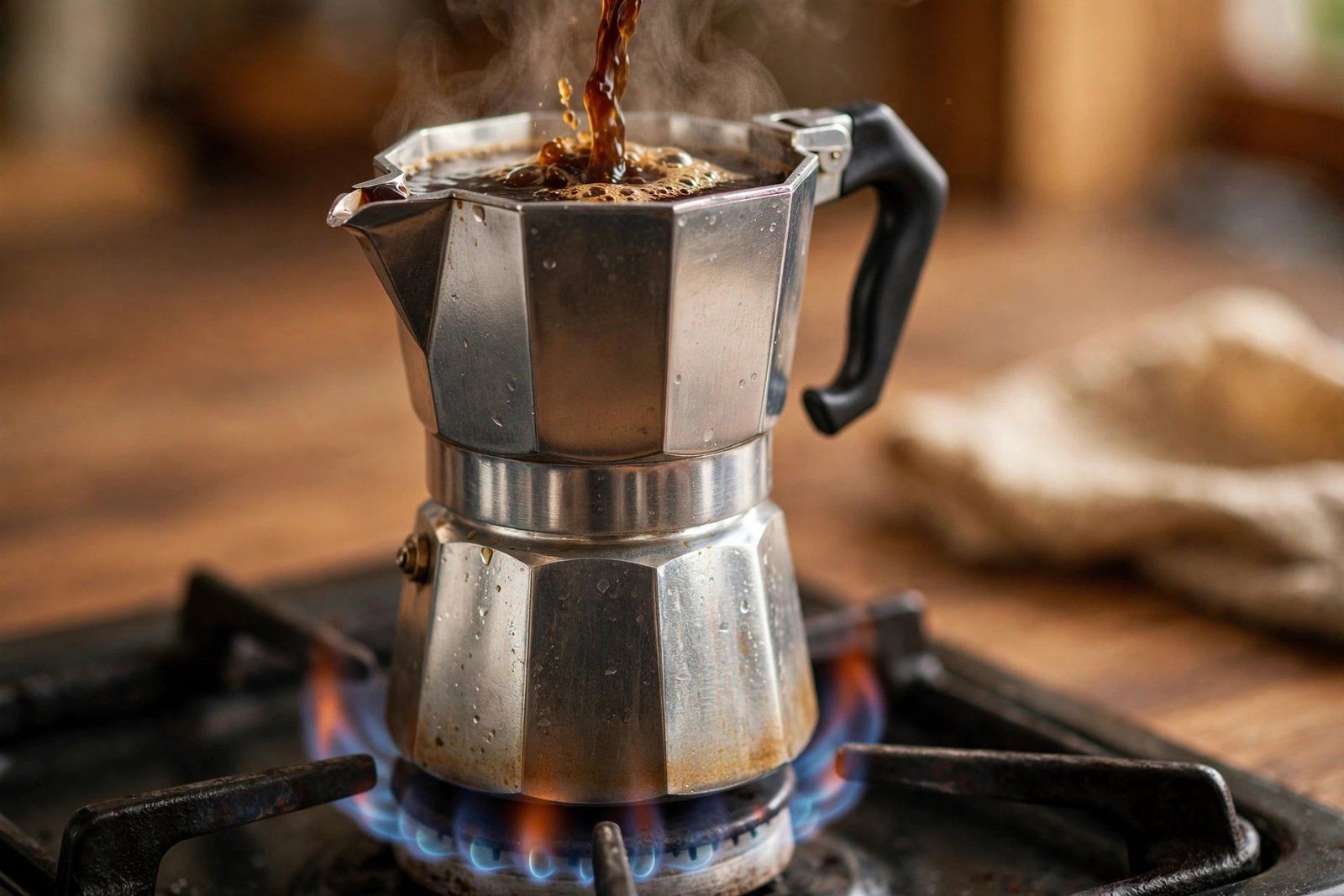
Method 1: Moka Pot — The Closest Thing to Real Espresso
The stovetop classic found in Italian kitchens for nearly a century. Steam pressure pushes hot water up through a bed of grounds, producing a strong, full-bodied brew with a thin layer of crema-like foam. The single closest thing to espresso without a machine — start here.
What you need: a moka pot ($30–60 for the classic 3-cup or 6-cup size — it will last decades), finely ground coffee, and a stove.
- Preheat your water. Boil water in a kettle first, then fill the bottom chamber to just below the safety valve. Starting hot keeps harsh, “cooked” flavors out of the cup.
- Fill the basket — do not tamp. Grind your coffee fine, about like table salt (slightly coarser than true espresso grind). Fill the filter basket loosely and level it off with your finger. Never press it down: tamping can block the flow and force pressure past the safety valve, which is both dangerous and bitter.
- Assemble and heat low. Screw the top on snugly and place the pot over medium-low heat, with the handle away from the flame.
- Listen, then pull it. Coffee will start flowing into the top chamber within a few minutes. The moment you hear sputtering and gurgling, take the pot off the heat immediately — that sound means the water is nearly gone and the last steam will scorch everything.
- Pour and use right away. A 6-cup pot yields roughly four 2-ounce servings. Drink it straight or build it into any drink below.
Pro tips: a darker roast gives the most espresso-like body. Rinse an aluminum pot with hot water only (no soap). If your brew tastes bitter, your heat was too high or you left it gurgling too long — go lower and pull earlier next round.
Method 2: AeroPress — The Easiest and Most Forgiving
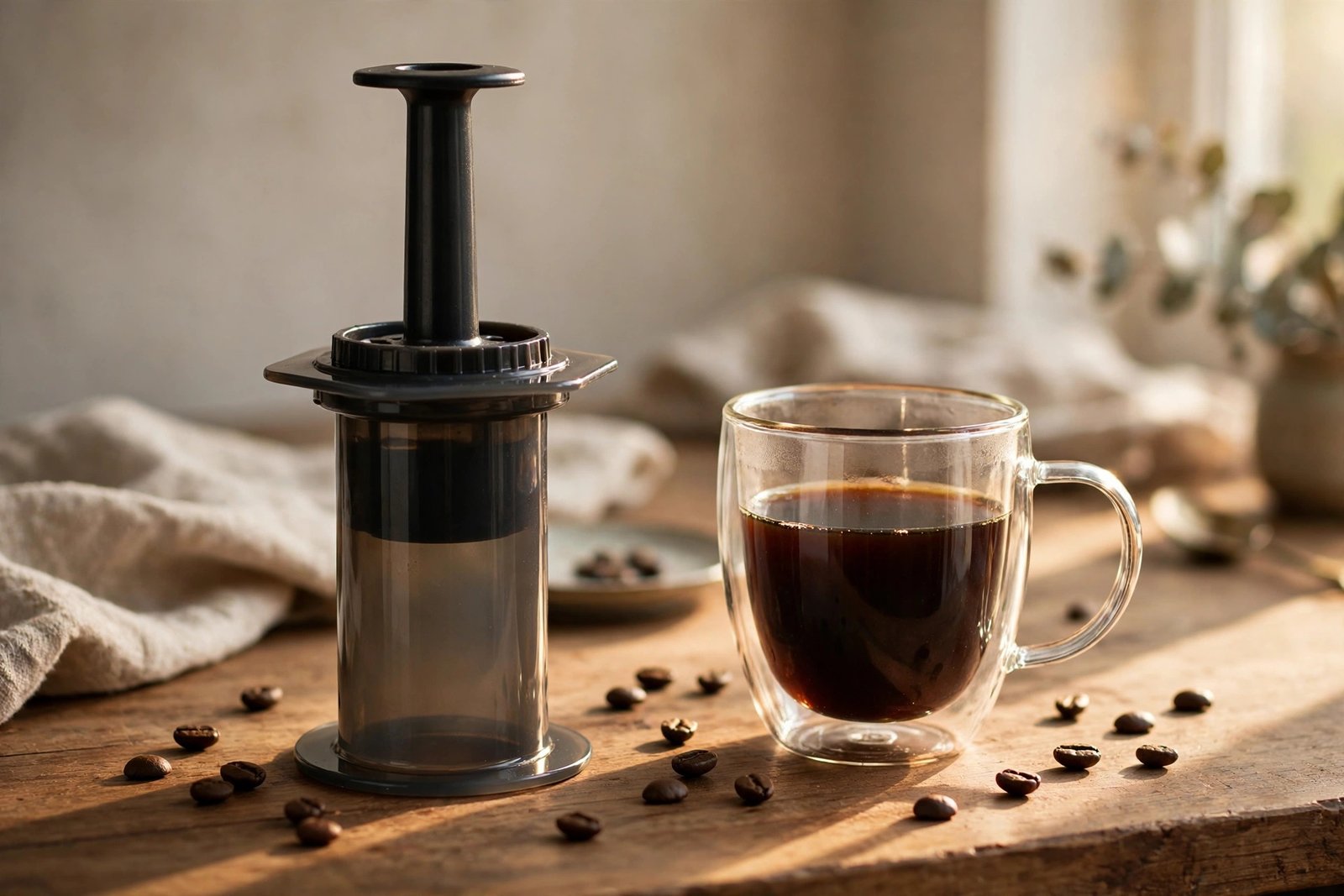
The AeroPress will not give you crema, but it makes an exceptionally clean, smooth, low-bitterness concentrate — and it is nearly impossible to mess up. It is also the best traveler of the bunch: light, unbreakable, ten-second cleanup.
What you need: an AeroPress ($35–45), paper micro-filters (included), finely ground coffee.
- Set up inverted. Flip the AeroPress upside down (plunger at the bottom, open chamber on top) and set it on the counter. Rinse a paper filter in the cap and set the cap aside.
- Add coffee. Add 15–18 grams of finely ground dark roast — about 2 rounded tablespoons.
- Add water and steep. Pour in about 2 ounces (60 ml) of water just off the boil (around 200°F). Stir for a few seconds, then let it steep for 60–90 seconds.
- Flip and press. Screw on the filter cap, flip the whole thing onto your mug, and press down slowly and firmly over about 30 seconds. Stop when you hear hissing.
- Serve. You now have 1.5–2 ounces of dark, smooth concentrate — drink as a shot, add hot water for an americano, or add milk for a latte.
Why people love it: the paper filter removes sediment and much of the bitterness, so the result tastes cleaner than moka pot coffee. It is also the most forgiving method here: grind a little off, steep a little long, and it still tastes good.
Method 3: French Press Concentrate — The $0 Method
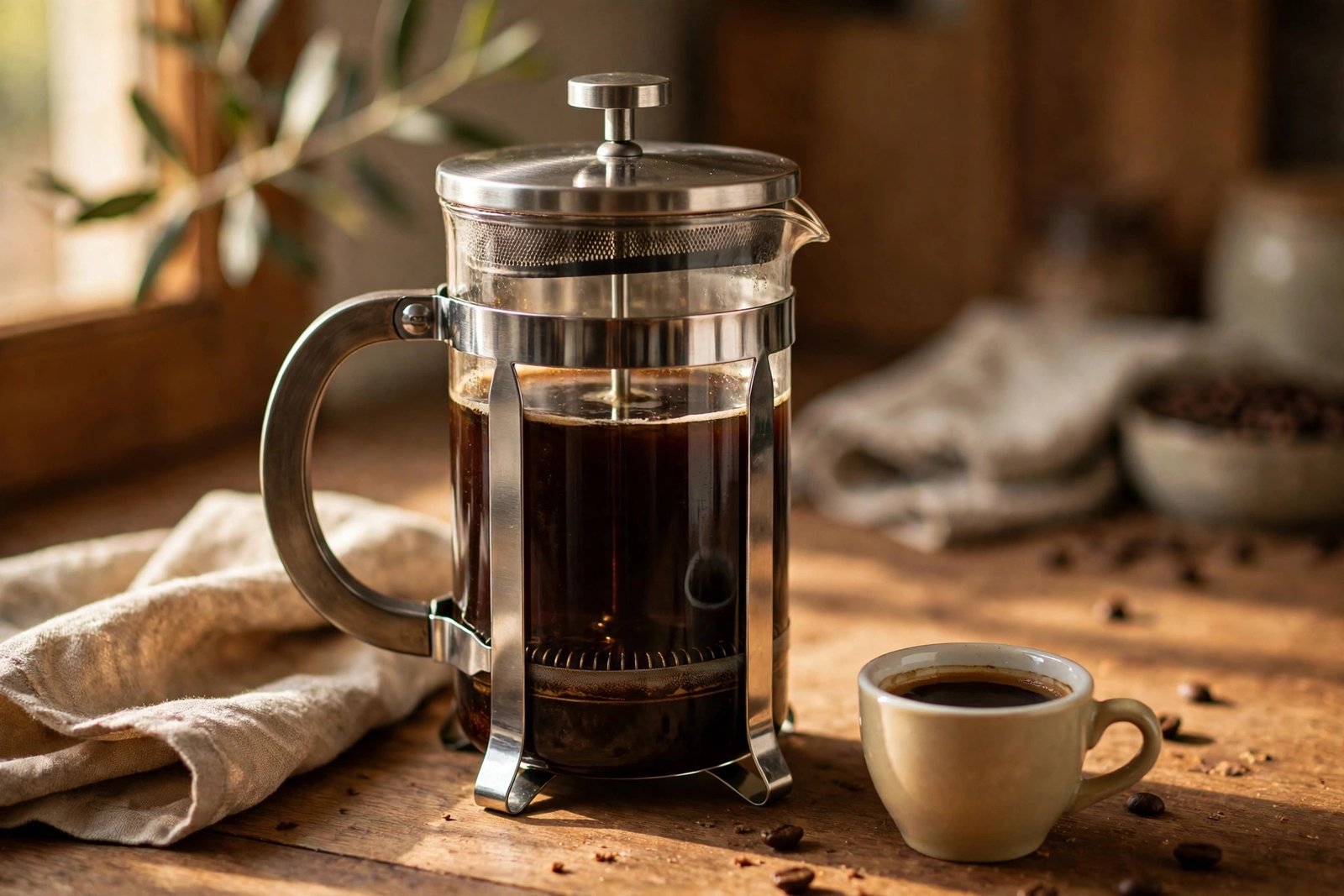
Already own a French press? You already own an espresso substitute. The trick is ratio: use about twice the coffee and half the water of a normal brew.
What you need: a French press (free if you own one), finely ground coffee.
- Overdose the grounds. Add 2 tablespoons of finely ground coffee per 4 ounces of hot water — roughly double your usual ratio.
- Steep 4 minutes. Pour water just off the boil, stir, and let it sit with the lid on (plunger up).
- Press slowly. Push the plunger down gently and pour immediately so it does not keep extracting.
- Optional: double-brew it. For maximum intensity, take that brewed coffee and brew it a second time with fresh grounds. The second pass picks up even more body — this is the strongest cup a French press can make.
Trade-offs: expect more sediment and a heavier cup than the moka pot or AeroPress. But in a milky latte with syrup, the difference shrinks to almost nothing — and the price is unbeatable.
Method 4: Manual Espresso Makers — The Real-Deal Middle Ground
Here is the open secret of the budget espresso world: hand-lever manual makers genuinely produce 9 bars of pressure — real espresso, with real crema — using nothing but arm power. No electricity, no pump, no $500 machine.
Devices in this category use a lever to force hot water through a puck of finely ground coffee — real 9-bar extraction, no pump, no boiler. The learning curve is real (grind, dose, and lever technique all matter), and they make one or two shots at a time. But the cup is the genuine article.
Cost: entry-level manual levers start around $150–200 — more than a moka pot, far less than any decent electric machine. If espresso is your daily drink and you want true crema, this is the smartest upgrade path — but compare it against electrics in our best budget espresso machines under $200 guide first.
Method 5: Instant Espresso Powder — The 60-Second Shortcut
Not glamorous, but honest: 2 teaspoons of instant espresso powder dissolved in 2 tablespoons of hot water gives you an intense coffee base in under a minute. It will never fool an Italian, but stirred into hot milk with homemade vanilla syrup, it makes a perfectly serviceable morning latte when you are out of beans or out of time.
Use actual instant espresso powder (finer and more intense than regular instant coffee) for the best result. And if you enjoy playing with instant coffee, our dalgona whipped coffee recipe turns the same pantry staple into a café showpiece.
Espresso Without an Espresso Machine: Which Method Should You Choose?
- Closest taste to real espresso → Moka pot. Most body, a whisper of crema, and a stovetop ritual people genuinely enjoy.
- Easiest and most forgiving → AeroPress. Best if you are new to this, hate bitterness, or brew where a stove is not an option.
- Cheapest (already own it) → French press concentrate. Zero new gear; totally fine in milk drinks.
- Want actual espresso with crema → Manual lever maker. The only option here that meets the technical definition, at a fraction of machine prices.
- Fastest → Instant espresso powder. Sixty seconds, one spoon, no equipment.
The Grinder Matters More Than the Method
Here is the advice that saves more bad coffee than any brewer ever will: put your money into the grind before the gear. Espresso-style brewing punishes uneven grounds — big chunks under-extract (sour) while dust over-extracts (bitter), and no method can fix that split.
- A burr grinder beats a blade grinder, every time. Blade grinders chop randomly; burr grinders crush uniformly. You do not need to spend much — our best budget coffee grinders under $50 guide has solid picks that handle fine espresso-style grinds.
- Grind fresh, grind fine. Coffee starts losing aroma within minutes of grinding. For these methods, aim for table-salt fineness (moka pot, AeroPress, French press concentrate) — and grind right before brewing.
- Pre-ground “espresso” works in a pinch. The fine grind sold as espresso in grocery stores suits moka pots as much as machines. It stales fast, so buy small bags and use them within two weeks of opening.

Turn Your Shots Into Café Drinks
A concentrated shot is a building block. The simple math for the classics:
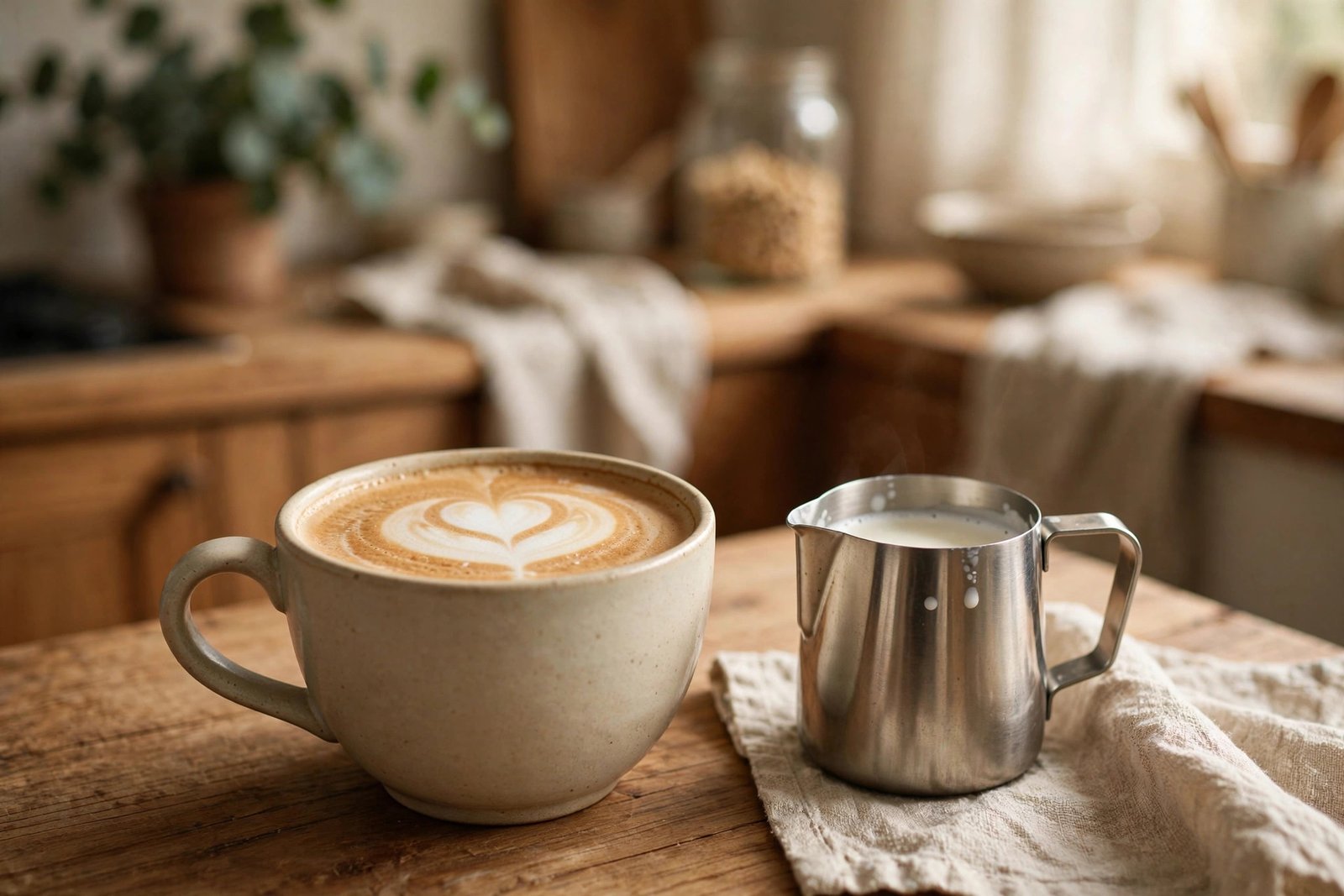
- Latte: 1 part shot + 3 parts steamed milk, thin foam cap. Sweet, mellow, endlessly customizable.
- Cappuccino: 1 part shot + 1 part steamed milk + 1 part thick foam. Stronger coffee flavor, drier texture.
- Americano: 1 part shot + 2 parts hot water. The best way to taste what your method actually produced.
- Iced latte: 1 part shot + cold milk over a full glass of ice. Stir well — the layers look great but taste better mixed.
For milk texture without a steam wand, a $15–25 handheld frother gets you shockingly close — see our budget milk frother guide. For café-menu flavor, stir in homemade caramel syrup or cinnamon dolce syrup.
6 Mistakes That Ruin Stovetop Espresso
- Tamping the moka pot basket. Pressing the grounds down restricts flow and can force pressure past the safety valve. Fill loosely, level gently, never tamp.
- Leaving it on the heat through the gurgle. That sputtering means the water is gone and steam is now scorching your coffee. Pull the pot the instant it starts.
- Blasting high heat to “speed it up.” High heat scorches the grounds into a harsh, metallic cup. Medium-low is the sweet spot.
- Grinding wrong for the method. Too coarse = weak and watery; powder-fine in a moka pot = a choked pot. Table salt is your reference point.
- Using stale pre-ground coffee. Ground coffee stales within days of opening. If every shot tastes flat, buy smaller bags or grind fresh.
- Judging by crema alone. These methods will never crown your cup like a $500 machine. Taste the latte, not the foam.
FAQs
Can you make real espresso without an espresso machine? Technically, no — real espresso needs roughly 9 bars of pressure, which only a pump machine or manual lever maker produces. But a moka pot or AeroPress makes an espresso-style concentrate that works identically in lattes, cappuccinos, and americanos.
Which method tastes most like real espresso? The moka pot, by a clear margin. Its steam pressure and metal filter produce the heaviest body and the closest flavor to a café shot.
Moka pot vs AeroPress — which should I buy? Pick the moka pot for maximum intensity and a stovetop ritual; pick the AeroPress for the easiest cleanup, less bitterness, and travel. At $30–45 each, many coffee lovers eventually own both.
Can I use regular pre-ground coffee for these methods? Yes — coffee labeled “espresso grind” works well in moka pots and AeroPress brewers. For the best flavor, grind whole beans fresh; pre-ground coffee loses aroma quickly once opened.
How much caffeine is in a moka pot “shot”? A 2-ounce serving lands around 100–150 mg — roughly comparable to a double shot of café espresso. If you are caffeine-sensitive, treat these like the real thing.
Is a manual espresso maker better than a cheap electric machine? For true espresso flavor, usually yes. Cheap electrics (under ~$150) often use pressurized baskets that fake crema without real extraction, while a manual lever produces genuine 9-bar shots. Compare both in our budget espresso machine guide.
Conclusion
Espresso without an espresso machine is not a compromise — it is a cheaper door into the same drinks. A $35 moka pot, a $40 AeroPress, or the French press you already own can all produce the concentrated, full-bodied base that great lattes are built on. Grind fresh and fine, pull the pot off at the first gurgle, and judge the result in milk, not by the crema.
Pick one method this week, pull your first stovetop shot, and build it into your favorite café drink at home — then tell us which method earned a permanent spot on your counter. That is the real win of espresso without an espresso machine: café drinks at home prices, no $300 machine required.
Keep Brewing
- Best Budget Espresso Machines Under $200 (2026)
- Best Budget Coffee Grinders Under $50 (2026 Guide)
- Best Budget Milk Frothers for Café Foam at Home
- Dalgona Whipped Coffee Recipe (Easy, 4 Ingredients)
Part of our Easy Coffee Recipes collection — five no-gear drinks you can make with what’s already in your kitchen.