
Brew and Beam is reader-supported. When you buy through links on our site, we may earn an affiliate commission.
Learning how to descale a coffee maker is the highest-ROI maintenance in your kitchen: thirty minutes, about fifty cents of vinegar, and your machine brews hotter, faster, and better-tasting than it has in months. If your coffee has been tasting flat, bitter, or just vaguely “off” — and the beans are fresh — scale buildup is the prime suspect. This guide covers exactly how to descale a coffee maker with vinegar, step by step, for drip machines, Keurig-style brewers, and espresso machines, plus how often to do it and the mistakes that cause the infamous vinegar aftertaste.
You don’t need a special descaling solution. The $8 bottle works fine, but plain white vinegar does the same job for pennies — you just have to rinse properly. That’s the whole secret, and it’s the part most guides rush past.
What Is Descaling (and Why Your Coffee Tastes Off)
Every time you brew, minerals in your water — mostly calcium and magnesium — deposit a thin layer of limescale on the machine’s heating element and internal tubing. In hard water areas this happens fast; in soft-water areas it just happens slower. Nobody escapes it — which is why learning how to descale a coffee maker is essential.
Scale hurts you three ways. First, temperature: scale insulates the heating element, so water never quite reaches brewing temperature — under-extracted, sour-leaning coffee. Second, flow: narrowed tubes mean slower, uneven brewing. Third, flavor: old scale harbors stale coffee oils that go rancid and taint every pot. The symptoms — lukewarm coffee, a machine that gurgles and takes forever, bitterness that wasn’t there when the machine was new — are all the same disease.
How to Descale a Coffee Maker: The Short Version
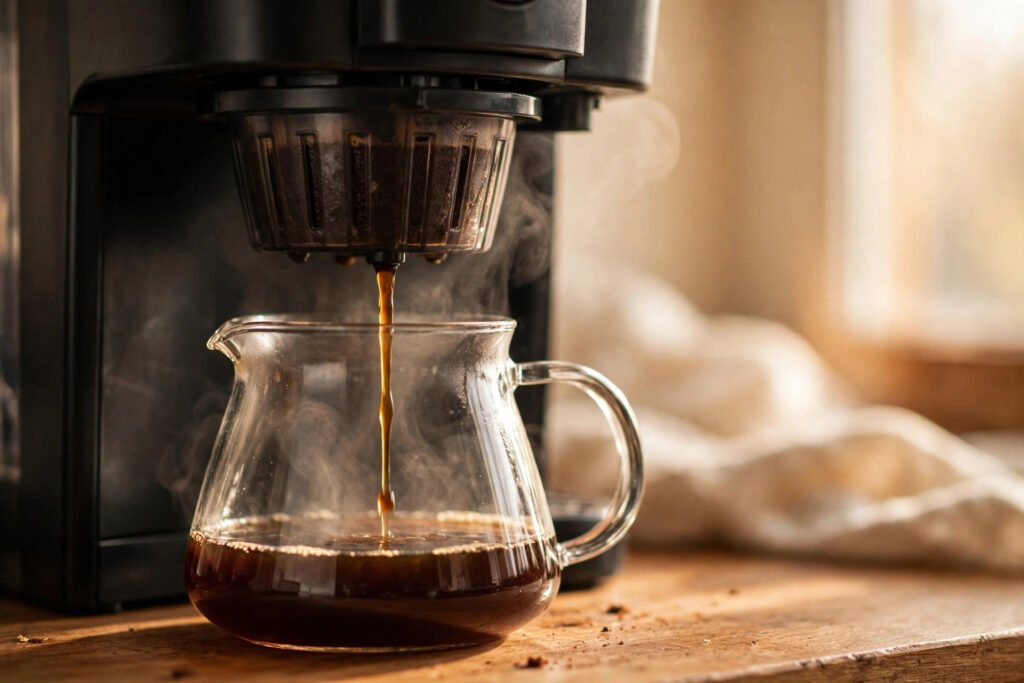
If you read nothing else: fill the reservoir with equal parts white vinegar and water, run half a brew cycle, pause 30 minutes, finish the cycle, then run two full cycles of plain water. That’s how to descale a coffee maker with vinegar in one paragraph, and it works for nearly every drip machine ever made. The rest of this guide is the detail: Keurig differences, espresso machine cautions, frequency, and how to avoid the vinegar taste people complain about.
How to Descale a Coffee Maker: What You’ll Need
- Distilled white vinegar — 2–4 cups depending on reservoir size. Plain white only: no apple cider, no balsamic, no “cleaning vinegar” with added scents.
- Fresh water — for the vinegar mix and the rinse cycles.
- A paper filter — to catch the loosened gunk during the descale cycle.
- 30–45 minutes — mostly waiting while the vinegar soaks.
That’s it. No special products, no tools, no disassembly.
How to Descale a Coffee Maker with Vinegar: Step-by-Step
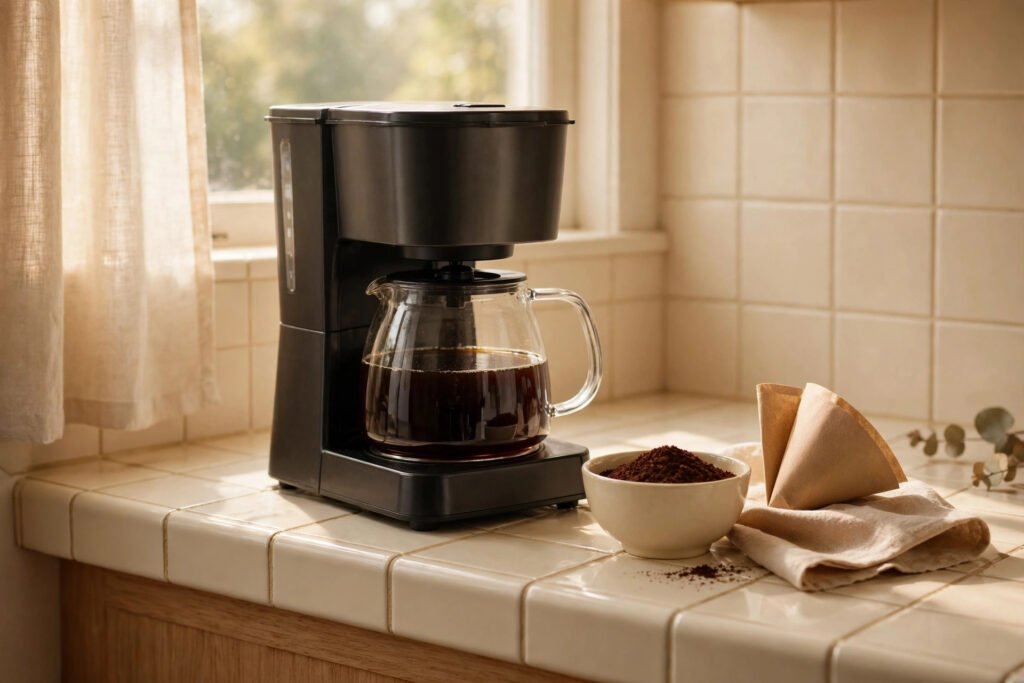
- Empty and rinse. Dump any old coffee, remove the used filter and grounds, and give the carafe a quick rinse. Put a fresh empty paper filter in the basket — it catches the scale flakes the vinegar loosens.
- Mix 1:1 vinegar and water. Fill the reservoir halfway with white vinegar, then top it up with fresh water. A 12-cup machine takes about 4 cups of each; scale down for smaller reservoirs.
- Run half a cycle, then pause. Start a brew cycle and let it run until about half the reservoir has cycled through — then turn the machine OFF. This is the critical step: the hot vinegar now sits inside the machine, dissolving scale, instead of just flushing through.
- Soak 30 minutes. Let the paused machine sit for 30 minutes (an hour for a machine that’s never been descaled). The acetic acid needs contact time to dissolve mineral deposits — rushing this step is the number one reason descaling “doesn’t work.”
- Finish the cycle. Turn the machine back on and let the rest of the vinegar solution brew through. You’ll often see discolored water and flakes in the carafe — that’s the scale leaving. Good.
- Dump, rinse, repeat with water — twice. Discard the vinegar water, rinse the carafe, refill the reservoir with plain fresh water, and run two complete brew cycles. See the next section — this step is non-negotiable.
How to Descale a Coffee Maker: Don’t Skip the Rinse Cycles
The infamous “my coffee tastes like pickles” complaint comes from exactly one cause: skimping on rinsing. Vinegar clings to internal tubing, and one quick rinse doesn’t clear it. Two full reservoirs of plain water, brewed completely through, is the minimum. If you’re sensitive to the smell, make it three — water is free.
Quick test before you brew coffee: smell the steam from the second rinse cycle. If you catch any vinegar sharpness at all, run one more. Your nose is more sensitive than any timer.

How to Descale a Coffee Maker: Keurig and Single-Serve Brewers
The method is the same with two adjustments. First, remove any water filter cartridge before descaling — vinegar will ruin it, and you’ll descale the filter instead of the machine. Second, run the descale as a series of large-cup brews (no pod) rather than a full carafe cycle: brew, pause, soak, repeat until the reservoir is empty, then rinse with plain-water brews until the vinegar smell is gone. Keurig’s own descaling light, if your model has one, is just a timer — it can’t tell whether you actually descaled, so don’t treat it as a diagnosis.
How to Descale a Coffee Maker: Espresso Machines
Vinegar works on espresso machines too, but with more caution: run the 1:1 solution through the brew group (not the steam wand), soak 20 minutes rather than 30, and rinse thoroughly — three plain-water cycles minimum, since espresso’s small water pathways hold onto vinegar flavor. If your machine cost real money, check the manual first: some manufacturers void warranties over vinegar and specify citric-acid descalers instead. Our budget espresso machine guide notes which popular models are vinegar-safe. When in doubt, a $8 bottle of citric-acid descaler is cheap insurance.
How to Descale a Coffee Maker: How Often Is Enough?
- Hard water: every 1–2 months. If your kettle furs up fast, your coffee maker does too.
- Average tap water: every 3 months. Set a calendar reminder — “I think it was recently” is how machines go two years.
- Filtered or soft water: every 6 months. Filtering slows scale dramatically but doesn’t stop it.
- Heavy use (multiple pots daily): halve all the intervals above.
Two habits stretch the interval: brewing with filtered water (fewer minerals in, less scale out) and never leaving water sitting in the reservoir for days — stagnant water deposits faster. Neither replaces descaling; both make it less frequent.

The First Brew After You Learn How to Descale a Coffee Maker
Here’s the payoff: brew a pot of the good stuff right after descaling — ideally beans you know well. Most people taste the difference immediately: hotter, cleaner, more defined flavors, none of the muddiness that crept in over months. If you keep your beans fresh too (our bean storage guide covers that half of the equation), the combination is the closest thing to a free equipment upgrade in coffee.
Want to quantify the improvement? Dial in the fresh pot with our free coffee-to-water ratio calculator — clean machine plus right ratio is the one-two punch. And if you’re brewing drip daily, our budget drip maker guide and French press vs. pour over comparison will tell you whether your machine is even worth descaling — or due for an upgrade. A clean grinder matters just as much, by the way: see our budget grinder picks.

How to Descale a Coffee Maker: 5 Mistakes to Avoid
- Skipping the soak. Running vinegar straight through without pausing just makes expensive salad dressing. The 30-minute soak does the actual work.
- One rinse cycle. Minimum two full plain-water cycles. Pickle-coffee is a rinsing failure, not a vinegar failure.
- Using fancy vinegar. Apple cider, wine, balsamic — all leave their own flavors and cost more. Plain distilled white only.
- Descaling with the water filter in. You’ll destroy the cartridge and descale nothing. Remove it first, replace after.
- Never descaling at all. The machine that “still works fine” is brewing at 170°F through half-clogged tubes. It doesn’t know what it’s missing — but you will, after the first descale.
How to Descale a Coffee Maker: Frequently Asked Questions
How do you descale a coffee maker without vinegar?
Citric acid is the best alternative: 1–2 tablespoons per quart of water, same soak-and-rinse method, no lingering smell at all. Commercial descaling solutions are mostly citric acid with a markup. Lemon juice works in a pinch but can leave its own residue — citric acid powder (sold in canning aisles) is cleaner.
Can I run vinegar through a Keurig?
Yes — that’s exactly how to descale a coffee maker like a Keurig at home. Remove the water filter cartridge first, run 1:1 vinegar-water as large-cup brews with soaking pauses, then rinse with plain-water brews until no vinegar smell remains. Never use vinegar in a Keurig with the charcoal filter still installed.
Is descaling with vinegar safe for all coffee makers?
For drip machines, essentially yes. For espresso machines, check the manual — some manufacturers specify citric-acid descalers and may tie warranty coverage to it. For anything with aluminum boilers (some moka pots and older machines), keep vinegar contact brief; prolonged acid exposure can pit aluminum.
Why does my coffee taste like vinegar after descaling?
Under-rinsing, always. Run two more full plain-water cycles. If the taste persists, the vinegar may have loosened old coffee oils rather than mineral scale — in that case, brew one throwaway pot with fresh grounds (which absorb residual odors) before your real pot.
The Bottom Line on How to Descale a Coffee Maker
Knowing how to descale a coffee maker with vinegar comes down to one formula: 1:1 vinegar and water, half-cycle, 30-minute soak, finish, rinse twice. Thirty minutes and fifty cents, two to four times a year, and your machine brews hotter, faster, and cleaner-tasting indefinitely. It’s the cheapest performance upgrade in your kitchen — cheaper than new beans, cheaper than a new machine, and most coffee drinkers have never done it once.