

This guide is part of our budget coffee gear collection.
Pour-over coffee lives or dies on control. The dripper and the beans get all the attention, but the quiet hero is the kettle — because a regular spout dumps water in an unpredictable glug, while a gooseneck’s thin, curved spout lets you pour a slow, precise spiral exactly where you want it. That control is the difference between an even extraction and a cup that’s sour and bitter at the same time.
The good news: you don’t need a $150 designer kettle. Below are the four best budget gooseneck kettles compared — real products, from classic stovetop workhorses to variable-temperature electrics — with honest pros, cons, and who each suits, plus why the gooseneck matters and the temperature basics that make it worth it. Prices move with sales, so we use ranges.
Why a Gooseneck Changes Your Pour-Over
A gooseneck kettle’s long, narrow, S-curved spout does two things a normal kettle can’t. First, it restricts flow: water exits as a thin, steady stream instead of a surge, so you can add water slowly and keep the coffee bed undisturbed. Second, the curve gives you leverage — tiny wrist movements translate into precise pour placement, which is exactly what pour-over recipes demand when they say “pour in slow concentric circles.”
Does it matter for other methods? For a French press or a drip reservoir, no — any kettle that boils works. But the moment you pick up a V60, Chemex, or Kalita Wave, the gooseneck stops being a nice-to-have. It’s the tool the method was designed around.

Best Budget Gooseneck Kettles: What to Look For
Budget gooseneck kettles all pour thin streams, but the details below decide which one you’ll still love in a year:
- Stovetop vs. electric. Stovetop kettles are cheaper and last forever, but you heat them on the burner and guess (or measure) the temperature. Electric kettles heat faster and many hold a set temperature — real convenience for daily brewers.
- Temperature control. Coffee brews best at 195–205°F. Variable-temp electrics dial that in exactly; stovetop kettles need a thermometer or a 30–60 second rest off the boil. Precision matters most for light roasts.
- Capacity. 0.8–1.0 liters is the sweet spot: enough for two generous mugs, small enough to stay balanced and pour precisely. Bigger kettles get heavy and wobbly at the end of the pour.
- Pour control. A well-designed spout gives a smooth, laminar stream even when nearly empty. Cheaper kettles can sputter or dribble as the water level drops.
- Handle comfort and balance. You’ll hold a full kettle of near-boiling water over a dripper daily. A cool-touch handle and a balanced body are safety features, not luxuries.
- Build quality. Stainless steel is the standard — durable, neutral-tasting, easy to clean. Thin metal dents; look for solid construction and a lid that seats firmly.
The golden rule of gooseneck kettles: the kettle serves the pour, and the pour serves the coffee. Even the finest kettle can’t save stale beans — but with fresh coffee and a decent budget grinder, it’s the upgrade that makes pour-over click.
Temperature Basics
Water temperature is the hidden variable in pour-over. Here’s the short version:
- The target zone is 195–205°F (90–96°C). Hotter water extracts faster and brighter; cooler water extracts slower and sweeter. Most medium roasts shine around 200–203°F.
- Light roasts like it hotter. Dense, lightly roasted beans need 205–208°F to open up — this is where a variable-temp kettle earns its keep.
- Dark roasts like it cooler. 195–200°F keeps dark roasts smooth instead of ashy and bitter.
- No thermometer? Bring water to a full boil, then wait 30–60 seconds off the heat — roughly the zone. Imprecise, but better than pouring straight off a rolling boil.
- Consistency beats perfection. The exact degree matters less than hitting the same temperature every brew. Repeatable beats optimal.
The Reviews
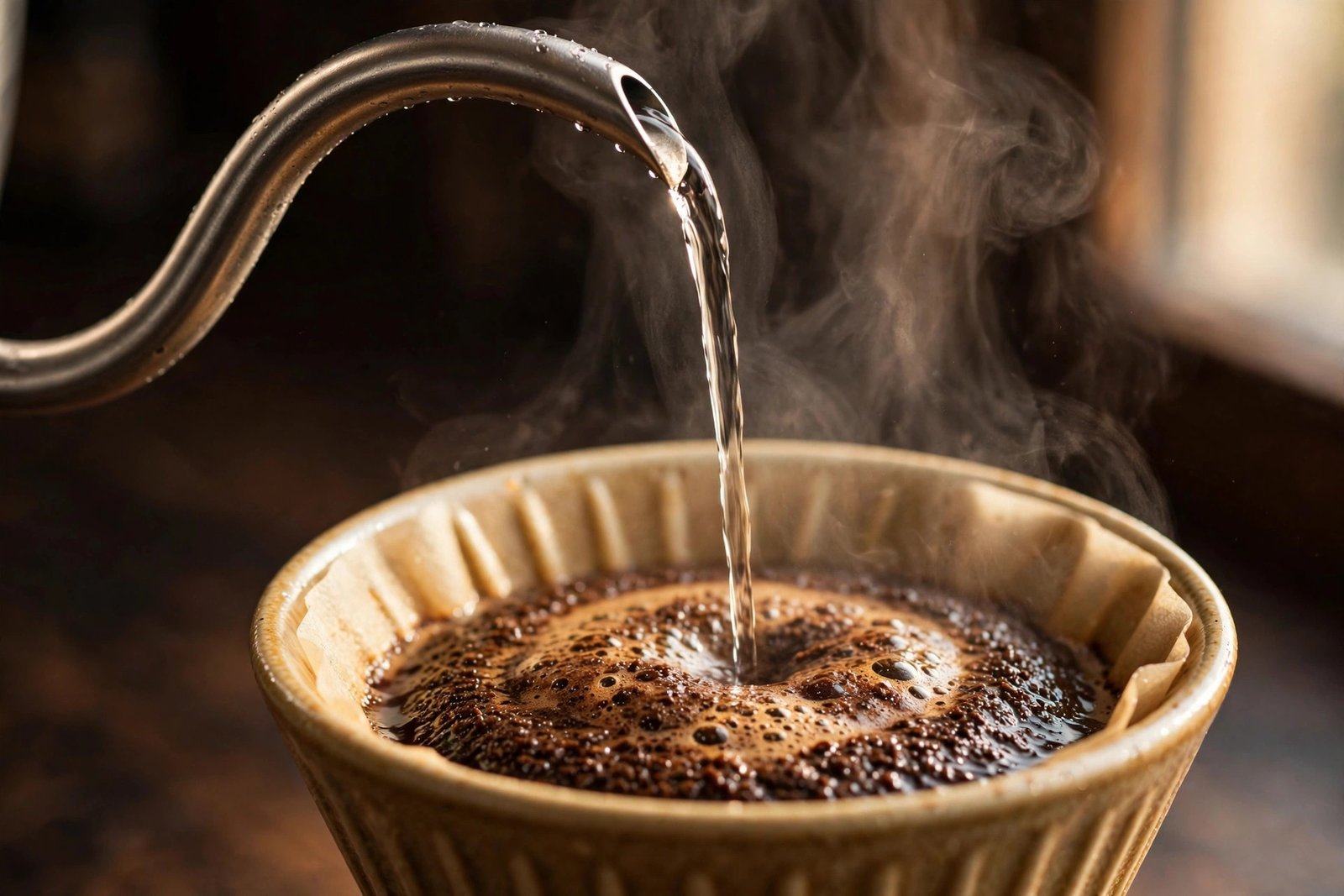
1. Hario V60 Buono (1.2L) — Best Overall Budget Pick
The Buono is the kettle that taught a generation to pour over. Hario — the Japanese company behind the V60 dripper — designed this stovetop gooseneck with a slim spout that produces one of the smoothest, most controllable streams in coffee. The reference kettle against which all others are judged, for less than a week of café lattes. See the current lineup on Hario’s official US site.
Pros:
- Usually $50–$60 — the classic for the price of two bags of good beans
- Superb pour control: the thin spout gives a precise, steady stream even at low water levels
- 1.2L capacity handles two big mugs with room to spare
- Slim, beautiful design that looks right on any stove
- Simple stainless steel build with no electronics to fail — lasts for years
Cons:
- Stovetop only: no temperature control, so you’ll want a thermometer or the boil-and-wait method
- Heats slower than electric, especially on a weak burner
- The handle can get warm during a long heat — use a mitt if your stove runs hot
- 1.2L of water gets heavy; the last pours of a full kettle need a steady wrist
Best for: Pour-over purists and minimalists. If you want the kettle every barista learned on, at a price that leaves room in the budget for better beans, this is it.
2. Bodum Melior Gooseneck Kettle — Best Cheap Stovetop
The Bodum Melior is the budget stovetop that proves you don’t need $50+ for a proper gooseneck — a straightforward stainless steel kettle with a cork-accented handle and a well-shaped spout, usually $35–$50. The cheapest real gooseneck worth buying.
Pros:
- Usually $35–$50 — the lowest price of any kettle on this list
- Genuinely good pour control for the money; the spout shape is well thought out
- Cork handle detail stays cool and looks great
- Works on gas, electric, and induction stovetops
- Light and easy to handle when full
Cons:
- Smaller 27oz (0.8L) capacity — fine for one or two cups, tight for a crowd
- Thinner steel than the Hario; dents more easily if knocked around
- No temperature control (stovetop), same thermometer-or-wait routine as the Buono
- The lid fit is merely okay — it can rattle on a vigorous boil
Best for: Solo brewers on the tightest budget. The cheapest way to get a real gooseneck pour without buying junk — perfect first kettle for a new pour-over setup.

3. COSORI Electric Gooseneck Kettle (0.8L) — Best Electric on a Budget
COSORI’s variable-temperature electric gooseneck is the budget electric done right: precise temperature control in 1-degree steps, a hold-warm function, and fast heat-up — usually $65–$80. For daily pour-over drinkers, dialing in 203°F and having the kettle hold it while you grind is a genuine upgrade over stovetop guessing.
Pros:
- Usually $65–$80 — variable temperature at a fraction of premium-kettle prices
- Precise digital temperature control with a hold-warm mode (up to an hour on most models)
- Heats faster than any stovetop kettle and auto-shuts off
- Countertop convenience: no stove needed, great for offices and dorms
- The matte finish and clean design look far more expensive than they are
Cons:
- At $65–$80 it’s the priciest kettle here — real money if you’re just testing pour-over
- 0.8L capacity is the smallest on this list; plan on refilling for two big mugs
- Electronics have shorter lives than plain steel — more to go wrong over the years
- The base takes up permanent counter space
Best for: Daily pour-over brewers who want precision without the premium price. If you brew every morning and geek out over light roasts, the temperature control pays for itself in better cups.
4. Willow & Everett Electric Gooseneck Kettle — Best Value Electric
Willow & Everett’s electric gooseneck (1.0L, preset temperature buttons) splits the difference between COSORI precision and stovetop prices: usually $45–$60. You get electric convenience, preset temps for the key coffee ranges, and a full liter — the most water per dollar of any electric here.
Pros:
- Usually $45–$60 — the cheapest electric gooseneck worth buying
- 1.0L capacity: the largest electric on this list, enough for two generous mugs
- Preset temperature buttons cover the key coffee ranges without fiddly dials
- Fast boil with auto shut-off and boil-dry protection
- Comfortable counterbalanced handle that stays cool
Cons:
- Presets, not precise control — you get stepped temperatures, not 1-degree dialing
- Pour control is good but not Buono-level; the stream can waver when nearly empty
- Bulkier base and body than the sleeker COSORI
- Long-term reliability is less proven than the big Japanese and European brands
Best for: The budget brewer who wants electric convenience and a full liter without paying for lab-grade precision. A great middle path between stovetop simplicity and the COSORI.
Quick Comparison
| Kettle | Typical price | Capacity | Type | Standout strength |
|---|---|---|---|---|
| Hario V60 Buono | $50–$60 | 1.2L | Stovetop | The classic — best pour control |
| Bodum Melior | $35–$50 | 0.8L | Stovetop | Cheapest real gooseneck |
| COSORI Electric | $65–$80 | 0.8L | Electric, variable temp | Precise temp control + hold-warm |
| Willow & Everett Electric | $45–$60 | 1.0L | Electric, presets | Most capacity per dollar |
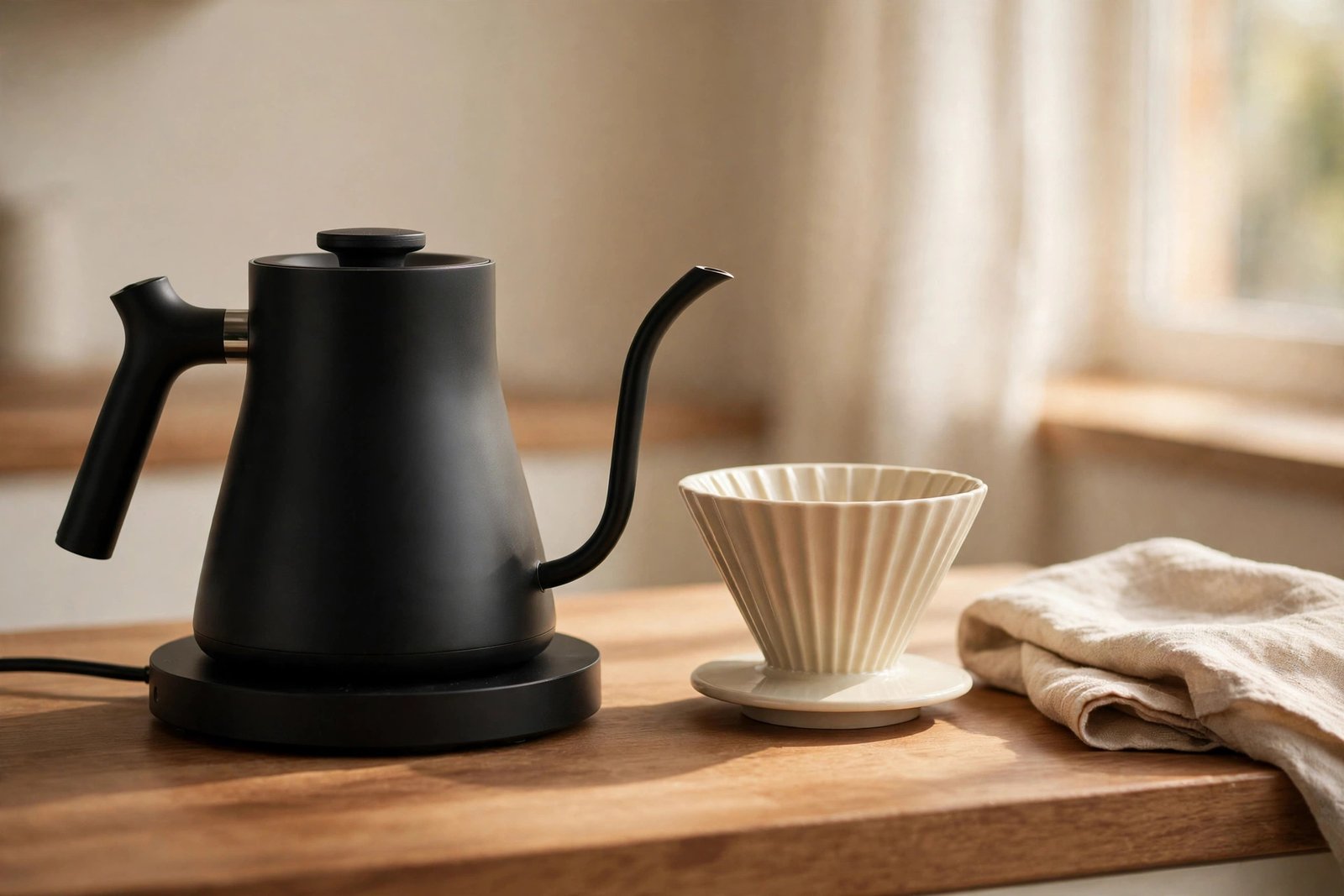
5 Tips for Better Pour-Over With a Gooseneck
- Pour slow and low. Hold the spout close to the coffee bed and pour in slow concentric circles. Height creates agitation; agitation creates uneven extraction. The gooseneck’s whole job is letting you stay low and gentle.
- Bloom first, always. Pour just enough water to wet all the grounds (about twice the coffee’s weight), wait 30–45 seconds while it bubbles, then continue. The bloom releases CO2 so the real pour extracts evenly.
- Keep the water level steady. Try to maintain a consistent water level in the dripper through the main pour — it keeps the extraction even. This is where the gooseneck’s precise flow control earns its keep.
- Match temperature to roast. Light roasts: 205–208°F. Medium: 200–203°F. Dark: 195–200°F. Wrong temperature is the most common reason a good recipe tastes off — adjust this before you blame the beans.
- Grind fresh and medium-fine. Pour-over wants a medium-fine grind (like table salt), ground right before brewing. Stale or inconsistent grounds waste everything the kettle gives you — a budget burr grinder is the kettle’s best friend.

FAQs
Do I really need a gooseneck kettle for pour-over? Strictly speaking, no — you can brew pour-over with any kettle. But a gooseneck makes the controlled pour the method depends on dramatically easier and more repeatable. It’s the single most impactful pour-over accessory, and budget options start around $35.
Stovetop or electric gooseneck — which should I buy? Stovetop if you want simplicity, longevity, and the lowest price — nothing to break. Electric if you brew daily and want speed plus temperature control. Variable-temp electrics are genuinely better for light roasts; otherwise it’s a convenience call, not a quality one.
What temperature should water be for pour-over? 195–205°F (90–96°C) covers almost everything: hotter for light roasts (205–208°F), cooler for dark roasts (195–200°F). Without a thermometer, boil and rest 30–60 seconds off the heat.
Can I use a gooseneck kettle on an induction cooktop? Most stainless steel stovetop goosenecks (Hario Buono, Bodum Melior) are induction-compatible — the steel is magnetic. If your cooktop is induction, check the product specs to confirm, since a few models use non-magnetic alloys.
How do I clean a gooseneck kettle? Descale monthly with equal parts white vinegar and water: fill, boil (or heat), let sit 20 minutes, rinse thoroughly. For electrics, don’t submerge the base. Wipe the spout tip regularly — dried mineral buildup there is what makes streams sputter.
Conclusion
The best budget gooseneck kettle is the one that matches how you brew: the Hario Buono for the classic, unbeatable pour; the Bodum Melior for the tightest budget; the COSORI electric for precise temperature control; and the Willow & Everett for electric convenience at a stovetop-adjacent price. Whichever you choose, pair it with fresh medium-fine grounds and the right temperature, and your pour-over will taste like the method was always meant to.
Pick the kettle that fits your mornings, dial in 200°F, and pour your best cup yet — then come back and tell us which one earned a permanent spot on your counter.
Keep Brewing
- French Press vs Pour Over: Which Is Better for Your Home Café?
- Best Budget Coffee Grinders Under $50
- Best Budget Cold Brew Makers (2026)
- DIY Coffee Station Under $100
Part of the collection: This guide is part of our Budget Coffee Gear hub — 10 guides to brewing great coffee without spending a lot.