

Apartment living means negotiating every square foot — with a roommate, a lease, and a kitchen the size of a closet. But a coffee bar doesn’t need much: two square feet, an outlet, and a surface that won’t cost you your security deposit. These apartment coffee bar ideas are built for real rental life — tiny kitchens, multipurpose rooms, strict leases, and budgets that respect rent day.
Every setup is renter-safe, sized for small spaces with real measurements, and priced in honest ranges. Spare counter corner or just a wall and a dream — there’s a station here that fits.
The Apartment Coffee Bar Playbook
Before the setups, the rules that make all of them work in a rental:
- Measure first, buy second. Apartment kitchens punish assumptions. Measure your available surface (width × depth), the clearance above it, and the distance to the nearest outlet. Write the numbers on your phone before you shop — most “too big” mistakes happen in the store aisle.
- Go renter-safe by default. Adhesive hooks and strips, tension rods, over-the-door organizers, and freestanding furniture — these are your mounting system. Anything that needs a drill needs landlord permission in writing; anything adhesive needs a test patch, because cheap strips can peel paint. Our renter-friendly no-drill guide covers the techniques in detail.
- One brewer, well chosen. In a small apartment, counter space is the scarcest resource. Pick one brewing method that covers your daily habit — drip machine, pour-over, French press, or a compact espresso maker — and resist the gadget creep. A second brewer should earn its footprint.
- Contain everything. Trays, baskets, and caddies turn a scattered setup into a “station.” Containment also makes cleaning fast: lift the tray, wipe the surface, done. In a rental where the counter might be laminate you don’t want to stain, a tray is also cheap insurance.
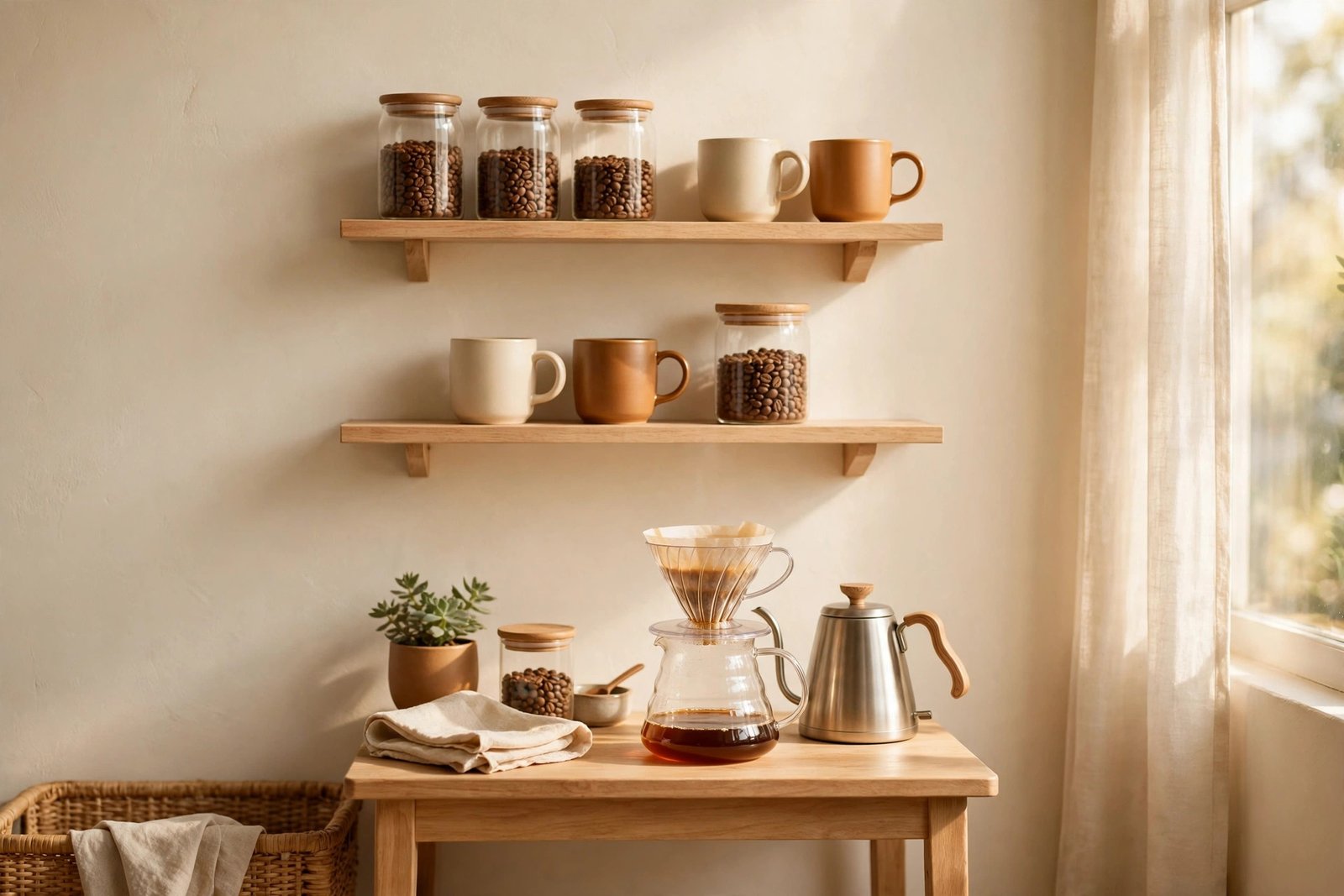
12 Apartment Coffee Bar Ideas
Each setup includes what you need, the space it takes, and a realistic budget range (assuming you already own a brewer).
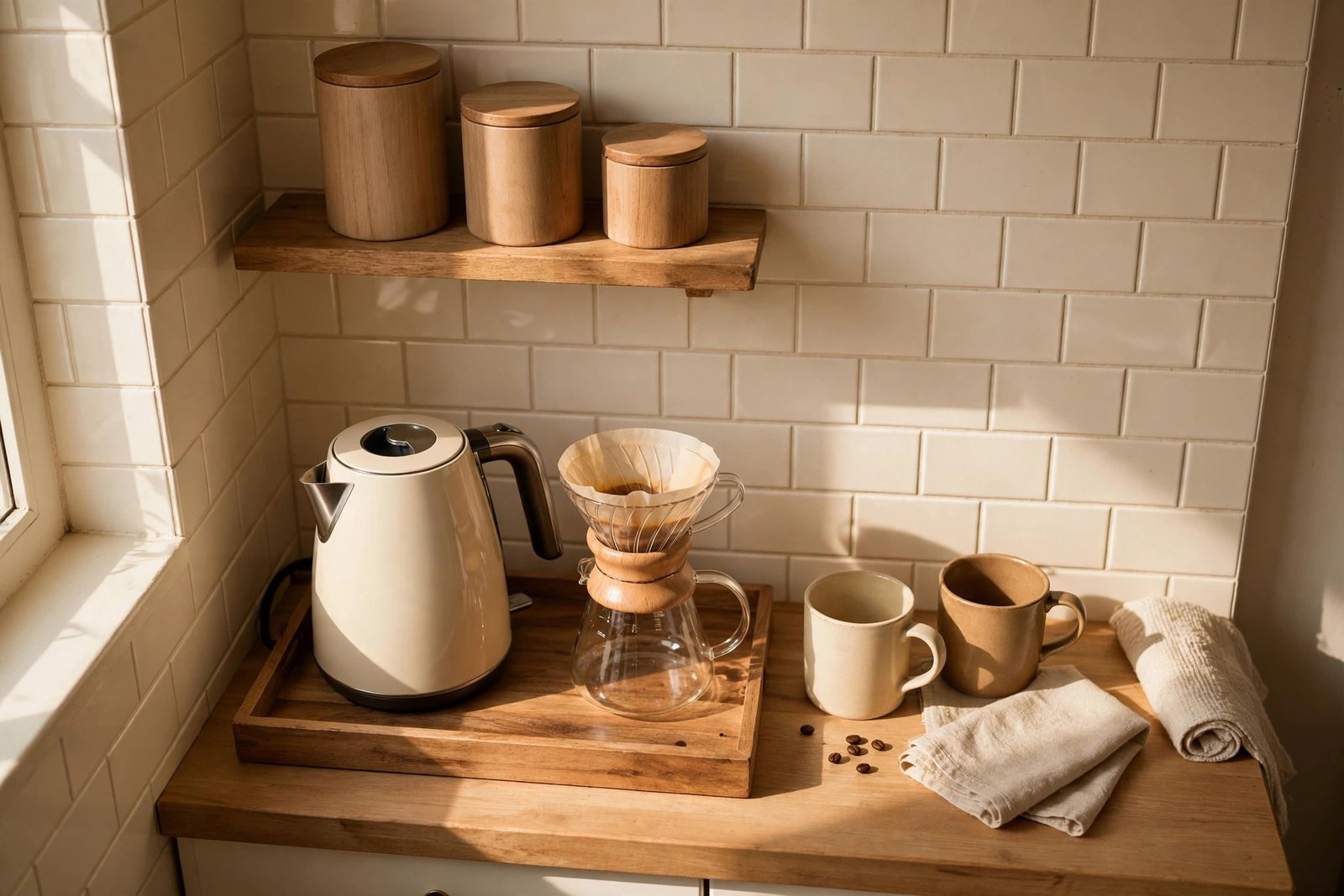
1. The Counter Corner Command Center
The classic: claim 18–24 inches of kitchen counter in the corner and make it official. A drip machine or compact espresso maker anchors the back corner, a tray in front holds today’s mugs and the sugar jar, and a small shelf riser above or beside it doubles the storage. Cost: $40–$120 for the tray, riser, and canisters (brewer separate). Needs: 18″ wide × 15″ deep of counter, one outlet.
2. The Rolling Cart Station
When the kitchen has no counter to spare, the cart becomes the counter. A three-tier rolling cart ($30–$70) parks in whatever gap exists — beside the fridge, at the end of the counter run, in the dining area — and rolls to the sink for water and cleanup. Top tier brews, middle serves, bottom stores. Cost: $60–$150 styled. Needs: a 16″ × 24″ parking spot and an outlet within cord reach.
3. The Closet Nook Conversion
That awkward hall closet or the dead space under the stairs? Remove the door (store it flat), add one or two battery LED puck lights, and slide in a narrow cart or small shelf. A 24-inch-deep closet fits a pour-over station with room to spare; deeper closets can hold a full drip setup. Cost: $30–$100 for lighting, shelf, and styling. Needs: a closet at least 20″ wide, plus an outlet nearby or a battery kettle routine.
4. The Wall Shelf Tower
No counter? Go up. Two or three adhesive-mounted or tension-pole shelves above a narrow console table create a vertical coffee station: brewer on the table, mugs and jars on the shelves. Freestanding leaning shelves (the ladder style) need zero wall contact at all — they just lean. Cost: $50–$130 for shelves and table. Needs: 24″ of wall width, floor space for a 12″-deep table.
5. The Sofa-Side Bar Cart
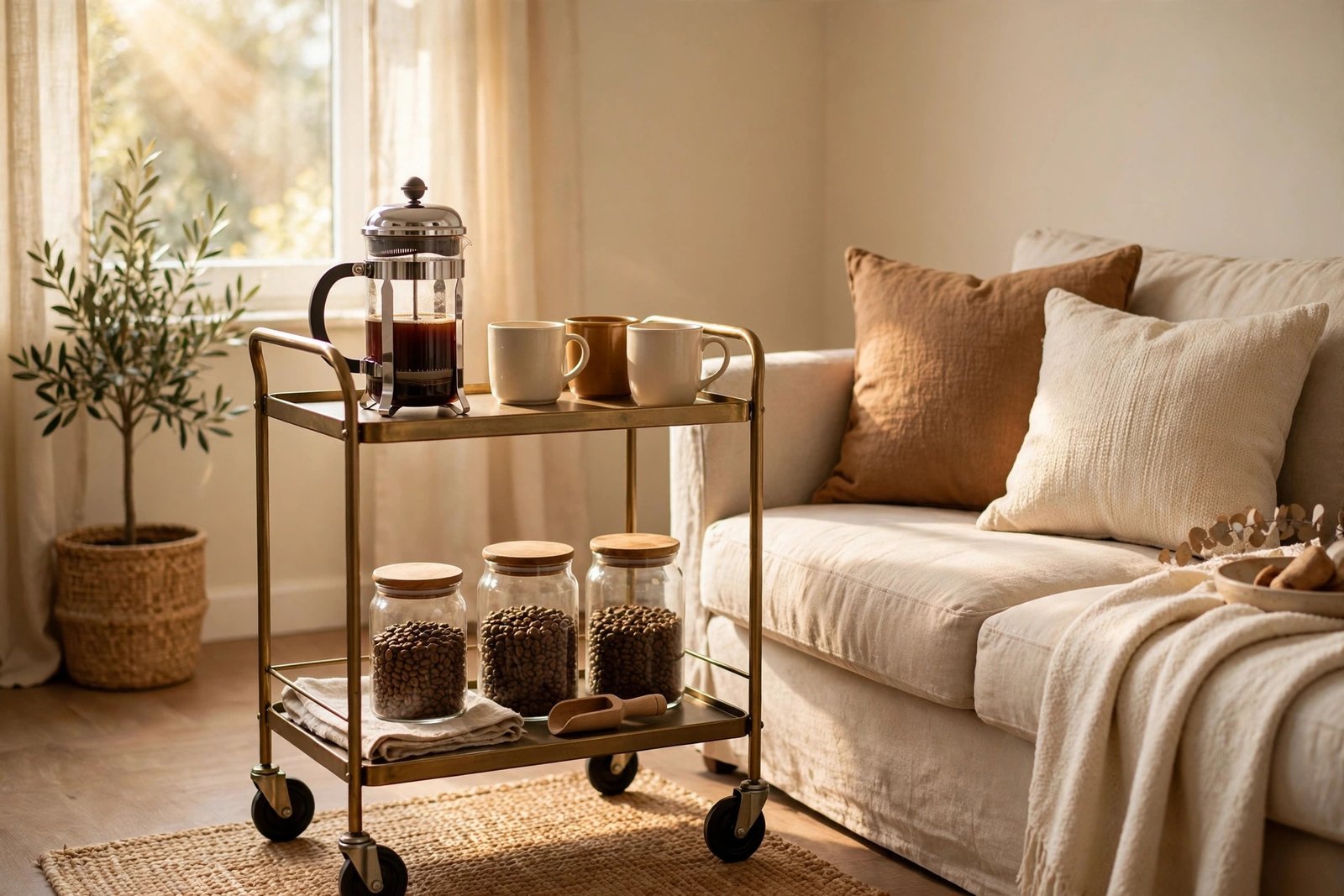
In studio apartments the living room is the kitchen’s overflow. A slim bar cart ($60–$120) beside the sofa holds a French press or pour-over, two mugs, and a lidded cookie jar — the evening coffee ritual without crossing the apartment. Keep it curated since it’s in your sightline all day. Cost: $90–$200 styled. Needs: 16″ × 30″ beside seating, outlet access.
6. The Entryway Console Station
The entryway console table is dead space in most apartments — a perfect coffee bar in disguise. A narrow console (10–12 inches deep, $50–$100) by the front door holds a pour-over setup for grab-and-go mornings: brew while you put on shoes. Add a small tray for keys and a wallet and it earns its footprint twice. Cost: $70–$160 styled. Needs: 30″ of entryway wall, one outlet.
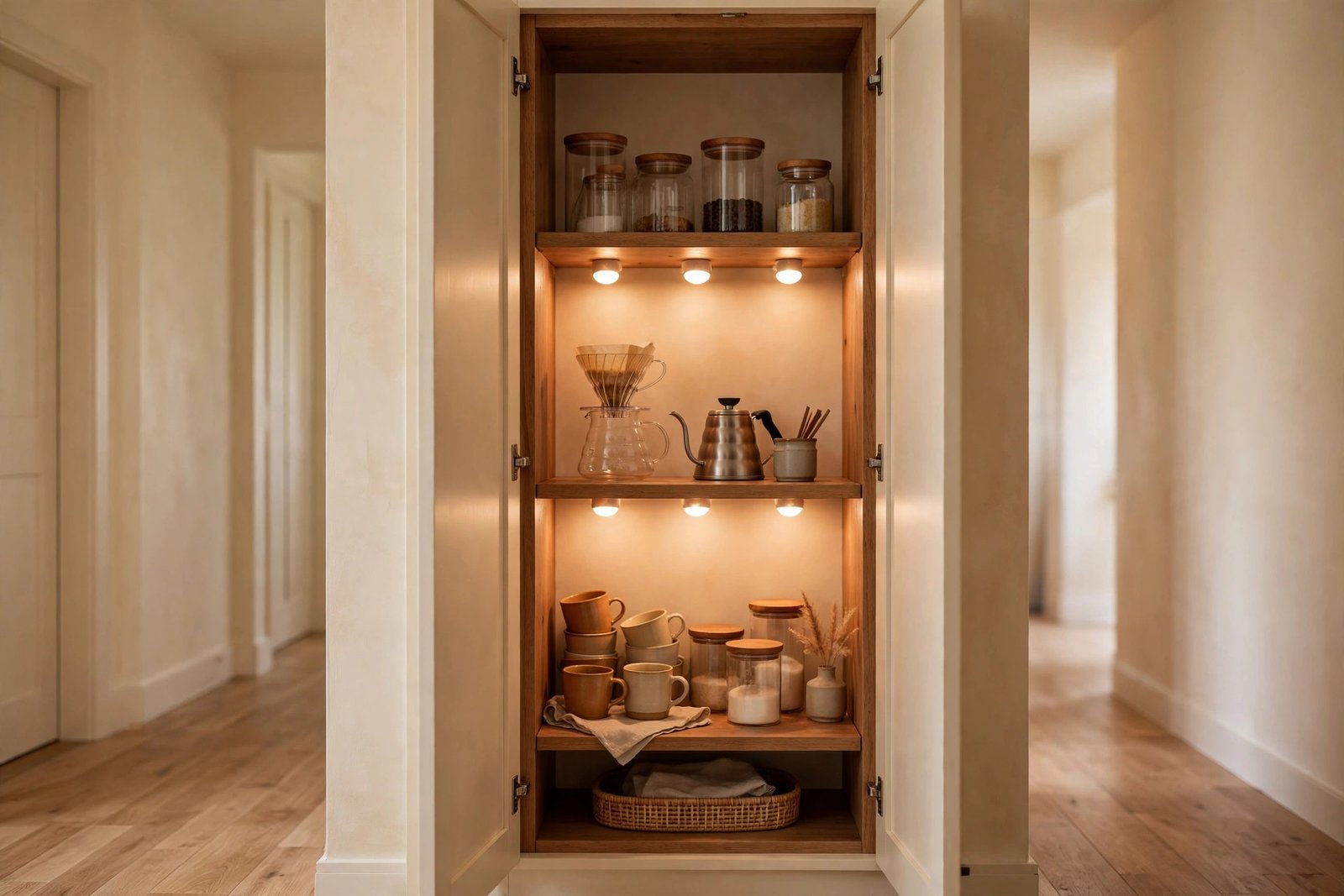
7. The Bedroom Pour-Over Perch
For apartments where the kitchen is a war zone at 6 a.m., a dresser-top station buys peace. A tray on the dresser holds an electric kettle, pour-over dripper, one mug, and a small canister of ground coffee. Nothing perishable, nothing that stains — the tray is non-negotiable on wood furniture. Cost: $30–$80 for tray and kettle (dripper separate). Needs: 14″ × 20″ of dresser top, one outlet.
8. The Balcony Coffee Corner
Apartment balconies are small but mighty. A weather-resistant metal cart or folding table ($40–$90) plus a French press and unbreakable mugs creates a morning ritual with a view. Store the grinder and anything electric inside; bring out only what’s needed. In mild climates this becomes a year-round station. Cost: $60–$140. Needs: a 2′ × 2′ balcony corner, weatherproof storage for beans.
9. The Under-Cabinet Floating Setup
A fold-down shelf under the upper cabinets means the coffee bar appears only when you need it. A fold-down wall table ($25–$60, mounted with heavy-duty adhesive or minimal screws with permission) gives you a 16″ × 12″ brew surface that vanishes after. Pair with mugs on adhesive hooks underneath the cabinet. Cost: $40–$100. Needs: 18″ of under-cabinet width, landlord OK for any screws.
10. The Bookshelf Coffee Niche
A cube shelf or bookcase you already own can donate one shelf to coffee. Clear a 13″ × 13″ cube, line it with a tray, and install your pour-over or compact brewer at a reachable height — waist to chest level works best. Baskets in the neighboring cubes hide the backup beans and filters. Cost: $20–$60 for tray, baskets, and lighting. Needs: one free shelf cube, outlet within reach.
11. The Dining Sideboard Station
If your apartment has a sideboard, buffet, or credenza in the dining area, its top is prime coffee-bar real estate. Style it like a serving station: brewer or carafe at one end, a tray of mugs and fixings in the middle, a small plant or art at the other end for balance. It doubles as a buffet server when you entertain. Cost: $50–$130 for trays and canisters. Needs: 36″+ of sideboard top, one outlet.
12. The Window Sill and Crate Mini Bar
The smallest setup on this list: a deep window sill or a wooden crate ($15–$30) on a stool becomes a one-person coffee bar. French press or pour-over, one mug, one small jar of beans — the whole station fits in a single square foot. It sounds spartan, but a window-view morning cup beats a crowded counter every time. Cost: $30–$70. Needs: 12″ × 12″ of sill or crate top.
Renter-Safe Rules: Keep the Deposit
Apartment coffee bars live or die on the lease. The golden rule: if you can’t reverse it in ten minutes, get it in writing. Adhesive hooks and strips are your best friends — use the weight-rated kind, apply them to clean surfaces, and remove them slowly with heat (a hair dryer) to protect paint.
Trays are deposit insurance. Coffee stains laminate, mars wood, and etches stone — a $15 tray under your brewer prevents a $200 countertop deduction. The same goes for heat: never set a hot kettle directly on a rental counter; a trivet or silicone mat costs almost nothing.
Keep the original hardware. If you remove a closet door or swap a shelf, bag the screws, label them, and store them with the door. Landlords forgive reversible changes; they charge for mysteries. And photograph everything before you move in — that photo is your evidence that the coffee ring was already there.
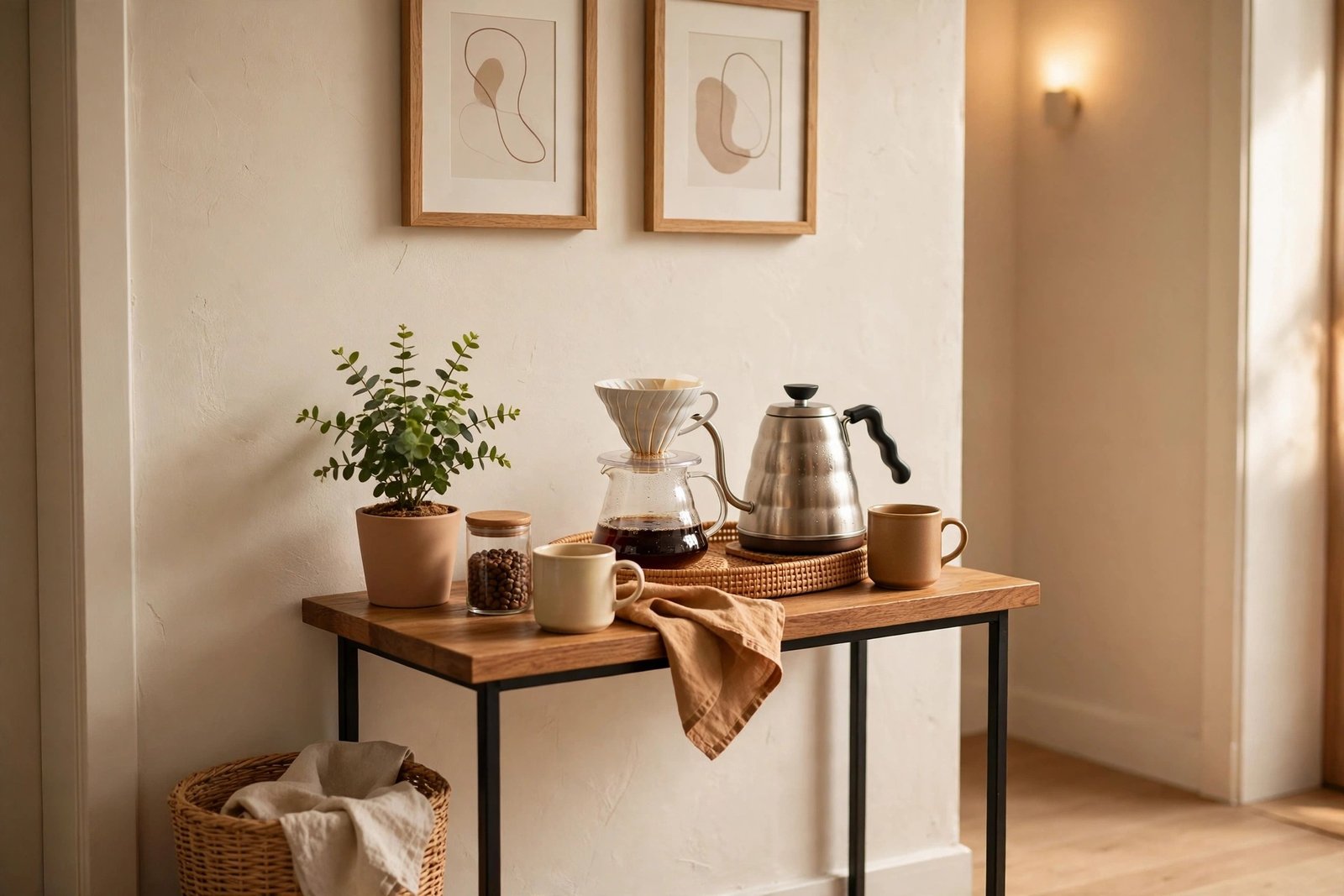
Budget Ranges: Apartment Coffee Bars by Budget
The $30–$80 starter. A thrifted tray, jars from your kitchen, adhesive hooks for mugs, and your existing brewer on an existing surface. This tier is pure styling — you’re not buying furniture, you’re designating a zone. Totally viable; most of the “after” in before-and-after photos is just containment and curation.
The $100–$180 sweet spot. A rolling cart or narrow console ($40–$90), a set of glass canisters ($15–$25), a proper tray and trivet ($15–$25), and adhesive hooks or a small shelf ($10–$20). This is the full-station tier: dedicated furniture, everything contained, genuinely pleasant to use every morning.
The $200–$300 complete. Sturdier furniture, a brewer upgrade (better drip machine or compact espresso maker, $80–$150 of the budget), matching canisters, and lighting — a small lamp or LED strip that makes the corner feel intentional after dark. Worth it if the station is in your main living space.
Wherever you land, spend on the piece you touch daily and save on the styling around it.
The Space Measurements Cheat Sheet
Tape these numbers to your fridge before you shop:
- Drip coffee maker: ~8″ wide × 12″ deep × 14″ tall (plus 6″ above to open the lid)
- Compact espresso machine: ~10″ wide × 14″ deep × 13″ tall
- Pour-over + kettle station: ~12″ wide × 10″ deep on a tray
- French press setup: ~10″ wide × 8″ deep
- Two-tier rolling cart: ~16″ wide × 24″ long × 32″ tall
- Mug (with handle): ~5″ wide × 4″ tall — plan 5″ of shelf height per row
- Standard interior doorway: ~30″ wide — your cart must clear this if it rolls room to room
The most common apartment mistake is forgetting vertical clearance: the cabinet above the counter, the shelf above the brewer, the lid that needs to swing open. Measure height, not just footprint. For more on fitting stations into tight kitchens, see our small kitchen coffee bar ideas.
FAQs
How do I make a coffee bar in a small apartment without drilling? Use adhesive hooks and strips for mugs and light shelves, tension rods inside cabinets or closets, and freestanding furniture — rolling carts, leaning shelves, console tables. Trays contain everything on existing surfaces. Nothing here needs a drill.
What’s the cheapest apartment coffee bar setup? Under $50: designate a tray on an existing counter or dresser, add jars you own for beans, hang mugs on adhesive hooks, and brew with what you have. The station is mostly organization, not purchases.
Where should I put a coffee bar in a studio apartment? Wherever you have 2 square feet and an outlet: a kitchen counter corner, beside the sofa on a cart, an entryway console, a closet nook, or a dresser top. Studios reward mobile setups — a rolling cart that parks in different spots for morning versus evening.
Can I have a coffee bar if my lease bans modifications? Yes. Every setup in this guide is reversible: freestanding furniture, adhesive mounting, and trays on existing surfaces. “No modifications” bans damage, not furniture — just avoid anything that marks walls or counters, and photograph the space before you start.
How much counter space does a coffee bar actually need? 18–24 inches wide and 12–15 inches deep covers a brewer, a mug, and fixings on a tray. A pour-over station fits in 12″ × 10″. If you don’t have that, go vertical (shelves) or mobile (cart) instead of fighting for counter.
What about roommates and shared kitchens? Containment is diplomacy: keep your station on one movable tray or cart, label your beans, and wipe the shared counter every time. A cart you can park in your room ends most coffee-related roommate friction.
Conclusion
Apartment coffee bars aren’t about square footage — they’re about intention. Two square feet, one outlet, and a tray turn a counter corner, a closet, or a cart into a morning ritual that feels like yours, lease and all. Measure first, go renter-safe, contain everything, and let the station earn its footprint.
Claim your corner this weekend — measure the spot, set down a tray, and brew the first cup in your new apartment café.
Keep Brewing
- Small Kitchen Coffee Bar Ideas
- Dorm Room Coffee Station Ideas
- Coffee Corner Decor on a Budget
- Renter-Friendly Coffee Bar: No-Drill Setup Ideas