

If your coffee order has the word “hazelnut” in it, you’re paying a flavor surcharge on every single cup — and the syrup behind it is one of the easiest things in the world to make at home. Homemade hazelnut syrup for coffee takes ten minutes, three ingredients, and tastes noticeably toastier and more natural than the bottle, because you control the hazelnut extract instead of tasting whatever the factory measured out.
One batch makes about 12 ounces — roughly 24 lattes’ worth — for under $1.50 in ingredients. A store bottle of the same size runs $8–$12. The math is not close. Here’s exactly how to do it.
Why Homemade Beats Store-Bought
- Taste: Good hazelnut extract gives a warm, toasted-nut flavor. Bottled syrups often taste candy-sweet and artificial — some people swear they can taste the “fake.” The homemade version tastes like actual hazelnuts.
- Cost: A batch costs roughly $1–$1.50 in ingredients (the extract is the only real expense). A 12-ounce bottle of name-brand hazelnut syrup runs $8–$12 at the store.
- Control: You decide how nutty it is — one teaspoon of extract for a whisper, two for the full coffee-shop hit. You can also make sugar-free and chocolate-hazelnut versions (see variations below).
- Speed: Ten minutes, most of it just waiting for sugar to dissolve. The stove does the work.

Ingredients for Homemade Hazelnut Syrup for Coffee
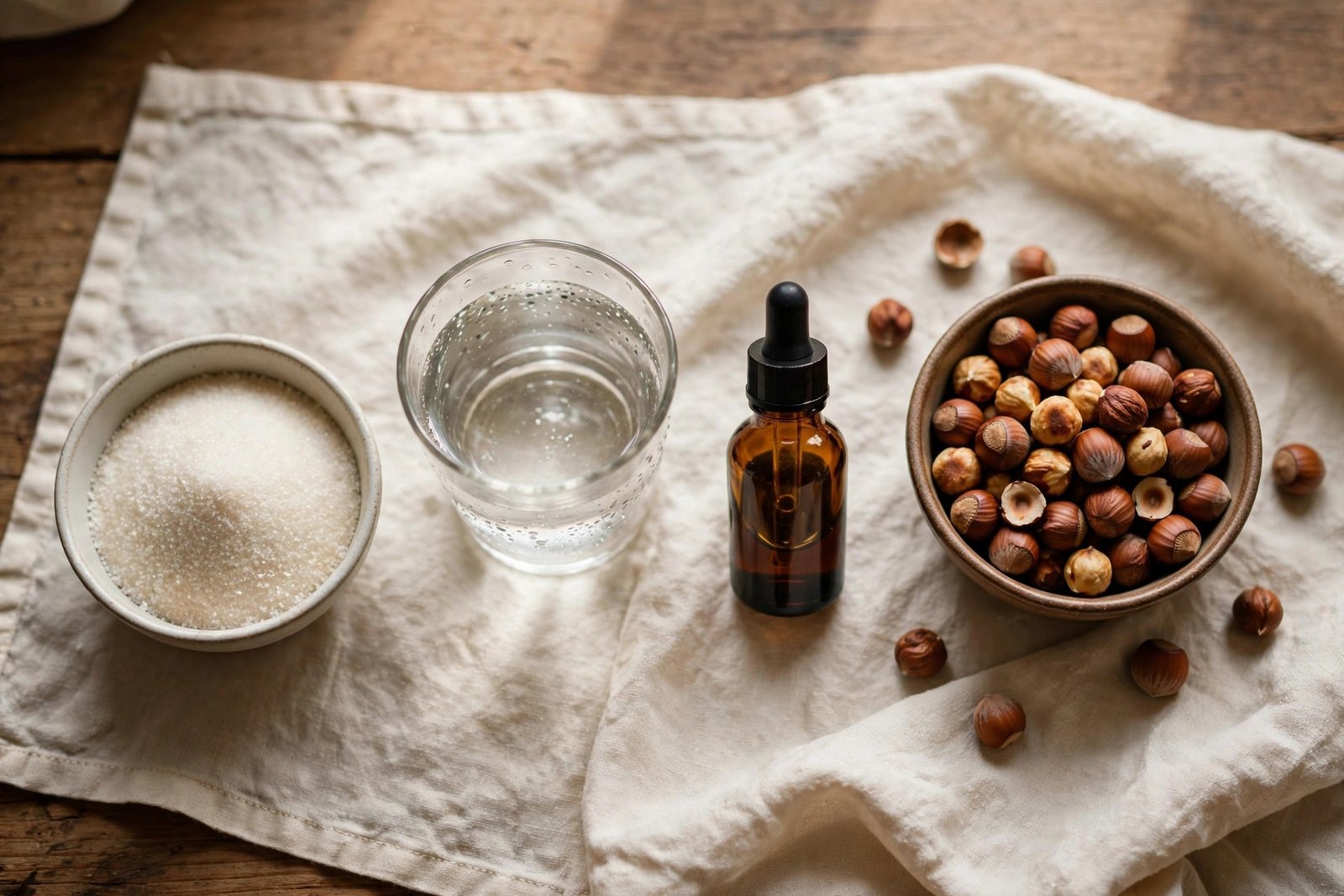
- 1 cup water
- 1 cup granulated sugar
- 1½–2 teaspoons pure hazelnut extract (not imitation — it matters here)
- ½ cup raw hazelnuts, toasted and roughly chopped (optional, for the steeped version)
About the extract: This is the whole flavor, so buy the good stuff. Pure hazelnut extract (look for one where hazelnut is the first ingredient, not “natural flavors” doing all the work) costs $5–$8 a bottle and lasts for many batches. Imitation hazelnut extract exists and it’s cheaper, but it tastes noticeably more like candy and less like nuts. If you’re making this syrup to escape the artificial taste of the bottled stuff, don’t reintroduce it with cheap extract.
Equipment: small saucepan, spoon, and a clean bottle or mason jar with a lid. A funnel helps but isn’t required. If you’re doing the toasted-hazelnut steep, you’ll want a fine-mesh sieve.
Instructions
Step 1: Dissolve the sugar (3 minutes)
Combine the water and sugar in a small saucepan over medium heat. Stir occasionally until the sugar is completely dissolved and the liquid is clear — about 3 minutes. Don’t let it boil hard; a gentle simmer is all you need.
Step 2 (optional): Steep toasted hazelnuts (30 minutes)
If you want extra nutty depth, stir the toasted chopped hazelnuts into the hot syrup, remove from the heat, cover, and let it steep for 30 minutes. Then strain through a fine-mesh sieve, pressing the nuts gently to release the syrup. This step is optional — the extract alone makes a great syrup — but steeping real toasted hazelnuts adds a roasted richness that extract alone can’t quite reach. (Toast the nuts at 350°F for 8–10 minutes until fragrant; rub off most of the skins in a kitchen towel first, since skins can add bitterness.)
Step 3: Cool, add extract, bottle (2 minutes)
Let the syrup cool for 3–5 minutes off the heat. Stir in the hazelnut extract — start with 1½ teaspoons, taste, and add the rest if you want it nuttier. Add the extract off the heat — boiling cooks off the delicate flavor compounds, which defeats the entire purpose. Pour into your clean bottle or jar, let it cool to room temperature, then seal and refrigerate.
That’s it. Three ingredients, ten minutes (plus optional steeping time), one toasty syrup.

Storage: How Long Does It Last?
Stored in a sealed bottle in the refrigerator, homemade hazelnut syrup for coffee keeps for 3 to 4 weeks. Because it has no preservatives, treat it like fresh food:
- Use a clean spoon or pump every time — no double-dipping.
- If it looks cloudy, smells off, or grows anything fuzzy, toss it. (With the 1:1 sugar ratio, this is rare before week 4.)
- If you made the steeped-hazelnut version, a little cloudiness is normal from the nut oils — that’s flavor, not spoilage. Strain it again through a coffee filter if you want it crystal clear.
- For longer storage, freeze it in an ice-cube tray, then transfer the cubes to a freezer bag. Frozen syrup keeps 3 months; thaw a cube or two as needed.
Pro tip: A $6 syrup pump (the kind coffee shops use) fits most standard bottles and gives you a perfect one-pump-per-drink portion. One pump is about 2 teaspoons — the sweet spot for a 12-ounce latte.

How Much to Use: Serving Guide
| Drink | Syrup amount |
|---|---|
| 8 oz hot coffee | 1–2 teaspoons |
| 12 oz hazelnut latte | 2 teaspoons (1 pump) |
| 16 oz iced coffee | 1 tablespoon |
| Cold brew (16 oz) | 1 tablespoon |
| Hot chocolate | 2 teaspoons (instant upgrade) |
When adding homemade hazelnut syrup for coffee to a drink, start with less — you can always add more, and good hazelnut extract is potent. The steeped version tastes a touch milder than the extract-only version, so taste and adjust.
Serving Ideas Beyond the Latte
- Hazelnut iced coffee: Fill a glass with ice, add cold brew, 1 tablespoon syrup, and a splash of half-and-half. Stir. Sixty seconds, done.
- Hazelnut cold foam: Add 2 tablespoons cold milk, 1 teaspoon syrup, and shake in a sealed jar for 30 seconds. Spoon over iced coffee for the coffee-shop cold foam effect.
- Hazelnut mocha: Add 2 teaspoons syrup plus 1 tablespoon cocoa powder to your latte. It tastes like a fancy chocolate-hazelnut spread in drinkable form.
- Hazelnut steamer: Steamed or warmed milk + 2 teaspoons syrup. The cozy caffeine-free nightcap that tastes like dessert.
- Drizzle for desserts: Warm slightly and drizzle over vanilla ice cream or brownies. The hazelnut-mocha combo is genuinely dangerous.
- Hazelnut Italian soda: Syrup + sparkling water + ice, with an optional splash of cream. A great afternoon non-coffee option.

Variations
Sugar-free hazelnut syrup: Replace the sugar with 1 cup of an erythritol/monk-fruit baking blend. Note: sugar-free versions don’t preserve as well — use within 2 weeks and keep refrigerated. The texture will be slightly thinner, which is normal.
Chocolate-hazelnut syrup: Whisk 2 tablespoons unsweetened cocoa powder into the sugar-water mixture in Step 1 before heating, so it dissolves fully. Proceed as normal. This tastes like the spreadable kind in syrup form — incredible in mochas and hot chocolate.
Vanilla-hazelnut: Add 1 teaspoon pure vanilla extract alongside the hazelnut extract in Step 3. The vanilla rounds out the nuttiness and makes the syrup taste more like the classic coffee-shop flavor profile.
Double batch: This recipe doubles cleanly. Use a medium saucepan and give it a few extra minutes of dissolving time. If you’re steeping hazelnuts, double those too — 1 cup toasted and chopped.
Troubleshooting
My syrup tastes bitter or medicinal — what went wrong? Too much extract, almost certainly. Hazelnut extract is potent; 2 teaspoons is the ceiling for this recipe, and some brands are stronger than others. Next batch, start at 1 teaspoon and work up. You can dilute an over-extracted batch by making a half-batch of plain simple syrup and mixing the two.
It’s cloudy — is it ruined? If you steeped real hazelnuts, cloudiness is just nut oils and it’s completely fine. Strain through a coffee filter for a clearer syrup. If you did the extract-only version and it’s cloudy, give it the sniff test — but with the 1:1 sugar ratio, spoilage before week 3–4 is rare.
Can I use hazelnut-flavored coffee creamer instead of extract? No — creamer is mostly oil, sugar, and flavoring, and it won’t blend into a syrup properly. Stick with extract for the syrup, and save the creamer for the coffee itself.
It’s too thin/thick? Simmered longer = thicker. Barely simmered = thinner, closer to flavored simple syrup. Both work fine in coffee — it’s personal preference. For a thicker syrup, simmer 5–6 minutes instead of 3.
FAQs
How long does homemade hazelnut syrup last?
3 to 4 weeks refrigerated in a sealed bottle. Freeze it in ice-cube trays for up to 3 months if you made a big batch.
Is homemade hazelnut syrup cheaper than store-bought?
Dramatically. A batch costs about $1–$1.50 and yields ~24 servings. A comparable store bottle costs $8–$12 for roughly the same number of servings.
Can I make it without hazelnut extract?
Yes — use the steeped version: simmer 1 cup of toasted, chopped hazelnuts in the hot syrup for 30 minutes, then strain. The flavor is milder and more authentically nutty than extract-only, though it takes more time and hazelnuts.
Do I need to refrigerate it?
Yes. No preservatives means the fridge is required. It’ll keep fine at room temperature for a day or two, but refrigerate for the full 3–4 week life.
What bottle should I store it in?
Any clean glass bottle or mason jar with a tight lid. Old syrup bottles, swing-top bottles, or a 16-ounce mason jar all work. Add a pump dispenser for coffee-shop convenience.
Conclusion
Ten minutes, three ingredients, and you’ll never pay $10 for a bottle of hazelnut syrup again. Make a batch this weekend — your Monday-morning latte will taste like a $6 coffee-shop drink for about six cents. Once you’ve nailed hazelnut, try our homemade caramel syrup next; the two together cover most coffee-shop flavor cravings.
Pin this recipe so it’s waiting for you on syrup-making day!
Keep Brewing
- Homemade Caramel Syrup for Coffee (Starbucks-Style, Without the Price)
- Homemade Vanilla Syrup for Coffee (5 Minutes)
- Pumpkin Spice Syrup Recipe (Fall Favorite, 10 Minutes)