

Brew and Beam is reader-supported. When you buy through links on our site, we may earn an affiliate commission.
Walk into any café in summer and you’ll see both on the menu, usually within a dollar of each other — and most people order one or the other without knowing they’re fundamentally different drinks. So let’s settle cold brew vs iced coffee properly: they’re made with opposite methods, they taste nothing alike, and one of them takes twelve hours while the other takes four minutes. Once you know the difference, you’ll never order blind again — and you’ll know exactly which one deserves a spot in your home routine.
We’ve made both at home for years — cold brew steeping overnight in a mason jar, iced coffee poured over ice on rushed mornings. Here’s the full breakdown: what each one actually is, how they taste side by side, the caffeine truth, and our no-fence-sitting verdict on which you should make.
What Cold Brew Actually Is
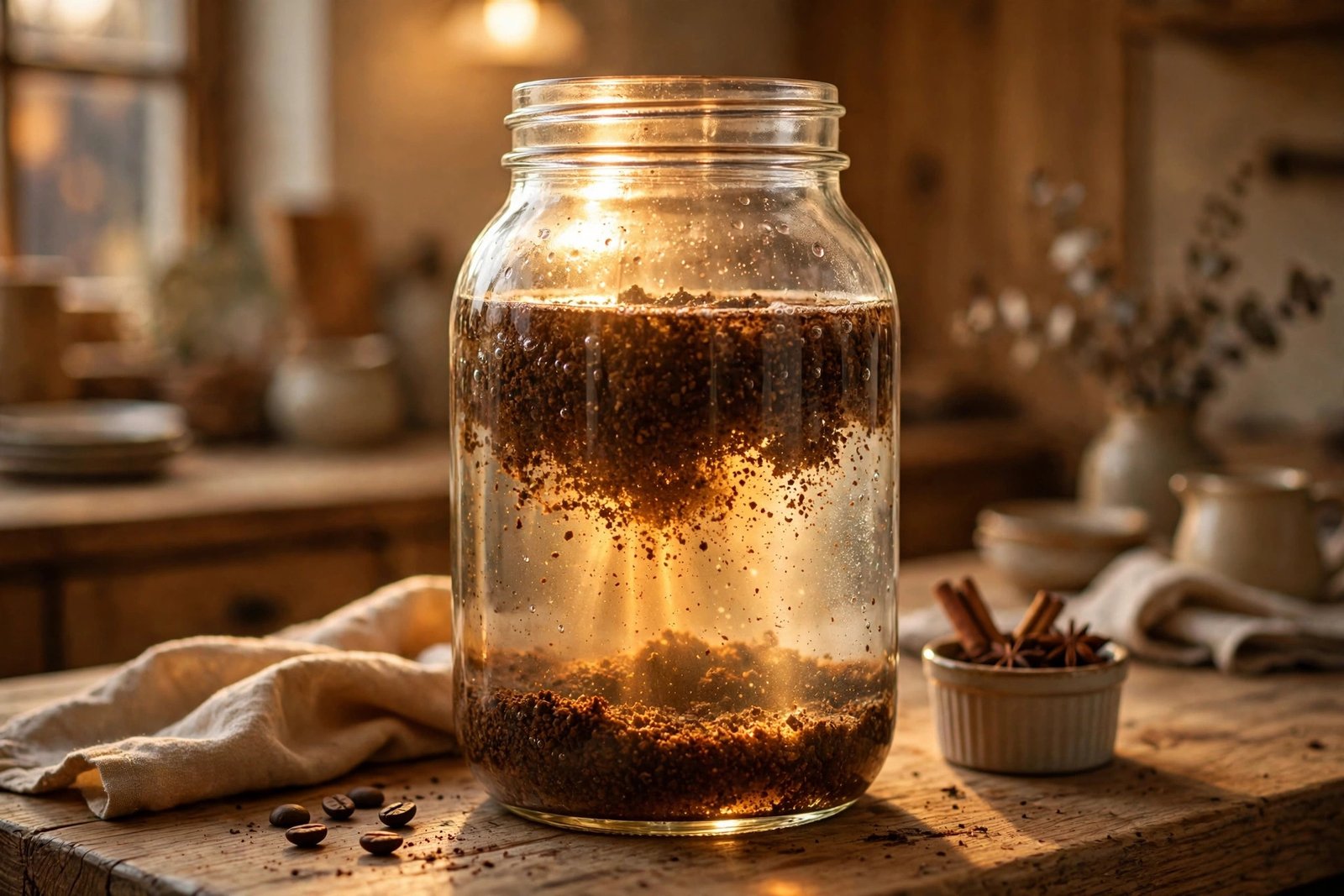
Cold brew is coffee that’s never touched hot water. Coarse-ground coffee steeps in cold or room-temperature water for 12–24 hours — time does the extracting instead of heat. The cold brew method produces a concentrate that’s typically diluted 1:1 with water or milk before drinking. That’s it: grounds, cold water, patience, strain.
Because heat never enters the picture, cold brew extracts fewer of coffee’s bitter, acidic compounds. The result is famously smooth — chocolatey, naturally a little sweet, low-acid enough that people with sensitive stomachs often tolerate it when hot coffee bothers them. It’s also strong: the long steep with a high coffee-to-water ratio makes a concentrate that packs real caffeine, though dilution brings the final cup back to earth. Our cold brew without a cold brew maker guide walks through the exact ratios — and if you want dedicated gear, our budget cold brew makers roundup covers the best cheap options (though honestly, a mason jar works fine).
What Iced Coffee Actually Is
Iced coffee is the opposite approach: coffee brewed hot, the normal way, then cooled and poured over ice. Drip machine, pour over, French press — brew it double-strength (because the ice will dilute it), then chill it fast over a full glass of ice. Four minutes, start to finish.
Because it’s brewed hot, iced coffee keeps all the characteristics of hot coffee — the brightness, the acidity, the aromatic complexity — just served cold. A bright Ethiopian that tastes like blueberries hot will still taste like blueberries over ice. What it loses is some aromatics to the ice melt, and if you brew it regular-strength instead of double, you get the classic sad watery iced coffee everyone has suffered through once. Brewed right, though, it’s crisp, refreshing, and lively in a way cold brew never tries to be. Our brown sugar oatmilk shaken espresso is iced coffee’s best-dressed form — proof of how good the hot-brewed-over-ice method can taste.

Cold Brew vs Iced Coffee at a Glance
The short version before we go deep:
| Cold Brew | Iced Coffee | |
|---|---|---|
| Brew method | Cold water steep, 12–24 hours | Brewed hot, poured over ice |
| Taste | Smooth, chocolatey, low-acid, naturally sweet | Bright, crisp, acidic — tastes like the hot version, cold |
| Caffeine | Higher as concentrate; similar per diluted serving | Standard — same as your hot cup |
| Acidity | Noticeably lower | Full acidity of the bean |
| Time | 12–24 hours (5 min active) | 4 minutes |
| Best for | Smooth-chocolate lovers, sensitive stomachs, batch preppers | Bright-coffee fans, impatient mornings, variety seekers |
Taste: Cold Brew vs Iced Coffee, Side by Side
This is where the cold brew vs iced coffee debate gets settled. Brew the same beans both ways and taste them next to each other: the cold brew is smooth and round — chocolate, caramel, a natural sweetness, almost no bite. The iced coffee is brighter and more energetic — you taste the bean’s actual character, the fruity or floral notes, the acidity that makes coffee taste alive.
Neither is objectively better; they’re different pleasures for different moods. Cold brew is the cozy blanket of cold coffee — mellow, forgiving, easy to drink black. Iced coffee is the crisp morning air version — vivid and refreshing, especially with lighter-roast beans. If you drink your coffee black and find regular coffee harsh, cold brew will feel like a revelation. If you love the bright complexity of a good pour over, iced coffee preserves everything you like about it.

Caffeine: Which One Is Stronger?
The honest answer: it depends on how you make them, but cold brew usually wins on paper and ties in the glass. A typical 16-oz cold brew (from concentrate, diluted 1:1) lands around 200mg of caffeine. A 16-oz iced coffee made from regular drip lands around 165mg — basically the same as its hot counterpart.
But here’s the catch: cold brew concentrate is strong stuff (~400mg+ per 16 oz undiluted), and plenty of people eyeball the dilution. If your “splash of water” is more of a suggestion, your cold brew is quietly the strongest coffee in the house. Iced coffee has no such trap — what you brew is what you get. Either way, both will wake you up just fine; don’t pick based on caffeine unless you’re deliberately chasing a bigger kick, in which case: cold brew, light on the dilution.
Acidity and Your Stomach
This is cold brew’s killer feature and the reason many people switch permanently. Hot-water extraction pulls out more acidic compounds; cold water leaves a lot of them behind. The result is measurably smoother — many people who get acid reflux or stomach discomfort from hot coffee (and, by extension, iced coffee) tolerate cold brew with no issues.
Fair note: “low acid” doesn’t mean “no acid” — cold brew is still coffee, still mildly acidic, still not for everyone with serious reflux. But for the large middle group who find regular coffee just a bit harsh, the difference is real and immediate. Iced coffee, being hot-brewed, carries the full acidity of the bean — great if you love brightness, rough if your stomach doesn’t.
Time, Cost, and Effort
Cold brew’s reputation for being fussy is undeserved — it’s the lowest-effort coffee method that exists. The active work is five minutes: dump coarse grounds in a jar, add water, stir, wait. The 12–24 hour steep happens while you sleep. One batch makes 4–6 servings, so a Sunday-night jar covers your whole week. Equipment cost: a mason jar you already own, plus coffee.
Iced coffee is faster per cup (four minutes) but it’s a per-cup ritual — you’re brewing fresh every time, and you have to remember to brew it double-strength or the ice ruins it. Over a week, cold brew is dramatically less total effort; per single cup on a random Tuesday, iced coffee is instant. Cost-wise both are pennies per cup at home — this decision is about time and taste, not money.

Who Should Make Which: The Verdict
Make cold brew if: you like smooth, chocolatey coffee; regular coffee upsets your stomach; you want a week’s worth of coffee from one five-minute session; you drink it black or with just milk. It’s the batch-prepper’s dream and the gentlest cold coffee there is.
Make iced coffee if: you love bright, complex coffee and want those flavors cold; you want coffee now, not tomorrow; you like switching beans and tasting the difference; you already own a drip machine or pour over setup. It’s the variety-lover’s pick.
Our honest take: most home coffee lovers end up with both in the rotation — cold brew as the weekday workhorse (jar’s always in the fridge), iced coffee for weekends when you want to taste a new bag of beans. If you can only pick one, pick based on your stomach and your schedule: sensitive stomach or batch-prepper goes cold brew; everyone else, start with iced coffee — it’s four minutes from curiosity to answer. That’s the same spirit as our moka pot vs espresso showdown: match the method to your actual mornings.

Frequently Asked Questions
Is cold brew stronger than iced coffee?
As brewed, yes — cold brew concentrate is significantly stronger. But it’s always diluted before drinking, so a finished glass of each is roughly comparable (~200mg vs ~165mg caffeine per 16 oz). The real difference in the cold brew vs iced coffee caffeine question is that cold brew’s strength is adjustable by dilution.
Why does cold brew taste less bitter?
Heat extracts bitter and acidic compounds aggressively; cold water extracts them slowly and partially. The 12+ hour cold steep pulls out the smooth, sweet, chocolatey compounds while leaving much of the harshness behind. Same beans, gentler chemistry.
Can I heat up cold brew?
Yes — dilute the concentrate with hot water instead of cold and you get a smooth, low-acid hot coffee. It’s genuinely good, especially for sensitive stomachs. Don’t microwave the concentrate itself; dilute first, then heat gently.
How long does homemade cold brew last?
Concentrate keeps 7–10 days refrigerated in a sealed jar; diluted cold brew about 2–3 days. Make a big batch Sunday night and you’re set for the week — that’s the whole appeal.
Which is cheaper to make at home?
Both cost pennies per cup — cold brew uses slightly more coffee per serving (it’s a concentrate), so iced coffee is marginally cheaper. The real cost difference is negligible; decide on taste and routine, not price.
The Bottom Line
Cold brew vs iced coffee isn’t a rivalry — it’s a menu. Cold brew is smooth, chocolatey, low-acid, and batchable: the patient person’s cold coffee. Iced coffee is bright, crisp, and instant: the impatient person’s cold coffee. Try both once — the mason jar costs nothing and the iced coffee takes four minutes — and let your taste buds and your schedule vote. And if this comparison cleared things up, join our newsletter below: every week we put another coffee question through the same honest head-to-head, so you never have to order blind again.