

This guide is part of our budget coffee gear collection.
Ask any coffee nerd what the single biggest upgrade for home brewing is, and the answer is almost never a fancier brewer — it’s a better grinder. Fresh-ground coffee, ground seconds before brewing, will improve your cup more than jumping from a $40 brewer to a $150 one. The catch? Great grinders get expensive fast — but the best budget coffee grinders keep it under $50.
Here’s the honest truth about budget coffee grinders under $50: you can absolutely get a grinder that transforms your mornings — but only if you know which type to buy and what compromises you’re accepting. Below are the most popular options under $50 — all real grinders widely available in the US at Amazon, Target, and Walmart — compared research-first, with honest pros, cons, and who each one suits. No lab tests here, just what years of owner reviews and coffee-community consensus actually say.
What to Look for in a Grinder Under $50
Before the reviews, here’s what actually matters at this price:
- Burr vs. blade: the honest version. Burr grinders crush beans between two surfaces for a consistent particle size; blade grinders chop them randomly like a tiny blender. Blade is a genuine compromise — you’ll get a mix of fine powder and chunky boulders, which brews unevenly. But here’s the honest part: a $20 blade grinder still beats pre-ground coffee that’s been stale for weeks. Burr is better; blade is acceptable if your budget is truly $20.
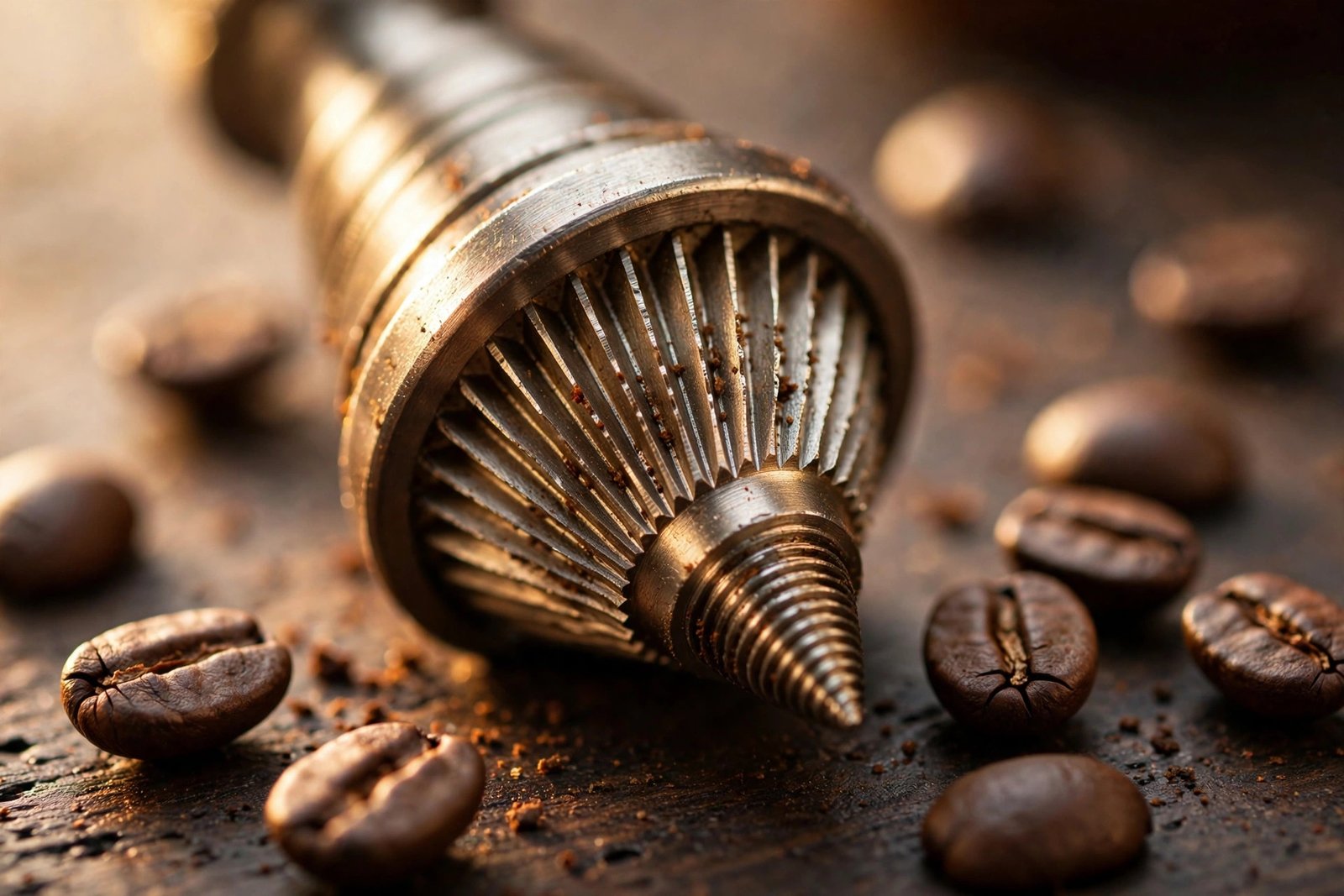
- Conical burrs are the budget sweet spot. Flat burrs grind more evenly but cost more. Under $50, every good pick uses conical burrs — either steel or ceramic. Both are fine for drip, pour-over, and French press.
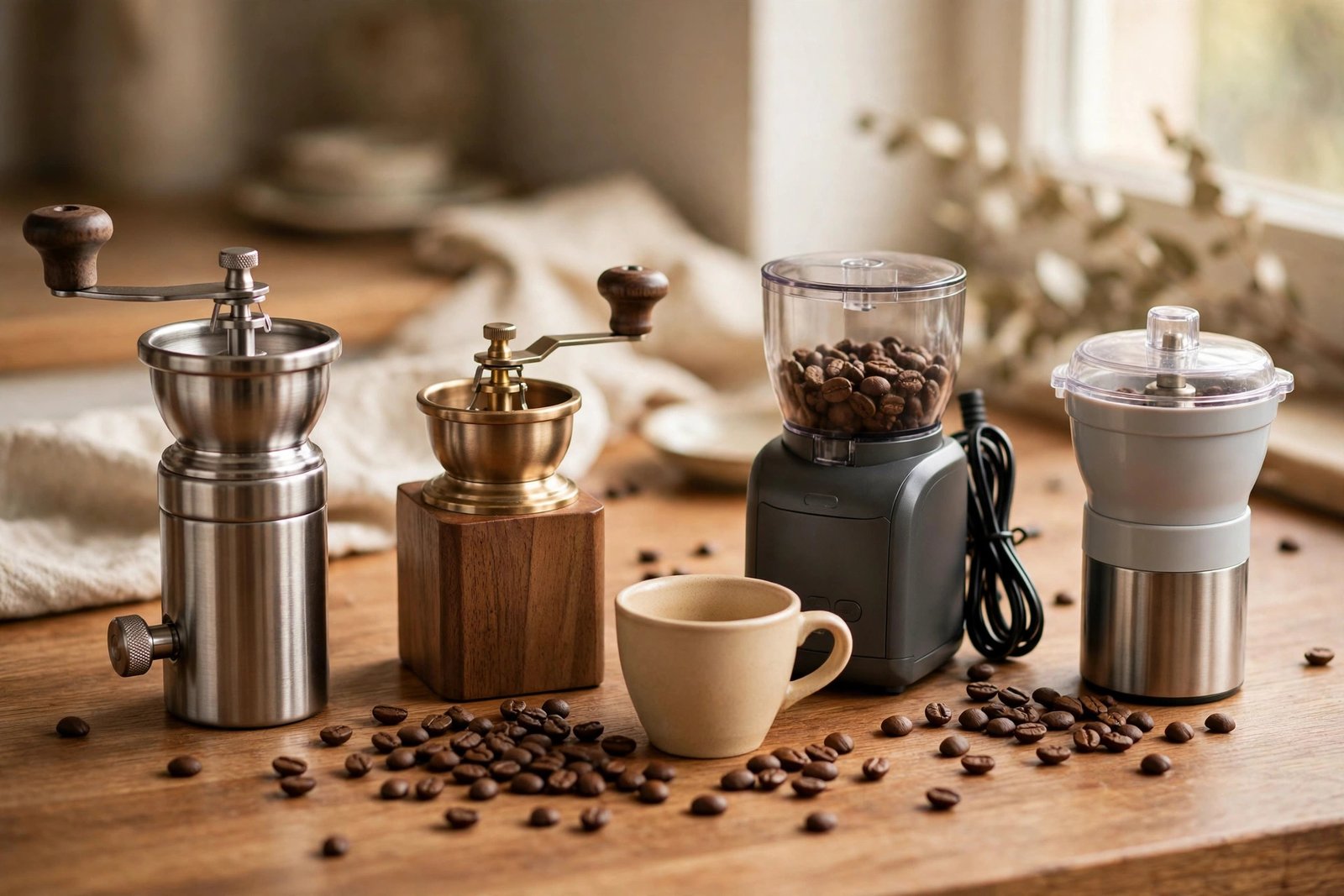
- Manual vs. electric. At this price, manual hand grinders give you better grind quality per dollar, while electric grinders give you convenience. A $40 hand grinder usually out-grinds a $40 electric one — but only if you’re willing to crank for 1–2 minutes per cup.
- Grind adjustability. Look for clearly stepped or easily adjustable settings. Cheap grinders with vague “fine to coarse” knobs and no repeatability will frustrate you — you want to be able to find your French press setting again tomorrow.
- Capacity. Electric hoppers here hold 2–8 ounces; hand grinders typically hold enough for 1–2 cups per fill. If you brew a full 12-cup pot daily, an electric makes more sense.
- What you WON’T get under $50: true espresso-fine grinding (cheap grinders can’t hit it consistently — don’t believe the marketing), timers, low-retention designs, or quiet operation. Budget for a separate upgrade later if espresso becomes your thing.
The Reviews: 4 Best Budget Coffee Grinders Worth Buying
1. Hario Skerton Pro — Best Overall
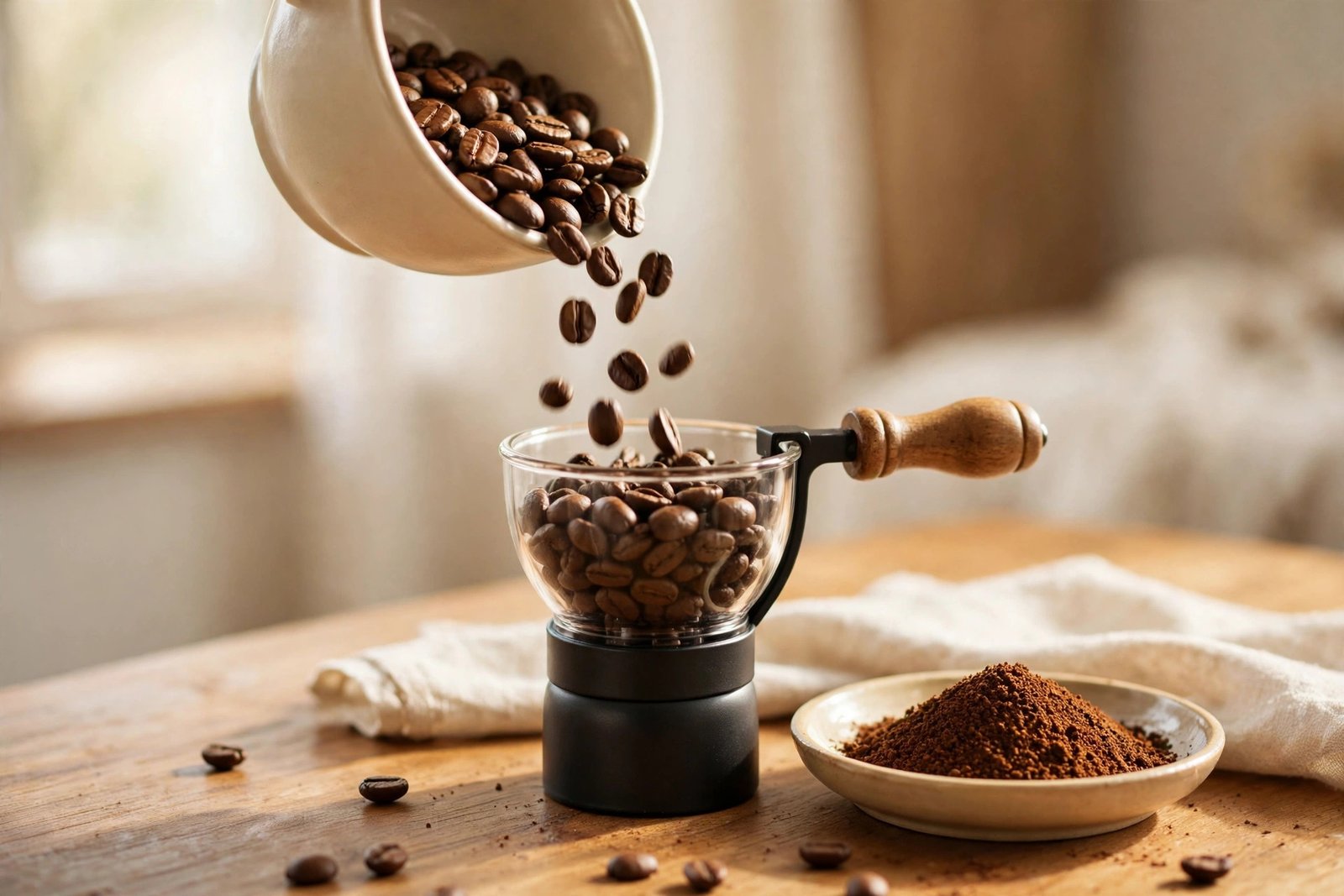
The Skerton Pro is the default recommendation in every budget coffee corner of the internet, and it earns it. This Japanese hand grinder pairs conical ceramic burrs with a genuinely usable grind adjustment — a big step up from the original Skerton’s fiddly version — and it grinds evenly enough for pour-over, drip, and French press.
Pros: – Usually in the $40–$50 range — the best grind quality per dollar on this list – Conical ceramic burrs stay sharp and don’t rust – Improved adjustment system over the original Skerton — easier to dial in and repeat – Quiet, portable, and needs no electricity — great for early risers and travel – The 100g glass grounds container doubles as a measuring vessel
Cons: – Hand-grinding takes 1–2 minutes per cup; a full pot’s worth is a workout – The glass container is fragile — one drop and you’re ordering a replacement – Not a true espresso grinder despite what some listings imply; it can’t hit consistent espresso-fine – Stepless adjustment means finding your exact setting again takes a little practice
Best for: Pour-over, drip, and French press drinkers who want the best possible grind under $50 and don’t mind a minute of cranking.
2. JavaPresse Manual Coffee Grinder — Best for Travel and Small Kitchens
JavaPresse built its name on one idea: a hand grinder small enough to disappear into a desk drawer or carry-on. Its compact stainless-steel body houses a ceramic conical burr with 18 click settings, and the grind quality is genuinely solid for pour-over and AeroPress.
Pros: – Usually in the $30–$40 range — one of the cheapest credible burr grinders – Tiny and lightweight; ideal for dorms, offices, and travel – 18 click settings make it easy to return to a favorite grind size – Quiet operation — no waking the household – Consistent enough for pour-over, drip, and French press
Cons: – Small capacity means one cup per fill — grinding for a crowd gets tedious – The crank handle can develop wobble over long-term heavy use – Slower than larger hand grinders like the Skerton Pro – Some long-term owners report the adjustment clicks wearing less precise after a year or more
Best for: Solo brewers, travelers, and small-kitchen dwellers who want good grinds in the smallest possible package.
3. Cuisinart DBM-8 Supreme Grind — Best Electric Burr Pick
If the idea of hand-grinding every morning makes you tired, the Cuisinart DBM-8 is the most proven electric burr grinder under $50. It’s a straightforward automatic burr mill: fill the 8-ounce hopper, choose from 18 grind settings, press a button, and the auto-stop timer shuts it off.
Pros: – Usually in the $40–$55 range — the cheapest electric burr grinder from a major brand – Push-button convenience with an automatic shut-off timer – 18 grind settings cover French press through drip well – 8-ounce hopper handles a full pot’s worth of beans – Enormous owner base means every question about it has an answer online
Cons: – Grind consistency falls apart at the fine end — this is not an espresso grinder, full stop – Noticeable retention: grounds hide in the chute and need tapping out – Static cling makes grounds stick to the container (the wet-spoon trick helps) – Mostly plastic construction and louder than you’d hope
Best for: Drip-coffee households that want electric convenience and brew medium to coarse — the path of least resistance to fresh-ground coffee.
4. KRUPS F203 — The Cheapest Grinder Worth Buying
Let’s be honest: the KRUPS F203 is a blade grinder, and blade grinders are a compromise. But it’s the compromise that introduced millions of people to fresh-ground coffee, and at this price it’s still a legitimate first step. It’s fast, dead simple, and widely available everywhere.
Pros: – Usually in the $15–$25 range — often the cheapest grinder on the shelf – Fast: grinds a pot’s worth in under 30 seconds – Simple one-button operation anyone can use – Compact enough to live on the counter – Doubles brilliantly as a spice grinder (buy a second one and dedicate it)
Cons: – Uneven grind — fines and boulders in the same batch, which brews unevenly – Blades heat the grounds if you over-grind, which dulls flavor – No real grind settings; you’re timing it by ear – Loud — the neighbors will know you’re making coffee
Best for: Absolute-budget brewers who drink French press or coarse-brew methods (where unevenness matters least) — and anyone who also wants a dedicated spice grinder.
Quick Comparison
| Grinder | Type | Typical price | Best grind range | Standout strength |
|---|---|---|---|---|
| Hario Skerton Pro | Manual conical burr | $40–$50 | Pour-over to French press | Best grind quality per dollar |
| JavaPresse Manual | Manual conical burr | $30–$40 | Pour-over to French press | Smallest, best for travel |
| Cuisinart DBM-8 | Electric conical burr | $40–$55 | Drip to French press | Easiest electric option |
| KRUPS F203 | Electric blade | $15–$25 | Coarse (French press) | Cheapest first step |
What About the OXO Brew Conical Burr Grinder?
The OXO Brew is the natural upgrade pick — stainless steel conical burrs, 15+ settings, a one-touch timer, and noticeably better consistency — but it typically sells for $90–$100, roughly double our cap. If your budget ever stretches, it’s where most budget-grinder owners land next. Until then, the Skerton Pro gives you surprisingly close grind quality for half the money.
5 Tips to Get Better Grinds on a Budget
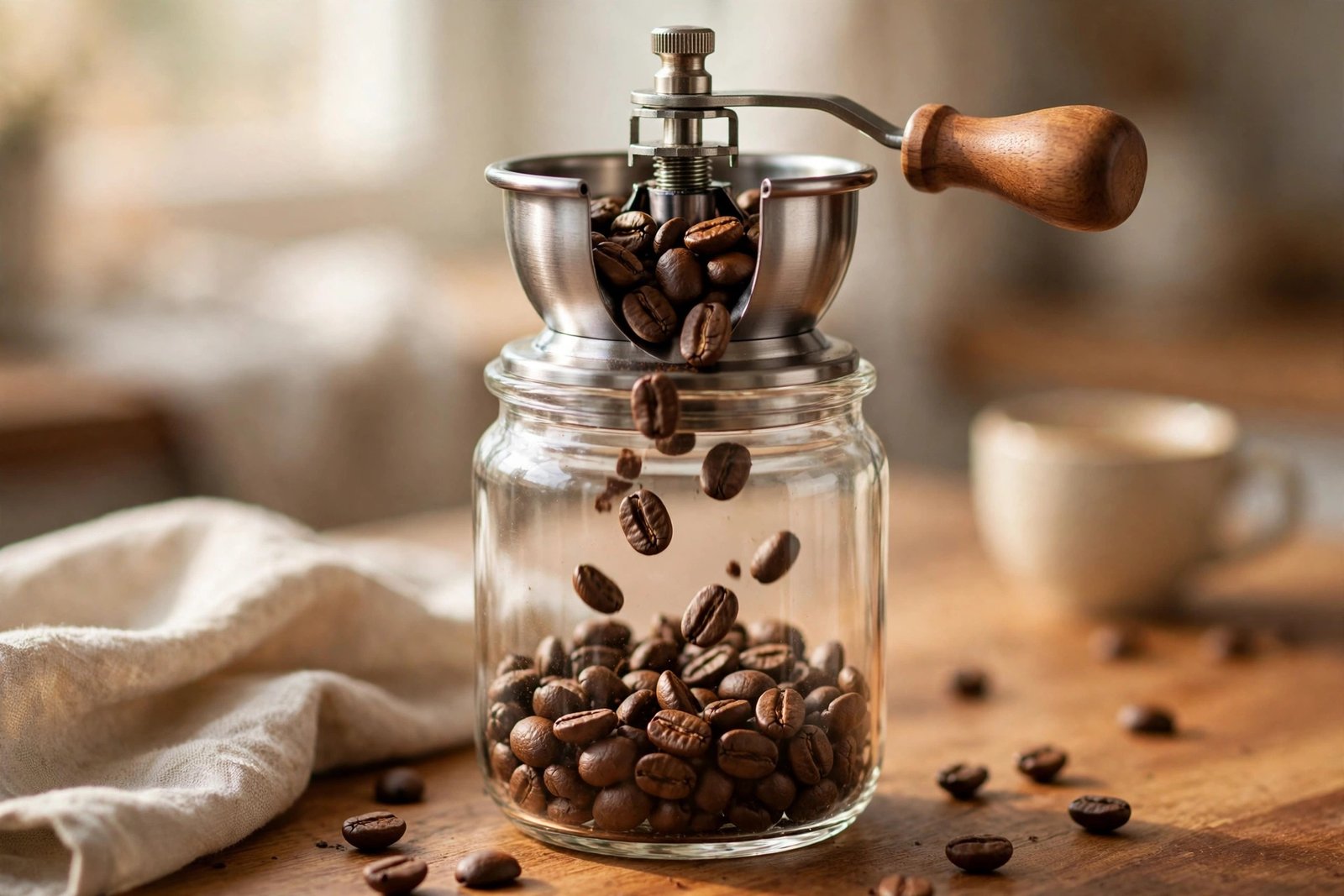
- Grind right before brewing. Coffee starts losing aroma within 15–30 minutes of grinding. Even the KRUPS, grinding seconds before the brew, beats premium beans ground last week. Freshness is free.
- Match your grind to your brew method. Coarse for French press, medium for drip machines, medium-fine for pour-over, fine for espresso (which these grinders can’t truly do — be honest with yourself here). Wrong grind size ruins more cups than wrong beans.
- Pulse blade grinders in short bursts. Hold the KRUPS for 3–5 seconds, release, shake, repeat. Short bursts keep the blades from heating the grounds and give you a more even result than one long blast.
- Keep spices out of your coffee grinder. Cumin-flavored coffee is a tragedy you only need once. If you grind spices, buy a second cheap blade grinder and label it — the KRUPS is perfect for this.
- Clean it regularly. Brush out retained grounds after each use (an old toothbrush works). Every few weeks, run a tablespoon of uncooked white rice through a blade grinder — or grinder cleaning tablets through a burr one — to pull out oily residue. Clean grinders grind more evenly and taste better.

Conclusion
Under $50, the choice comes down to one question: hand or electric? If you’ll crank for a minute, the Hario Skerton Pro gives you the best grind quality on this list — it’s the pick coffee people actually recommend. If convenience wins, the Cuisinart DBM-8 is the proven electric burr option. Traveling or short on space? The JavaPresse disappears into a bag. And if $20 is truly the budget, the KRUPS F203 still beats pre-ground coffee every single morning.
Whichever you choose, pair it with fresh whole beans and grind right before you brew. That one habit matters more than any grinder on this list.
Save this guide — and when your first cup of truly fresh-ground coffee ruins the office pot for you, you’ll know the grinder was worth it.
Keep Brewing
- Best Budget Espresso Machines Under $200 (2026)
- French Press vs Pour Over: Which Is Better for Your Home Café?
Part of the collection: This guide is part of our Budget Coffee Gear hub — 10 guides to brewing great coffee without spending a lot.