
Learning how to store coffee beans properly is the cheapest upgrade in all of coffee. A $15 bag of great beans, stored wrong, tastes worse within a week than a $8 bag stored right. And the frustrating part? Most people do everything backwards — the freezer bag left open in the fridge door, the pretty glass jar on a sunny counter, the beans ground a month before they’re brewed. This guide fixes all of it: the science of why beans go stale, the exact container and spot to use, the real rules on freezing, and the five mistakes that kill flavor fastest.
The good news: you don’t need special equipment. The best coffee bean storage at home costs almost nothing — it’s a handful of rules applied consistently, not a gadget. Let’s get into it.
Why Coffee Beans Go Stale (the 30-Second Science)
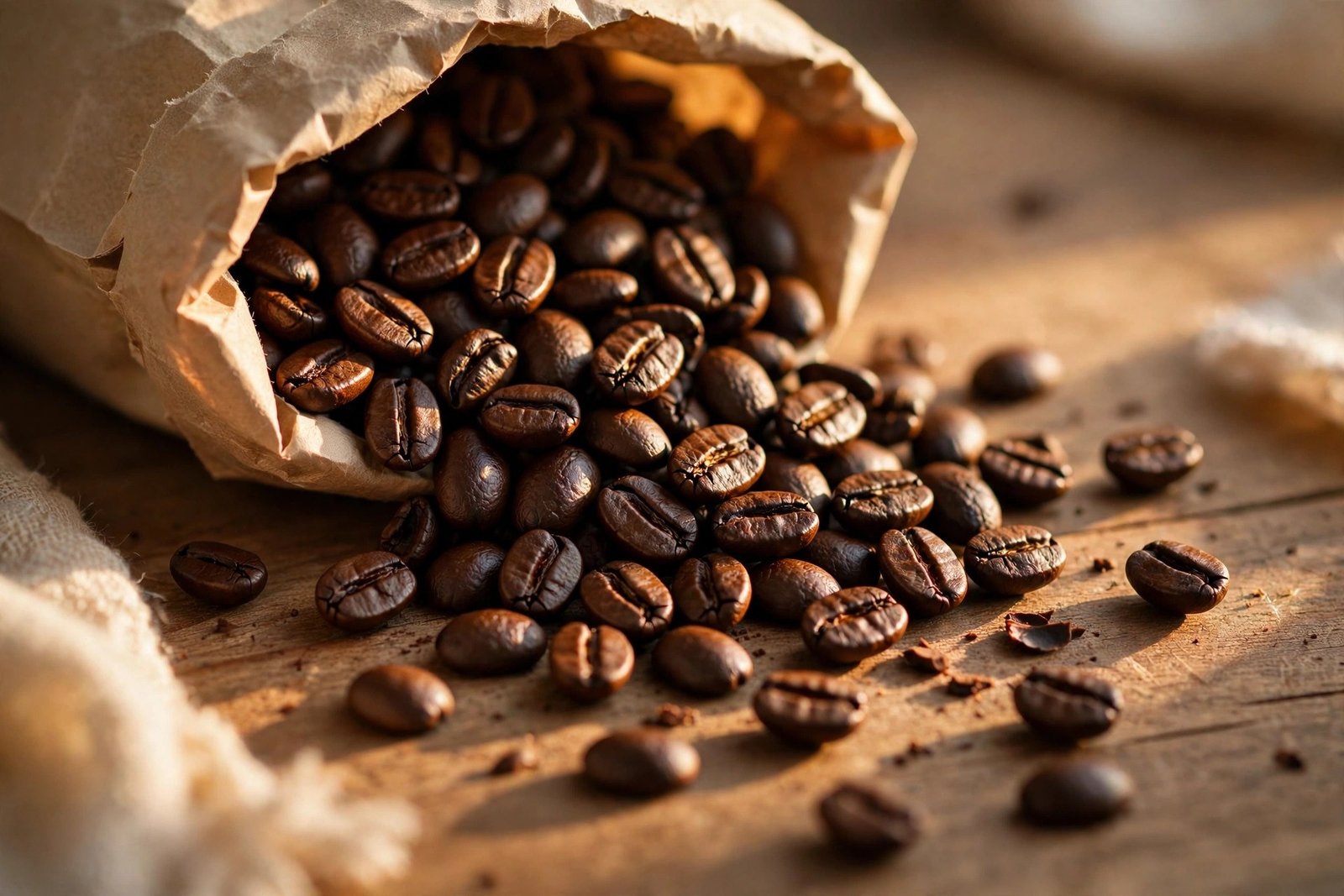
Roasted coffee beans are full of volatile aromatic compounds — the gases and oils that make coffee smell and taste like coffee. Roasting creates them; time destroys them. Four enemies do the destroying:
- Air (oxygen): oxidizes the oils, turning bright flavors flat and papery. This is enemy number one.
- Light: especially UV, breaks down compounds and heats the beans.
- Moisture: beans are hygroscopic — they absorb water (and odors) from the air, which wrecks the roast profile.
- Heat: accelerates every chemical reaction above, including staling.
Every storage rule below is just these four enemies, handled one by one. The coffee bean is a roasted seed — treat it like fresh food, because chemically, that’s what it is.
How to Store Coffee Beans: The Short Version
If you read nothing else: keep whole beans in an opaque, airtight container, in a cool dark cupboard, and grind only what you brew. Buy in quantities you’ll finish in 2–3 weeks. That’s it — that single paragraph covers 90% of how to store coffee beans at home, and it beats what most coffee drinkers are doing right now.
The rest of this guide is the 10%: the freezer question, roast dates, the mistakes, and what to do when life gets in the way of the ideal.
The Best Container: Opaque and Airtight
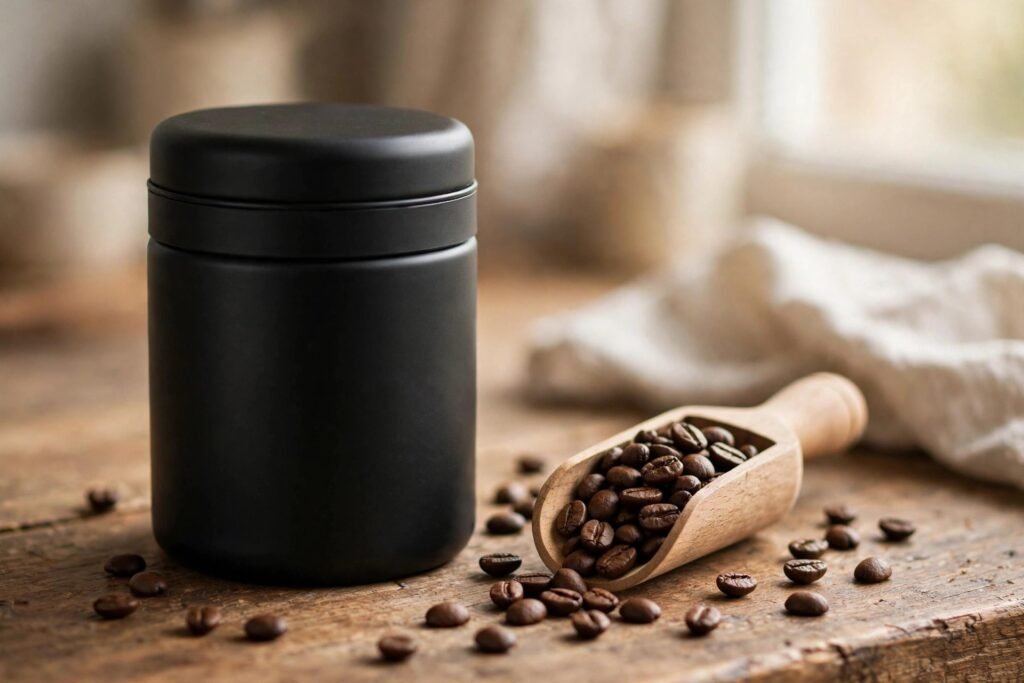
The container matters more than anything else. The ideal coffee canister is opaque (blocks light), airtight (blocks air and moisture), and sized so the beans fill most of it — less headspace means less trapped air doing damage.
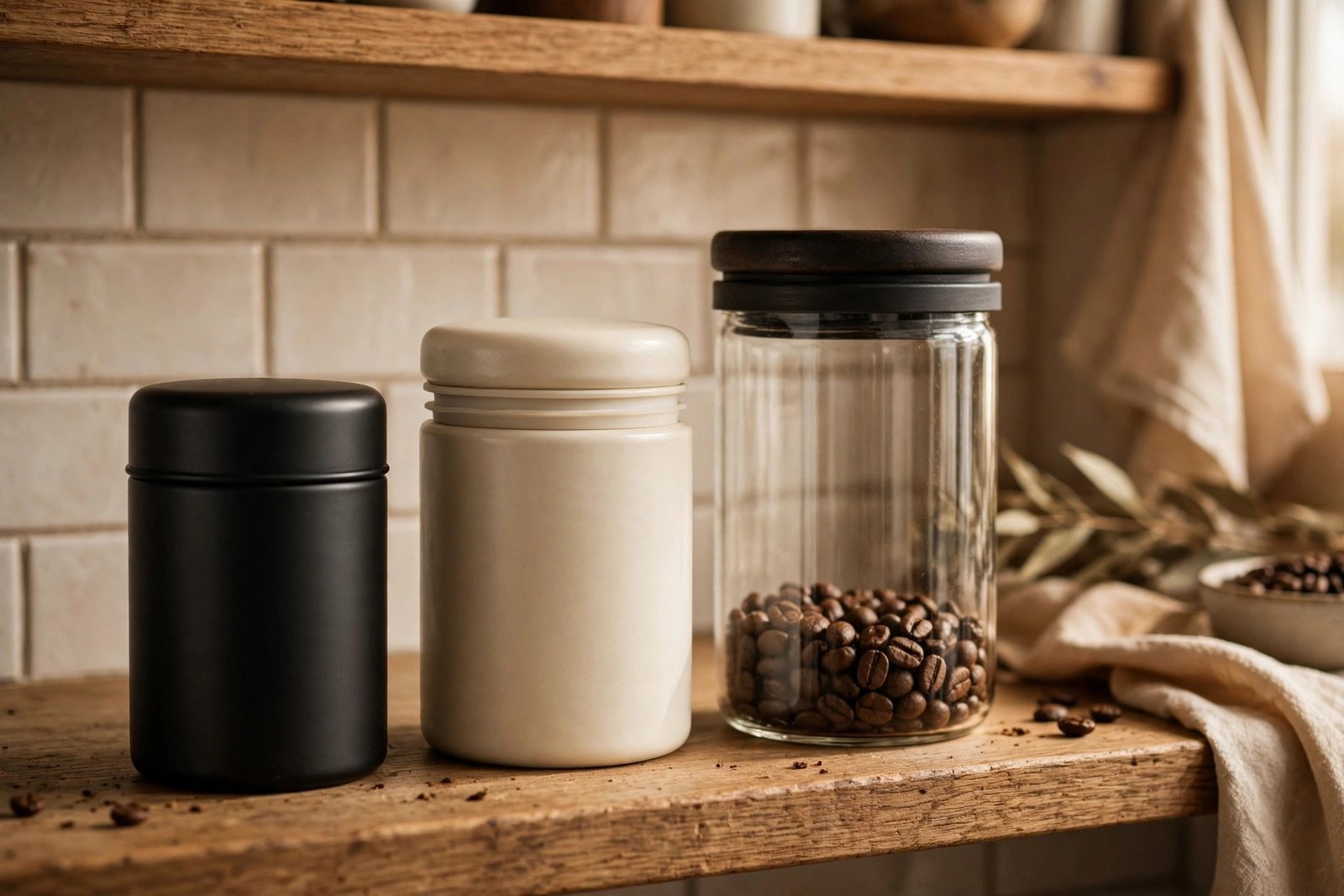
When deciding how to store coffee beans at home, the container is the first call. What works, in order of preference:
- A dedicated coffee canister with a one-way CO2 valve. Freshly roasted beans release carbon dioxide for days after roasting (“degassing”). A one-way valve lets that gas escape without letting air in. These cost $15–25 and are the gold standard.
- Any opaque airtight container. A quality kitchen canister with a silicone-seal lid does the job — just keep it in a dark cupboard.
- The bag the beans came in — IF it has a resealable valve top. Good roasters sell beans in foil bags with one-way valves and tin-tie or zip closures. Squeeze the air out, seal it tight, and that bag is a perfectly fine home for 2–3 weeks. If the bag has no valve and no reseal, transfer the beans on day one.
What doesn’t work: the pretty clear glass jar on the counter (light), the open bag folded over with a clip (air), and anything near the stove (heat).
Where to Keep Them: Cool, Dark, Dry
A kitchen cupboard away from the stove and oven is the sweet spot — room temperature, dark, dry. The pantry works. A cabinet above the coffee maker does not (heat rises from the machine). Countertop is fine only if the container is fully opaque and the spot never gets direct sun. Honestly, this is the easiest part of how to store coffee beans — pick the right spot once and you’re done.
And the fridge? No. The refrigerator is humid, full of food odors that beans absorb, and the temperature swings every time the door opens cause condensation on the beans. The fridge is where coffee goes to taste like last night’s leftovers. This is the single most common storage mistake, and it’s completely avoidable.
Should You Freeze Coffee Beans?
The freezer is controversial, but the science is settled: freezing works — if you do it right. Cold dramatically slows staling. The catch is moisture and freeze-thaw cycles, so the rules are strict:
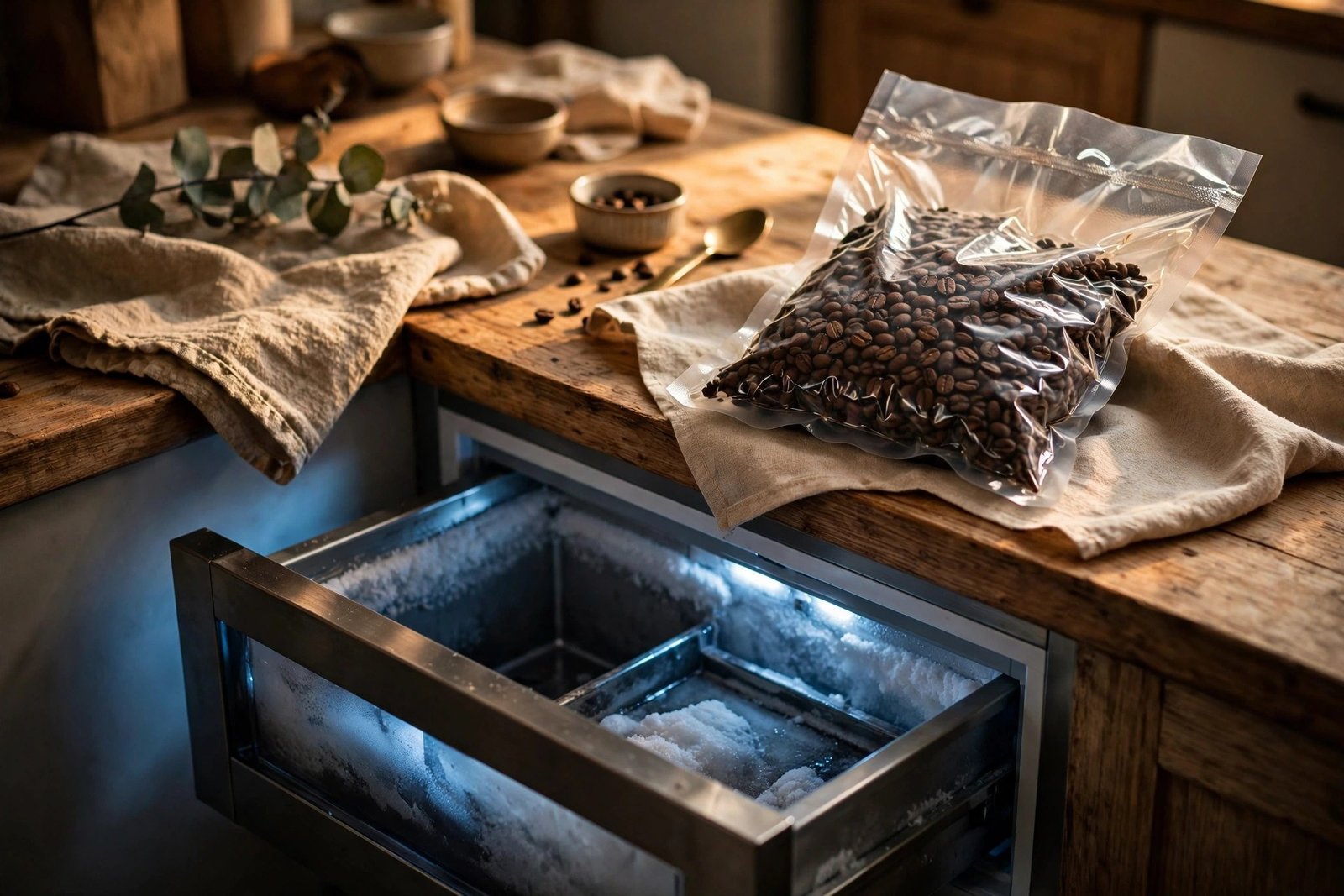
- Portion first. Divide beans into weekly portions (small zip bags or jars) before freezing. Never freeze the whole bag and dig into it daily — every opening invites condensation.
- Airtight is non-negotiable. Squeeze out all air, or better, vacuum-seal. Freezer burn is just oxidation with extra steps.
- Freeze once. Take a portion out, let it come fully to room temperature before opening (30–60 minutes — opening cold beans in warm air causes instant condensation), and never refreeze.
- Only freeze beans you won’t use within 3 weeks. If you’ll drink them sooner, the cupboard is simpler and just as good.
Done this way, frozen beans stay excellent for 2–3 months. Done the lazy way — the open bag tossed in the freezer door — and you’ll get worse coffee than the cupboard, plus a hint of frozen peas. Method matters more than temperature.
Whole Bean vs. Pre-Ground: No Contest
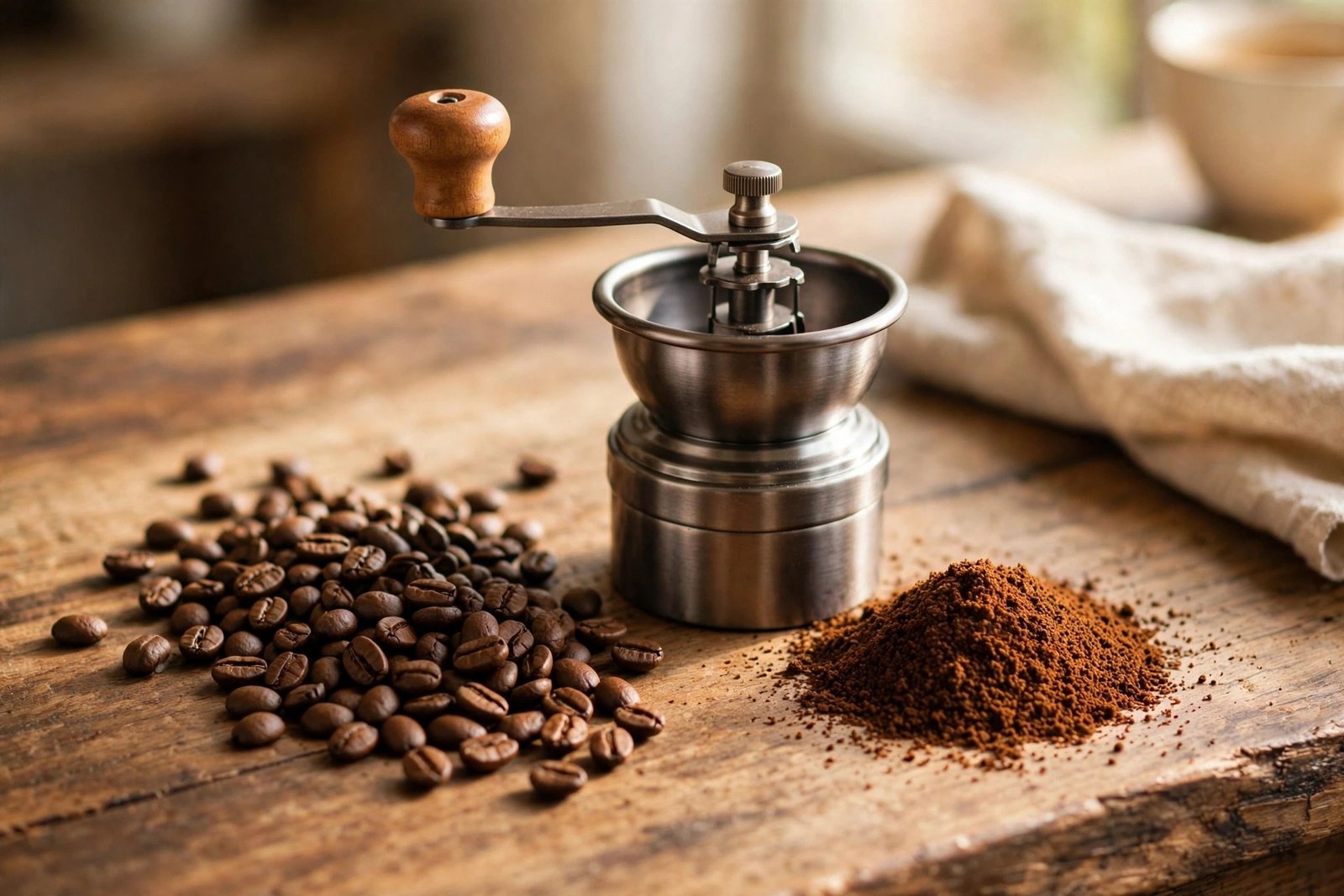
Grinding multiplies the bean’s surface area enormously — which multiplies the speed of staling by the same factor. Pre-ground coffee starts losing its best aromatics within hours; whole beans hold them for weeks. This is the single highest-leverage habit in how to store coffee beans for maximum flavor: buy whole beans and grind right before brewing.
You don’t need a $200 grinder. A manual burr hand grinder ($20–30) grinds enough for a morning brew in a minute or two, and it transforms even budget beans. Our budget grinder guide breaks down which ones are actually worth buying — the short version is that a cheap hand grinder beats expensive pre-ground every single time.
If you absolutely must buy pre-ground (travel, office, no grinder yet): buy small bags, keep them sealed airtight, use within 1–2 weeks, and accept that you’re leaving flavor on the table. Then put a hand grinder on your wishlist — it’s the upgrade that pays for itself in the first bag.
How Long Do Coffee Beans Actually Last?
Forget “expiry dates” — they mean almost nothing for coffee. What matters is the roast date, printed on any bag from a decent roaster. Here’s the real timeline for whole beans stored properly:
- Days 2–14 after roast: peak flavor. (Day 0–1 the beans are still degassing — many taste better after resting a day or two.)
- Weeks 2–4: still very good. The brightest top notes fade, but the coffee is delicious.
- Weeks 4–6: noticeably flatter, but perfectly drinkable — fine for milk drinks.
- Beyond 6–8 weeks: stale. Brewable, not enjoyable. Time for the freezer rule next time, or smaller bags.
Buy from roasters who print roast dates, not just “best by” dates. A bag roasted last week beats a “fresher-looking” bag with a 12-month best-by window every time. And buy in 250g–500g bags you’ll finish in 2–3 weeks rather than the 1kg “deal” that goes stale on the shelf — the bulk discount is the most expensive way to buy coffee.
The 5 Storage Mistakes That Kill Flavor Fast
- The fridge. Humidity, odors, condensation. Cupboard wins.
- The sunny countertop jar. It looks great on Instagram and tastes like cardboard by Friday. Opaque or nothing.
- Buying the 1kg bag “to save money.” You saved $4 and wasted $12 of stale beans. Buy what you’ll drink in 3 weeks.
- Grinding the whole bag on Sunday. Pre-ground stales in days. Grind per brew — or at most per day.
- Ignoring the roast date. “Best by 2027” tells you nothing. Roasted-on dates tell you everything.
Fresh Beans Deserve Fresh Brewing
Once your beans are stored right, the rest of the routine matters more — because now you can actually taste the difference. Dial in your brew with our free coffee-to-water ratio calculator (fresh beans + right ratio = café cups at home), and if you brew for iced coffee, our cold brew method is built for exactly these beans. Serious about espresso? Fresh beans are half the battle — the other half is in our budget espresso machine guide.
Frequently Asked Questions
How to store coffee beans after opening the bag?
The moment you open the bag, the 2–3 week clock starts. Squeeze out the air, reseal tightly (or transfer to an opaque airtight container), and keep it in a cool dark cupboard. If the bag has a one-way valve and a good reseal, it can stay in the bag — otherwise, move the beans on day one.
Is it better to store coffee in the bag or a container?
A valve bag from a good roaster is excellent storage — it’s designed for exactly this. A dedicated airtight canister is equally good and more convenient for daily scooping. What matters is opaque + airtight + minimal headspace, not which of the two you pick.
Can you store coffee beans long term?
Yes — portioned, vacuum-sealed, and frozen, beans hold quality for 2–3 months. For the cupboard, “long term” doesn’t exist: buy smaller bags more often instead. The best long-term strategy is a buying strategy, not a storage trick.
Do coffee beans go bad?
They don’t spoil like milk — old beans won’t make you sick. They just go stale: flat, papery, lifeless. Beans months past roast are safe to brew and unpleasant to drink. When in doubt, the smell test never lies — vibrant aroma means life, dustiness means it’s over.
The Bottom Line
Knowing how to store coffee beans comes down to four words: airtight, opaque, cool, whole. Airtight opaque container, cool dark cupboard, whole beans ground fresh. Buy in 2–3 week quantities from roasters who print roast dates, keep them out of the fridge, and freeze only in sealed portions you’ll use once. Do that, and every bag you buy will taste the way the roaster intended — for weeks, not days.